Why Is Teamwork an Important Part of LDKS?
Gusti Ayu Tita P
19 September 2026
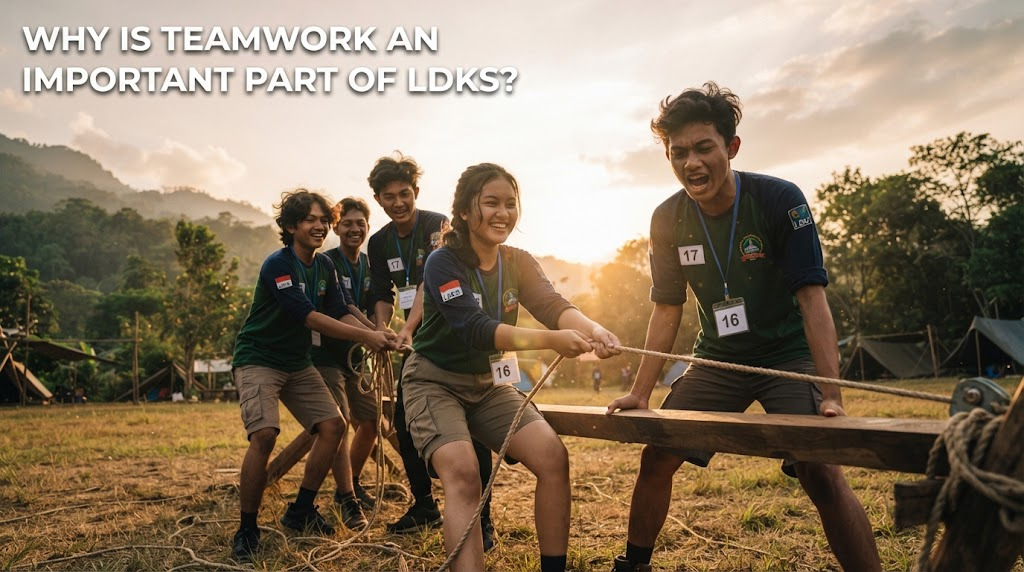
LDKS, or Student Leadership Training, is a school program that helps students develop leadership and personal skills through practical activities. One of the most important parts of LDKS is teamwork, because students often need to complete tasks and solve challenges together. Working in groups gives students opportunities to communicate, share ideas, and understand different perspectives. These experiences can prepare students to cooperate effectively in school and future professional environments.
WHAT IS TEAMWORK IN LDKS?
Teamwork in LDKS involves students working together to achieve a shared objective. Activities may include group discussions, problem-solving challenges, games, presentations, and organizational tasks. Each student can have a different role or responsibility within the group. This allows students to understand that every member can contribute to the success of a team.
Teamwork also teaches students that completing a task is not always about individual ability. Students need to coordinate their actions and support one another when difficulties occur. Through these activities, teamwork skills can develop through direct practice. Students can also learn how cooperation can make group activities more organized and effective.
HOW DOES TEAMWORK IMPROVE COMMUNICATION?
Effective communication is necessary when students work together. During LDKS, students need to explain ideas, listen to instructions, ask questions, and share information with their teammates. These activities provide regular opportunities to practice communication skills in real situations. Students can learn that clear communication helps prevent confusion and supports better cooperation.
Team members may have different opinions about how to complete a task. Instead of simply ignoring those differences, students can discuss their ideas and find a suitable solution together. This process teaches them to communicate respectfully even when they disagree. As a result, team communication becomes an important part of successful teamwork.
WHY DOES TEAMWORK TEACH RESPONSIBILITY?
Every successful team needs members who are willing to complete their responsibilities. LDKS activities can assign students specific roles, such as organizing materials, leading discussions, recording information, or presenting results. Completing these duties helps students understand the importance of personal responsibility within a group. They can also see how one person's actions may influence the work of other team members.
Responsibility becomes especially important when a group faces a challenge. Students need to remain committed to their assigned tasks instead of leaving the work to others. If a problem occurs, they can discuss it and look for a solution together. These experiences can help students develop responsible habits that are useful in school organizations and daily activities.
HOW DOES TEAMWORK TEACH RESPECT FOR DIFFERENT OPINIONS?
Students may have different personalities, experiences, and ideas when participating in LDKS. Group activities provide opportunities for them to understand and appreciate these differences. Students learn that a good team does not require everyone to have exactly the same opinion. Instead, mutual respect allows different ideas to be considered before a decision is made.
Listening to different viewpoints can also help students discover solutions they may not have considered themselves. When students learn to respond politely to disagreements, group discussions can become more productive. This experience can strengthen respectful cooperation and improve relationships among team members. The ability to respect different perspectives is also valuable in future academic and professional environments.
HOW CAN TEAMWORK DEVELOP PROBLEM-SOLVING SKILLS?
Many LDKS activities require students to solve challenges as a group. They may need to identify a problem, discuss possible solutions, and decide which approach to use. Working together allows students to combine their knowledge and ideas. This can make problem-solving skills an important part of the teamwork experience.
Students can also learn that problems do not always have one simple solution. If an approach does not work, the group can evaluate the situation and try another strategy. This process encourages students to remain patient and flexible when facing difficulties. Team-based problem solving can therefore support both critical thinking and cooperation.
HOW DOES TEAMWORK PREPARE STUDENTS FOR LEADERSHIP?
Teamwork is closely connected to leadership development because effective leaders need to understand how to work with other people. Through LDKS, students can experience different roles within a group, including becoming a coordinator, participant, or discussion leader. These experiences can help them understand that leadership involves guiding and supporting others. A leader also needs to recognize the contributions of every team member.
Students can learn that leadership is not simply about telling people what to do. It also requires listening, sharing responsibilities, resolving disagreements, and helping the team reach its goals. By practicing these behaviors during LDKS, students can develop a more practical understanding of student leadership. These lessons may become useful when they participate in school organizations and other group activities.
CONCLUSION
Teamwork is an important part of LDKS because it gives students practical opportunities to develop communication, responsibility, respect, problem-solving, and leadership skills. Group activities encourage students to share ideas, listen to others, and contribute to common goals. Students can also learn how their individual actions affect the success of an entire team.
The teamwork experience gained through LDKS can be useful beyond school. Students can apply these skills when working on class projects, joining organizations, continuing their education, and entering professional environments. Through consistent practice, effective teamwork can become a valuable ability for personal development and future success.
Tentang Penulis
Gusti Ayu Tita P
Penulis — Universitas STEKOM
Penulis aktif yang berfokus pada isu-isu akademik, teknologi pendidikan, dan pengembangan sumber daya manusia di lingkungan kampus.