Why Mass Protests Emerge During Rising Social Tensions?
Gusti Ayu Tita P
1 September 2026
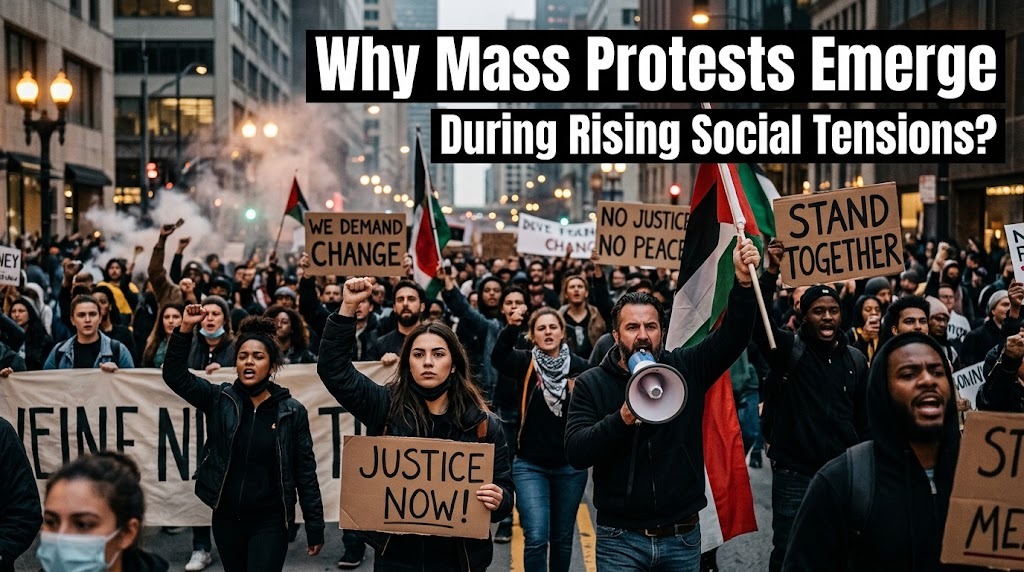
Mass protests often emerge when social tensions become strong enough to encourage people to express their concerns collectively. These tensions can develop from economic difficulties, controversial policies, social inequality, political disagreements, or dissatisfaction with public institutions. When problems continue without clear solutions, frustration can spread across different groups. People who share similar concerns may then come together to demand attention or change. Understanding this process helps explain why some social issues eventually develop into large public demonstrations.
GROWING PUBLIC DISSATISFACTION
One major factor behind mass protests is growing public dissatisfaction with conditions that affect everyday life. People may become concerned about rising living costs, employment opportunities, public services, education, or government decisions. A single problem may not immediately lead to collective action, but continued difficulties can gradually increase frustration. When many people experience similar problems, individual concerns can become a shared social issue. This creates stronger motivation for people to express their opinions publicly.
Dissatisfaction can become more intense when people believe their concerns are not being properly addressed. Limited communication or unclear explanations can make people feel ignored. As frustration increases, communities may search for ways to make their concerns more visible. Collective action can then become an option for expressing demands. The process usually develops gradually rather than appearing without warning.
ECONOMIC PRESSURE INCREASES SOCIAL TENSION
Economic conditions can strongly influence the level of tension within a community. Rising prices, limited employment opportunities, income inequality, and financial insecurity can affect people's daily lives. When economic pressure continues, people may become more concerned about their future and their ability to meet basic needs. Economic pressure can therefore contribute to broader dissatisfaction. If many groups experience similar difficulties, the issue can gain wider public attention.
Economic problems can also affect people's perception of fairness. Communities may question whether opportunities and resources are distributed fairly. When people believe that existing conditions are unequal or difficult to change, frustration can become stronger. Economic inequality may then become part of a broader social debate. Public discussions about these issues can eventually contribute to collective demonstrations.
CONTROVERSIAL POLICIES CAN TRIGGER REACTIONS
Government policies can become a source of tension when they significantly affect people's interests or daily lives. A policy may receive criticism if citizens believe its impact has not been properly considered. Concerns can arise around employment, education, taxation, public services, environmental regulation, or other areas of public policy. Policy disagreement can become more visible when affected communities organize to express their views. In some circumstances, demonstrations become a way to communicate opposition or request revisions.
The level of public reaction often depends on how a policy is introduced and explained. Transparent communication can help citizens understand the reasoning behind a decision. Without sufficient information, uncertainty can create room for speculation and misunderstanding. Public consultation can provide opportunities for people to communicate concerns before tensions become more serious. Effective communication does not eliminate disagreement, but it can help manage it constructively.
LACK OF TRUST CAN DEEPEN TENSIONS
Trust between citizens and public institutions is important for maintaining social stability. When people believe institutions are not responding fairly or transparently, confidence can decline. Repeated experiences of disappointment may strengthen the perception that formal channels are ineffective. Public trust can therefore influence whether people choose dialogue, formal complaints, or more visible forms of collective action. Low trust can make existing social tensions more difficult to manage.
Rebuilding trust usually requires more than statements or temporary responses. Institutions need to demonstrate transparency, accountability, and consistent communication. Citizens also need reliable information to understand how decisions are made and what actions are being taken. Institutional accountability can help reduce uncertainty and improve relationships between authorities and communities. When trust improves, disagreements may be easier to address through constructive dialogue.
SOCIAL MEDIA CAN ACCELERATE COLLECTIVE REACTION
Social media has changed how quickly social issues can gain public attention. A video, statement, or personal experience can reach thousands of people within a short period. People who experience similar problems can easily connect and discuss their concerns. Digital communication can therefore accelerate the development of collective awareness. An issue that begins within a small community can become widely discussed when it receives significant online attention.
However, speed also creates risks. Misleading information, incomplete context, and emotionally charged content can spread alongside accurate reporting. People may form strong opinions before verifying what actually happened. Digital literacy is therefore essential when following social issues online. Checking sources and comparing information can help prevent unnecessary tension caused by misinformation.
SOLIDARITY TURNS CONCERNS INTO COLLECTIVE ACTION
Shared experiences can create a sense of solidarity among people who face similar problems. When individuals realize that others have the same concerns, they may feel more confident expressing their opinions together. Organizations, student groups, workers, communities, and advocacy groups can help connect these individuals. Social solidarity can transform separate complaints into a collective message. This can make an issue more visible in the public sphere.
Solidarity does not mean every participant has exactly the same background or motivation. People can support the same cause for different reasons while agreeing on a particular demand. Shared objectives provide a connection between these perspectives. Collective identity can strengthen participation when people believe their voices will have greater impact together. At the same time, differences within a movement should be managed through communication and mutual respect.
MEDIA COVERAGE CAN INCREASE PUBLIC ATTENTION
Mass media can influence how quickly a social issue becomes widely known. News reports can introduce an issue to audiences who may not have experienced it directly. Continued coverage can also encourage public debate and bring responses from institutions into the discussion. Media attention may therefore increase the visibility of a protest or the issue behind it. This can make social tensions more noticeable to the wider public.
However, audiences should not rely on a single report to understand a complex event. Different media outlets may focus on different aspects of the same situation. Social media posts may also present opinions as if they were established facts. Critical media consumption allows people to compare perspectives and evaluate information carefully. Better information can support more balanced public discussion.
UNRESOLVED PROBLEMS CAN BUILD PRESSURE
Social tensions often increase when problems remain unresolved for an extended period. People may initially tolerate difficulties while waiting for improvements or explanations. If the situation continues without meaningful progress, patience can gradually decrease. Unresolved social problems can create a sense that stronger public action is necessary. This accumulated frustration can contribute to the emergence of mass protests.
Early communication can sometimes prevent tensions from becoming more serious. Authorities, community leaders, organizations, and citizens can discuss problems before frustration reaches a critical point. Clear responses and realistic solutions can reduce uncertainty. Constructive dialogue provides an opportunity to address disagreements without immediately escalating conflict. It is most effective when all sides are willing to listen and respond to evidence.
PEACEFUL PROTEST AND PUBLIC RESPONSIBILITY
When tensions rise, the way people express their concerns becomes especially important. Peaceful demonstrations allow citizens to communicate strong opinions while reducing risks to other members of society. Participants can present demands through speeches, signs, public statements, and other lawful forms of expression. Peaceful protest can keep attention focused on the issues being raised. Responsible organization can also help protect public safety.
Public responsibility applies to all sides involved in a demonstration. Protesters should consider the rights and safety of other citizens, while authorities should manage public safety while respecting lawful expression. Media organizations and social media users also have responsibilities when communicating information about the event. Responsible communication can help prevent misunderstandings and unnecessary escalation. A balanced approach creates more space for meaningful discussion.
CONCLUSION
Mass protests can emerge during rising social tensions because public dissatisfaction, economic pressure, controversial policies, declining trust, unresolved problems, and social solidarity can gradually bring people together. Social media and mass media can accelerate this process by spreading information and increasing public awareness. However, information must be carefully verified because misinformation can intensify existing tensions.
Ultimately, mass protests are often connected to deeper social conditions rather than a single event. Open dialogue, transparent communication, accurate information, and responsible civic participation can help address disagreements before they become more difficult to manage. When citizens and institutions are willing to communicate, social tensions can be addressed more constructively. This creates greater opportunities for peaceful participation and meaningful social change.
Tentang Penulis
Gusti Ayu Tita P
Penulis — Universitas STEKOM
Penulis aktif yang berfokus pada isu-isu akademik, teknologi pendidikan, dan pengembangan sumber daya manusia di lingkungan kampus.