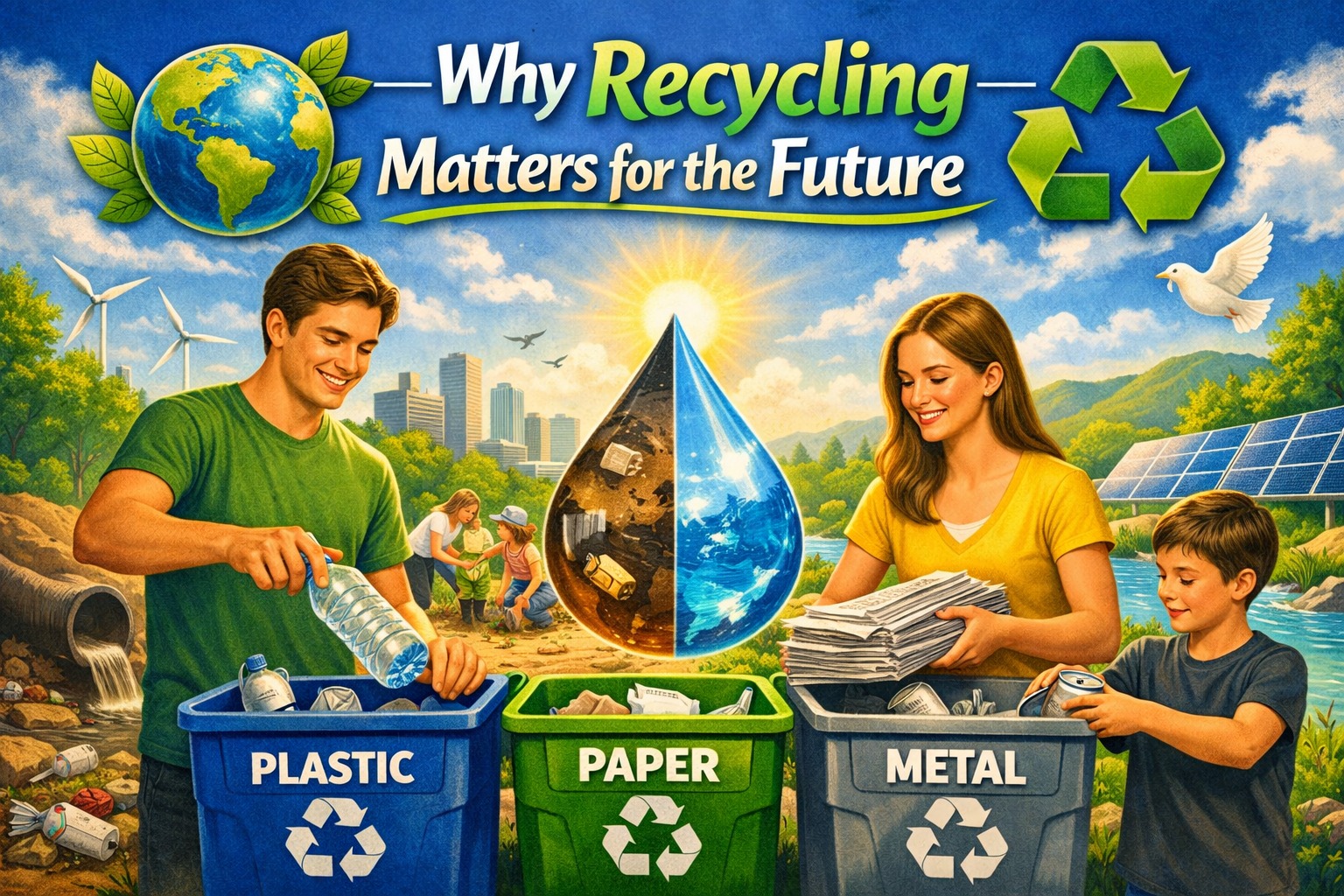
Recycling is no longer just an environmental trend—it has become a global necessity. As populations grow and consumption increases, the planet faces rising waste, pollution, and resource depletion. Recycling offers a practical solution that helps protect natural resources, reduce environmental damage, and create a more sustainable future for the next generations.
THE GROWING GLOBAL WASTE PROBLEM
Every year, billions of tons of waste are produced worldwide. Plastic packaging, electronic waste, food scraps, and industrial byproducts are filling landfills at an alarming rate. Many of these materials take hundreds or even thousands of years to decompose. During this time, they release harmful chemicals into the soil, water, and air.
Without proper waste management, landfills continue to expand and oceans become polluted with plastic debris. Recycling helps reduce the amount of waste that ends up in landfills and prevents environmental contamination.
CONSERVING NATURAL RESOURCES
Recycling plays a crucial role in preserving the Earth’s limited natural resources. Materials such as paper, metal, glass, and plastic require raw resources that are often extracted through mining, logging, or drilling. These processes consume energy and damage ecosystems.
By recycling materials, industries can reuse existing resources instead of extracting new ones. For example, recycling aluminum saves up to 95 percent of the energy required to produce new aluminum from raw materials. This significantly reduces environmental impact and promotes sustainable production.
REDUCING ENERGY CONSUMPTION AND POLLUTION
Manufacturing products from recycled materials typically uses less energy compared to producing them from raw materials. Lower energy consumption leads to fewer greenhouse gas emissions, which helps slow climate change.
Recycling also reduces air and water pollution. When waste is burned or buried in landfills, toxic gases and chemicals can be released. Recycling minimizes these harmful effects by turning waste into new products instead of disposing of it improperly.
ECONOMIC BENEFITS OF RECYCLING
Recycling is not only beneficial for the environment but also for the economy. The recycling industry creates jobs in waste collection, processing, manufacturing, and distribution. Many countries now recognize recycling as an important sector that contributes to economic growth.
Additionally, recycling reduces production costs for businesses. Using recycled materials is often cheaper than sourcing raw materials, making it a win-win solution for both companies and the environment.
ENCOURAGING RESPONSIBLE CONSUMPTION
Recycling encourages individuals to become more mindful of their consumption habits. When people separate waste, reuse materials, and choose eco-friendly products, they develop a stronger sense of responsibility toward the planet.
Simple actions such as using reusable bags, avoiding single-use plastics, and sorting household waste can make a significant difference. When communities adopt sustainable habits, the collective impact becomes powerful.
BUILDING A SUSTAINABLE FUTURE
Recycling is a key step toward building a sustainable future. Governments, businesses, and individuals must work together to improve recycling systems and raise awareness about responsible waste management.
Education plays a major role in shaping future generations who understand the importance of protecting the environment. By making recycling a daily habit, society can reduce waste, conserve resources, and create a healthier planet.
CONCLUSION
Recycling matters because it protects the environment, conserves natural resources, reduces pollution, and supports economic growth. Small actions taken today can lead to a cleaner and more sustainable world tomorrow. The future of our planet depends on the choices we make, and recycling is one of the simplest yet most powerful solutions available.
Tentang Penulis
Gusti Ayu Tita P
Penulis — Universitas STEKOM
Penulis aktif yang berfokus pada isu-isu akademik, teknologi pendidikan, dan pengembangan sumber daya manusia di lingkungan kampus.