
Why Students Need to Develop Skills Outside College to Succeed in the Workforce?
Gusti Ayu Tita P
10 Maret 2026
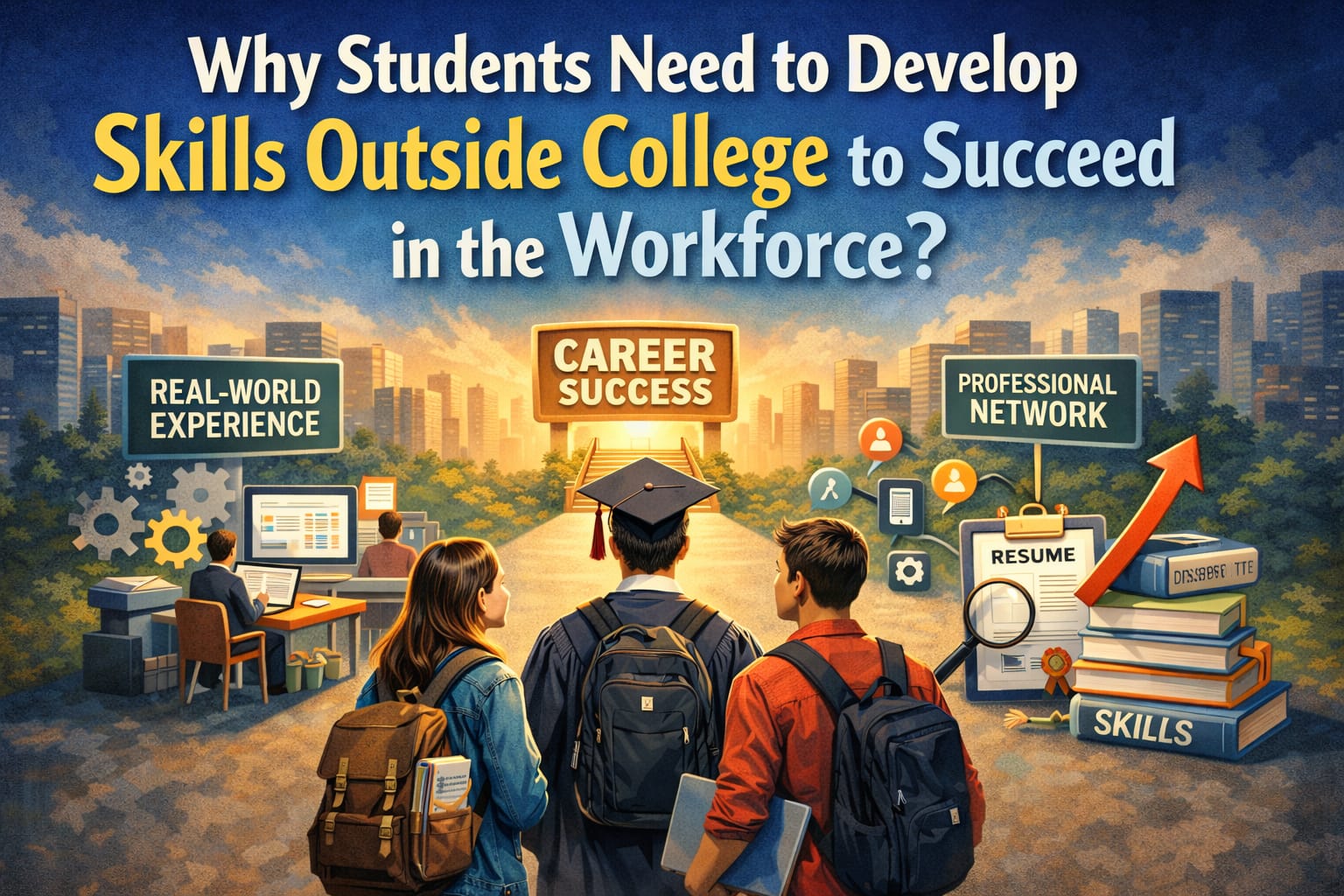
Today’s workforce is evolving rapidly. Technological advancements, changing industry demands, and global competition mean that companies no longer view academic grades as the sole indicator of a person’s capability. Many employers now seek graduates who possess real experience, practical skills, and the ability to adapt to change.
For this reason, students need to realize that learning does not only take place in the classroom. Developing skills outside of college activities has become an essential factor in preparing for the professional world. Additional activities during university life can help students gain valuable experiences that are not always covered in academic curricula.
THE DIFFERENCE BETWEEN ACADEMIC LEARNING AND WORKPLACE REQUIREMENTS
College education generally focuses on understanding theories, concepts, and the fundamental knowledge of a particular field. This is certainly important as the foundation of a student’s academic development. However, the professional world often demands more practical and applicable skills.
Companies require individuals who can work effectively in teams, communicate clearly, solve problems efficiently, and adapt to changing circumstances. These abilities are not always fully developed through classroom learning alone.
Therefore, students need to complement their academic knowledge with experiences that help sharpen practical skills.
THE IMPORTANCE OF DEVELOPING SOFT SKILLS
One of the main reasons students should be active outside the classroom is to develop soft skills. These include communication abilities, leadership, teamwork, time management, and critical thinking.
Such skills are highly valued in the workforce because almost every profession involves interaction with others and responsibility for completing tasks. Students who participate actively in various activities usually have greater opportunities to strengthen these abilities.
For example, joining campus organizations, becoming part of event committees, or participating in group projects can help students face real challenges that require coordination and responsibility.
GAINING PRACTICAL EXPERIENCE
In addition to soft skills, activities outside of college also provide opportunities for students to gain practical experience. This experience can include internships, research projects, social activities, or even running small businesses.
Practical experience is essential because it helps students understand how theories learned in class are applied in real-life situations. Furthermore, such experiences can strengthen a student’s portfolio, which is highly beneficial when applying for jobs.
Employers are often more interested in candidates who have real-world experience because they are considered more prepared to handle workplace challenges.
BUILDING PROFESSIONAL NETWORKS
Activities outside the classroom also provide opportunities for students to build professional networks. These networks can develop through seminars, workshops, professional communities, and internship programs.
Connections formed during university years can offer significant benefits in the future. Students may gain information about job opportunities, find mentors, or receive recommendations from professionals who are already experienced in their field.
The broader a person’s professional network, the greater the career opportunities that may become available.
INCREASING SELF-CONFIDENCE
Engaging in activities outside of academic studies also helps students develop self-confidence. When individuals become accustomed to facing challenges, interacting with many people, and taking on responsibilities, they become more prepared to deal with new situations.
Self-confidence is an essential asset when entering the workforce. Job interviews, presentations, and teamwork require individuals who can express their ideas and abilities with confidence.
Students who actively participate in various activities are usually better prepared to handle pressure and challenges in professional environments.
CONCLUSION
Developing skills outside of college is an important step for students who want to prepare themselves for the workforce. Additional activities such as joining organizations, participating in internships, attending training programs, or engaging in community initiatives can help students gain valuable experience, skills, and professional networks.
By combining academic knowledge with practical experience, students will have stronger advantages when entering the workforce. Preparation during university years can become a solid foundation for building a successful career in the future.
Tentang Penulis
Gusti Ayu Tita P
Penulis — Universitas STEKOM
Penulis aktif yang berfokus pada isu-isu akademik, teknologi pendidikan, dan pengembangan sumber daya manusia di lingkungan kampus.















