Yoga As A Way To Maintain Balance Between Body And Mind
Gusti Ayu Tita P
1 September 2026
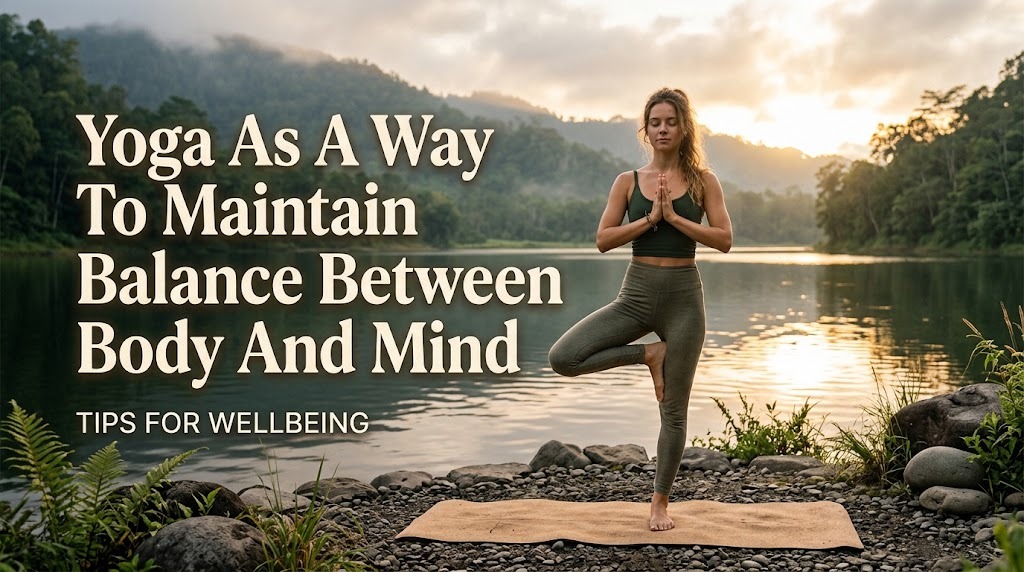
Maintaining balance between physical health and mental well-being is an important part of a healthy lifestyle. Daily responsibilities, work, study, and social activities can sometimes make people forget to take care of their bodies and minds. Yoga offers a practical way to combine physical movement, breathing, concentration, and relaxation in one activity. When practiced consistently, yoga can become a useful part of a balanced lifestyle.
Yoga does not require advanced skills or exceptional flexibility. Beginners can start with simple poses and gradually develop their abilities. The practice encourages people to become more aware of their bodies, breathing patterns, and mental state. Body awareness and mindful movement are two important elements that make yoga different from many ordinary exercise routines.
UNDERSTANDING THE CONNECTION BETWEEN BODY AND MIND
The body and mind influence each other in many ways. Physical tension can affect how a person feels, while stress or emotional pressure can sometimes make the body feel tense and tired. Yoga brings attention to both physical movement and mental focus during the same practice. This combination can encourage greater awareness of physical and mental conditions.
During a yoga session, practitioners are encouraged to focus on their movements and breathing rather than constantly thinking about outside activities. This can create a short period of mental focus in the middle of a busy day. Over time, this practice may help people become more aware of when they need movement, rest, or relaxation. Recognizing personal needs can support healthier daily habits.
HOW YOGA SUPPORTS PHYSICAL BALANCE
Many yoga poses require the body to maintain stability while moving or remaining in a particular position. These movements can involve the legs, core, shoulders, and other muscle groups. Regular practice may help develop balance, flexibility, mobility, and muscular endurance. The level of difficulty can be adjusted according to individual ability.
Physical balance is not only useful during yoga. It can also support everyday activities that require coordination and body control. Beginners should focus on controlled movements instead of trying to hold challenging poses immediately. Gradual improvement is generally safer and more sustainable than forcing the body to progress quickly.
USING BREATHING TO SUPPORT MENTAL CALMNESS
Breathing is an important part of many yoga practices. Practitioners are often encouraged to notice the rhythm and quality of their breathing while moving through different poses. Slow and comfortable breathing can help create a calmer atmosphere during practice. Breath awareness can also help practitioners stay focused on the present movement.
Beginners do not need to master advanced breathing techniques. Simply maintaining natural and steady breathing can be a useful starting point. If a breathing technique causes dizziness or discomfort, it should be stopped. Comfortable breathing should always take priority over following a complicated technique.
YOGA AND STRESS MANAGEMENT
Stress can affect both mental and physical well-being. A busy schedule may contribute to muscle tension, restlessness, or difficulty focusing. Yoga combines gentle movement with focused breathing, giving people an opportunity to pause and relax. Regular relaxation practices may help support general well-being.
Yoga is not a replacement for professional care when someone experiences serious or persistent mental health concerns. Instead, it can be one supportive activity alongside appropriate professional guidance and healthy habits. A quiet yoga session may provide a useful break from daily demands. Creating regular moments of relaxation can contribute to a more balanced routine.
IMPROVING BODY AWARENESS
Body awareness means paying attention to how the body feels and moves. Yoga encourages practitioners to notice posture, muscle tension, balance, breathing, and physical comfort. This awareness can help people recognize when they need to modify or stop a movement. Listening to the body is especially important for beginners.
Improved body awareness can also reduce the tendency to force movements simply to achieve a certain pose. Every person has different levels of flexibility and strength. Instead of comparing yourself with others, focus on understanding your own movement patterns. Personal progress should be measured by improved control and comfort rather than appearance.
SUPPORTING FOCUS AND MINDFULNESS
Yoga often requires attention to breathing, posture, and movement at the same time. This can encourage practitioners to remain focused on the present activity. Regularly directing attention toward one task may support concentration and mindfulness during practice. The experience can be especially useful for people who spend much of their day dealing with distractions.
Mindfulness does not mean completely emptying the mind of thoughts. Instead, it involves noticing thoughts and returning attention to the current activity. Simple yoga routines can provide an opportunity to practice this skill. Consistent attention and awareness can make the practice more meaningful.
CREATING A BALANCED DAILY ROUTINE
Yoga can be included in different parts of the day. Some people prefer a short session in the morning, while others use gentle yoga as a way to relax in the evening. The best schedule is one that fits naturally into your lifestyle. Consistency is more important than practicing for a long time occasionally.
A balanced routine should also include other healthy habits. Regular physical activity, nutritious food, adequate sleep, and social connection all contribute to overall well-being. Yoga can complement these habits rather than replace them. Balance comes from combining several healthy behaviors in a sustainable way.
SIMPLE YOGA PRACTICES FOR BEGINNERS
Beginners can start with basic poses that are relatively easy to control. Mountain Pose, Child's Pose, Cat-Cow, and gentle seated stretches can introduce fundamental movements. These exercises can help beginners become familiar with posture, breathing, and body awareness. There is no need to immediately attempt advanced poses.
Practice on a stable surface and use suitable support when necessary. Move slowly and avoid forcing the muscles or joints beyond a comfortable range. If a pose causes sharp pain, numbness, or unusual discomfort, stop the movement. Safe practice should always come before flexibility or performance.
AVOIDING COMMON MISTAKES
One common mistake is believing that yoga requires extreme flexibility. In reality, yoga can be adapted to different levels of physical ability. Another mistake is comparing personal progress with experienced practitioners. Everyone has a different body and starting point.
Forcing a pose, holding the breath, and rushing through movements can also reduce the quality of practice. Beginners should learn the basic technique before attempting more difficult variations. Using modifications is not a sign of weakness but a practical way to adapt the exercise. Patience and proper technique are essential for long-term progress.
CONCLUSION
Yoga as a way to maintain balance between body and mind combines physical movement, breathing, concentration, and relaxation. Through regular practice, people can work on flexibility, balance, mobility, body awareness, and mental focus. Yoga can also provide a valuable opportunity to slow down and pay attention to the body's needs. These qualities make it a practical activity for supporting a balanced lifestyle.
The key is to practice according to your own ability and goals. Start with simple poses, maintain comfortable breathing, and increase the difficulty gradually. Combine yoga with adequate sleep, nutritious food, and other forms of physical activity for a more complete approach to well-being. Consistency, mindfulness, and self-awareness can help make yoga a sustainable part of everyday life.
Tentang Penulis
Gusti Ayu Tita P
Penulis — Universitas STEKOM
Penulis aktif yang berfokus pada isu-isu akademik, teknologi pendidikan, dan pengembangan sumber daya manusia di lingkungan kampus.