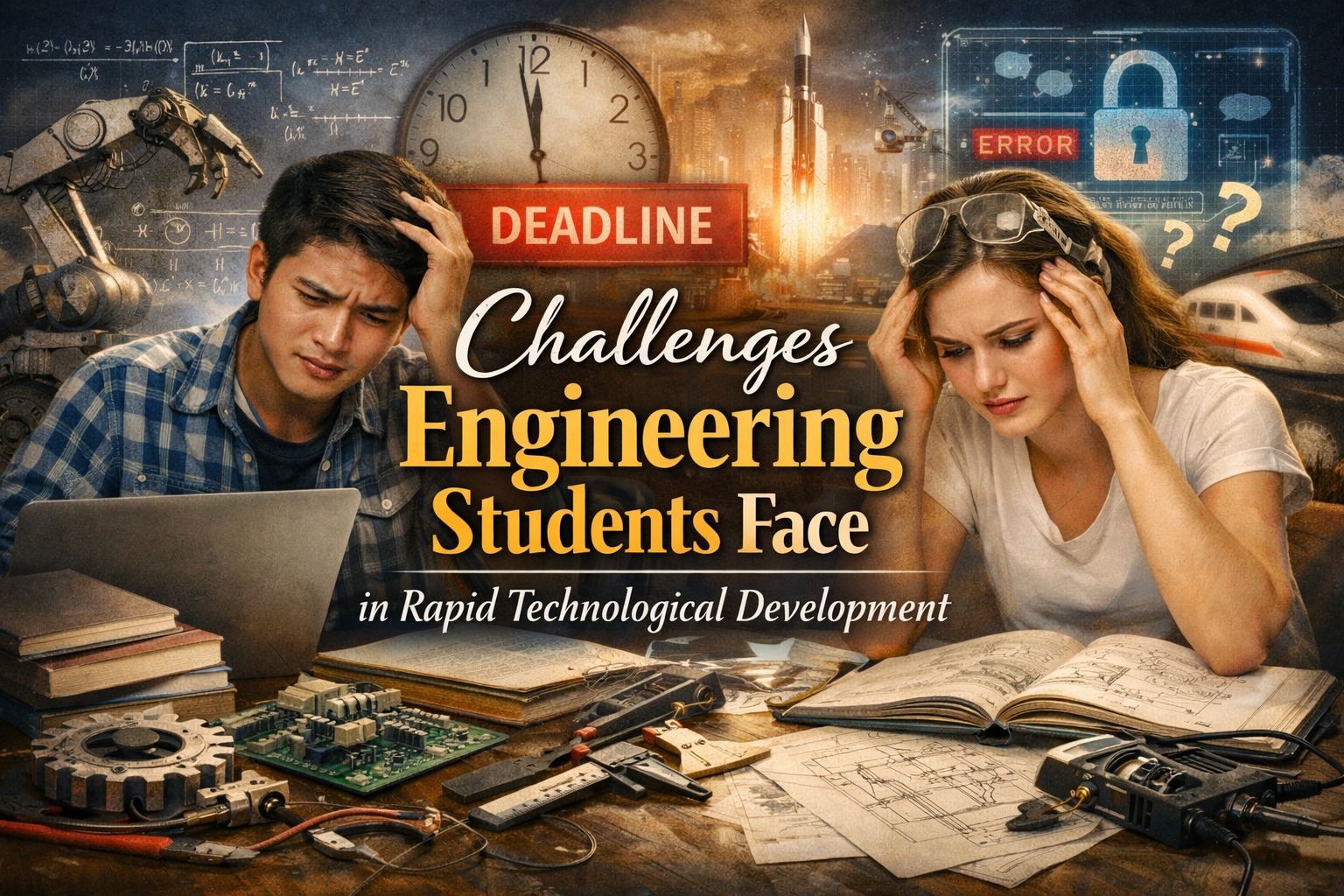
Challenges Engineering Students Face in Rapid Technological Development
Gusti Ayu Tita P
10 Oktober 2026
INTRODUCTION
The rapid growth of technology has changed the way industries operate and created new demands for future professionals. Engineering students are expected to understand not only traditional engineering concepts but also modern technologies such as Artificial Intelligence, automation, and digital systems. These changes provide many opportunities, but they also create challenges that students must overcome.
As technology continues to evolve, engineering students need to continuously improve their knowledge and skills. They must adapt to new learning methods, understand emerging technologies, and prepare themselves for a competitive job market. Developing the right abilities will help them become successful engineers who can contribute to future technological progress.
KEEPING UP WITH FAST TECHNOLOGICAL CHANGES
One of the biggest challenges faced by engineering students is the speed of technological development. New tools, software, and engineering methods are introduced regularly, making it difficult for students to stay updated. Knowledge that is relevant today may require improvement as technology continues to advance.
To overcome this challenge, students need to develop a habit of continuous learning. They can participate in training programs, online courses, seminars, and technology communities to expand their knowledge. Staying informed about industry trends helps engineering students remain competitive in the future workplace.
BALANCING TECHNICAL KNOWLEDGE AND DIGITAL SKILLS
Modern industries require engineers who understand both fundamental engineering principles and digital technologies. Many engineering students face challenges when they need to combine traditional technical knowledge with skills in programming, data analysis, and digital tools. This combination has become increasingly important in the era of industrial transformation.
Developing digital skills requires additional effort because students must learn new concepts beyond their main engineering fields. However, mastering these skills provides greater career opportunities and allows future engineers to contribute effectively to technology-driven industries.
FACING HIGH COMPETITION IN THE JOB MARKET
The increasing number of engineering graduates creates stronger competition in the professional world. Companies are no longer looking only for candidates with high academic achievements but also those who have practical experience, creativity, and strong communication abilities. This situation encourages students to develop additional skills during their education.
Engineering students need to build their professional profiles through internships, projects, certifications, and research activities. These experiences help demonstrate their abilities and increase their chances of securing better career opportunities after graduation.
DEVELOPING PROBLEM-SOLVING AND CRITICAL THINKING SKILLS
Engineering involves solving complex problems that require logical analysis and creative solutions. Many students struggle to apply theoretical knowledge when facing real-world challenges. Therefore, developing problem solving and critical thinking skills is essential for future engineers.
These skills can be improved through practical projects, laboratory activities, teamwork, and engineering competitions. By experiencing different challenges, students become more confident in analyzing situations and creating effective solutions.
ADAPTING TO NEW LEARNING METHODS
Technology has also changed the way engineering education is delivered. Students now need to adapt to digital learning platforms, simulation software, and online resources. While these technologies provide many advantages, adjusting to new learning systems can become a challenge for some students.
Successful engineering students must learn how to use technology as a learning tool rather than simply as a source of information. Developing independent learning habits allows them to understand complex topics more effectively and prepare for future professional demands.
IMPROVING SOFT SKILLS FOR PROFESSIONAL SUCCESS
Technical knowledge alone is not enough to succeed in modern engineering careers. Companies also value soft skills such as communication, teamwork, leadership, and adaptability. Engineering students sometimes focus heavily on technical abilities while paying less attention to these important professional skills.
Improving soft skills helps engineers collaborate with different teams and communicate technical ideas clearly. These abilities are especially important because many engineering projects require cooperation between professionals from various backgrounds.
MANAGING PRESSURE AND ACADEMIC DEMANDS
Engineering education often involves challenging subjects, complex projects, and demanding assignments. Managing academic pressure becomes another challenge that students must handle effectively. Without proper time management, students may experience difficulties balancing coursework, projects, and personal development.
Developing time management skills and maintaining a healthy study routine can help students handle these demands. Good organization allows engineering students to complete their responsibilities while continuing to improve their technical and professional abilities.
CONCLUSION
Engineering students face many challenges in the era of rapid technological development, including adapting to new technologies, improving digital skills, competing in the job market, and developing professional abilities. These challenges require commitment, flexibility, and a willingness to continue learning.
By strengthening technical skills, problem-solving abilities, digital knowledge, and soft skills, engineering students can successfully prepare themselves for future careers. Those who adapt to technological changes will have greater opportunities to become innovative engineers and contribute to global technological advancement.
About the Author
Gusti Ayu Tita P
Author — STEKOM University
An active author focused on academic issues, educational technology, and human resource development in the campus environment.