Why Rejecting Vote Buying Creates Fairer Elections?
Gusti Ayu Tita P
10 Oktober 2026
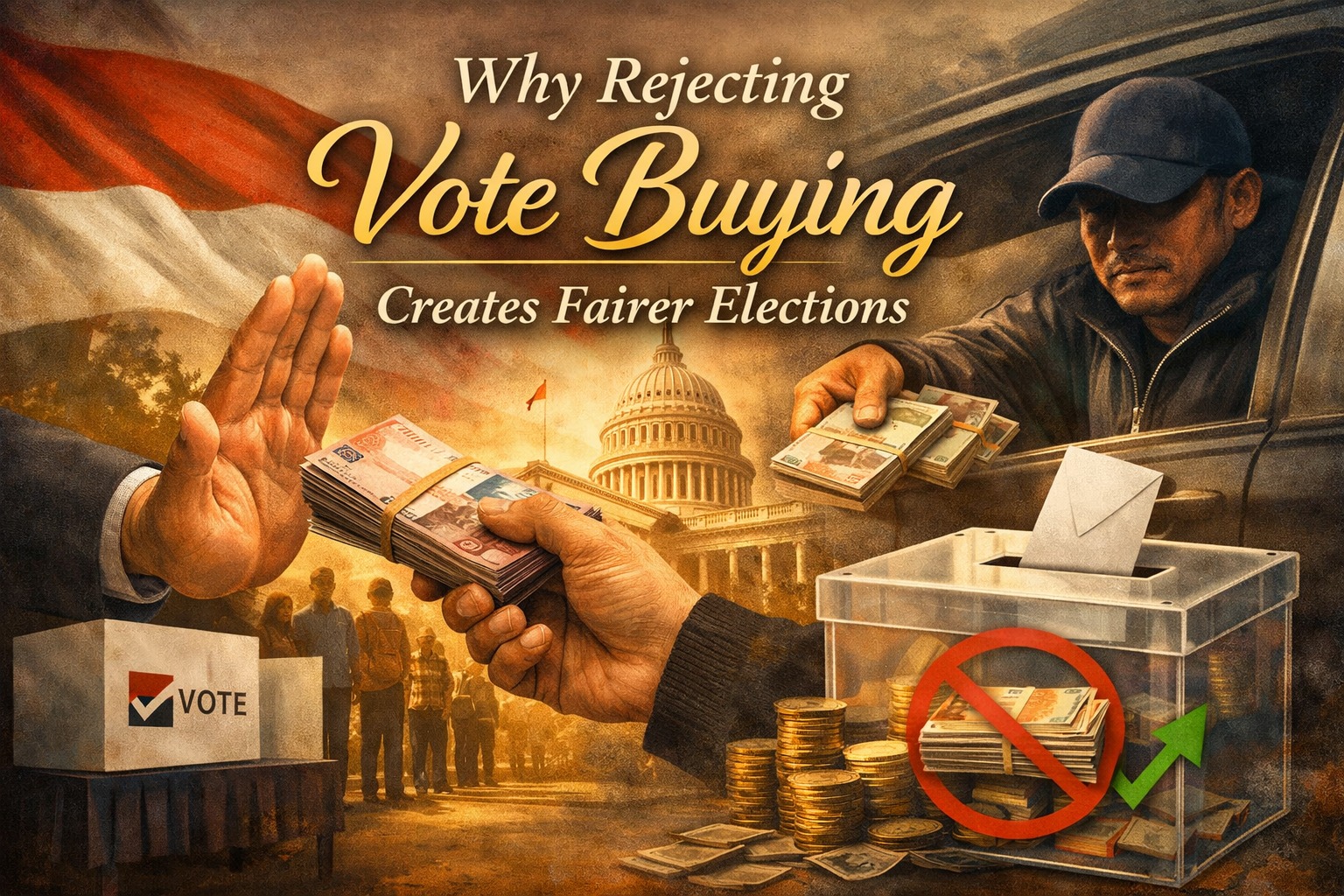
Vote buying is one of the biggest threats to democratic elections because it undermines the principle that every citizen should vote freely based on personal judgment. When money, gifts, or other incentives influence voting decisions, elections no longer reflect the true will of the people. Instead of rewarding candidates with strong leadership qualities and practical policies, vote buying gives unfair advantages to those who misuse financial resources. Rejecting this practice is essential for protecting the integrity of elections and strengthening democracy.
Every citizen has the responsibility to support honest and transparent elections. By refusing vote buying, voters help ensure that elected leaders earn public trust through their vision, competence, and integrity rather than financial influence. Fair elections create stronger governments, improve public accountability, and encourage sustainable national development.
UNDERSTANDING WHAT VOTE BUYING IS
Vote buying refers to the practice of offering money, goods, services, or other benefits in exchange for political support during an election. This unethical behavior attempts to influence voters by providing personal rewards instead of encouraging informed decision-making. In many countries, vote buying is prohibited because it violates democratic principles and electoral laws. It weakens public confidence in the election process.
Vote buying can occur in various forms, including direct cash payments, gift distribution, promises of personal benefits, or material assistance linked to voting choices. Recognizing these practices helps citizens protect themselves from manipulation. Public awareness is one of the most effective ways to reduce electoral fraud and promote fair competition.
HOW VOTE BUYING DAMAGES DEMOCRACY?
Democracy depends on free and fair elections, where every citizen can vote without pressure or improper influence. Vote buying replaces independent decision-making with financial incentives, making election outcomes less representative of public opinion. As a result, qualified candidates may lose to individuals who rely on unethical campaign methods. This weakens the quality of democratic leadership.
When vote buying becomes common, public trust in government institutions gradually declines. Citizens may begin to believe that elections are unfair or that political success depends more on money than competence. This perception reduces civic participation and harms the long-term stability of democratic systems.
WHY REJECTING VOTE BUYING BENEFITS SOCIETY?
Rejecting vote buying helps ensure that leaders are chosen based on their qualifications, experience, and commitment to serving the public. Candidates must compete by presenting realistic programs, strong policy ideas, and responsible leadership instead of offering material rewards. This creates healthier political competition and encourages better governance. Honest elections also strengthen respect for the rule of law.
Communities benefit when public officials are elected through genuine public support. Leaders who earn office fairly are more likely to focus on improving education, healthcare, infrastructure, economic opportunities, and public services. Responsible voting contributes to long-term national progress and social stability.
THE ROLE OF CITIZENS IN PREVENTING VOTE BUYING
Every voter has an important role in protecting election integrity. Citizens should refuse any form of financial or material incentive intended to influence their vote. Reporting suspicious activities to election authorities also helps maintain transparency and fairness throughout the electoral process. Active public participation discourages unethical campaign practices.
In addition, communities can organize educational campaigns to increase awareness about the negative consequences of vote buying. Schools, universities, civil society organizations, and the media all contribute to promoting democratic values. Better public understanding creates stronger resistance to electoral manipulation.
BUILDING A CULTURE OF HONEST ELECTIONS
Creating fair elections requires cooperation between governments, election commissions, political parties, media organizations, and citizens. Strong law enforcement against electoral violations helps prevent vote buying and protects democratic institutions. Transparent campaign financing and independent election monitoring also improve public confidence. These measures create equal opportunities for all candidates.
At the same time, voters should continue developing political awareness and critical thinking skills. Evaluating candidates based on their vision, integrity, and policy proposals leads to better electoral decisions. A culture of honesty strengthens democracy and supports sustainable national development.
CONCLUSION
Rejecting vote buying is essential for preserving democracy and ensuring that elections truly represent the will of the people. Honest voting encourages candidates to compete through ideas, competence, and integrity rather than financial influence. Fair elections produce more accountable leaders and stronger public institutions.
Every citizen has the power to protect democratic values by refusing unethical practices and making informed voting decisions. Together, responsible voters can build transparent elections, strengthen public trust, and create a brighter future for the nation.
About the Author
Gusti Ayu Tita P
Author — STEKOM University
An active author focused on academic issues, educational technology, and human resource development in the campus environment.