Challenges In Managing Structural Positions In The Modern Era
Gusti Ayu Tita P
12 Agustus 2026
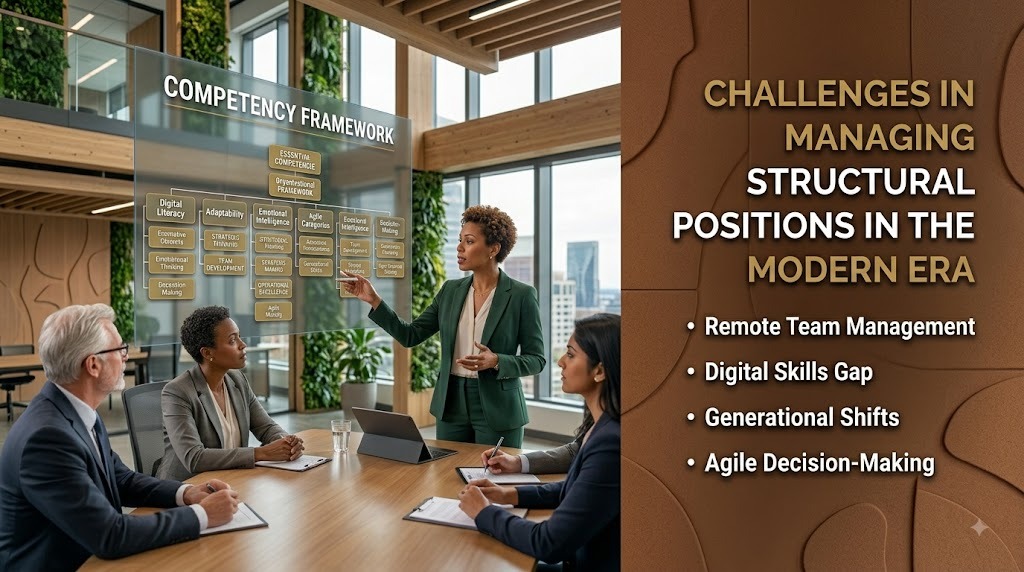
Structural positions are important for maintaining organizational direction, coordination, and accountability. However, managing these positions has become more challenging as organizations face rapid technological development, changing workplace expectations, limited resources, and increasingly complex problems. Leaders are expected to achieve organizational goals while also supporting employees and adapting to new circumstances. Professional leadership and adaptability are therefore essential for managing structural positions effectively.
Modern structural leaders must deal with challenges that are different from those faced by traditional managers. Digital transformation has changed how employees communicate and complete their work, while organizations increasingly rely on data and technology. At the same time, employees expect transparent communication, fair treatment, and opportunities for development. Understanding these challenges can help organizations prepare more effective leadership strategies.
UNDERSTANDING STRUCTURAL POSITIONS IN THE MODERN ERA
A structural position is a formal organizational role that carries specific authority, responsibilities, and accountability. People in these positions may supervise employees, coordinate departments, manage programs, or make important decisions. Their responsibilities depend on the organization's structure, objectives, and operational needs. Clear roles and authority are essential because they help prevent confusion and overlapping responsibilities.
In the modern era, structural positions require more than administrative knowledge. Leaders need to understand technology, employee development, data, organizational change, and stakeholder expectations. They must also be able to respond to problems that can develop quickly. As a result, modern structural leadership requires a combination of managerial competence, communication, integrity, and adaptability.
RAPID TECHNOLOGICAL CHANGE
One of the biggest challenges for structural leaders is the rapid development of technology. Digital systems are increasingly used for communication, administration, data management, monitoring, and service delivery. Leaders need to understand how these technologies can improve organizational processes without adopting tools simply because they are popular. Digital competence is therefore becoming an important leadership requirement.
Technology can also create new risks. Cybersecurity threats, data leaks, privacy concerns, and incorrect use of digital systems can affect organizational performance. Leaders must ensure that employees understand appropriate security procedures and responsible technology use. Successful digital transformation requires technology, employee skills, and effective leadership to work together.
RESISTANCE TO ORGANIZATIONAL CHANGE
Employees may resist changes because they are comfortable with existing processes or uncertain about new expectations. Resistance can become stronger when leaders do not clearly explain why a change is necessary. Structural leaders need to communicate the purpose and expected benefits of changes. Effective change management can help employees understand and accept new working methods.
Leaders should also provide sufficient training and support during transitions. Employees may need time to develop new skills or adjust to unfamiliar systems. Listening to employee concerns can help leaders identify practical problems that may not be visible from management level. By combining communication, training, and employee involvement, organizations can reduce unnecessary resistance.
INCREASING EMPLOYEE EXPECTATIONS
Modern employees often expect clear communication, fair treatment, professional development, and meaningful opportunities to contribute. Structural leaders must balance these expectations with organizational targets and available resources. Ignoring employee needs can reduce motivation and increase workplace dissatisfaction. Employee engagement is therefore an important concern for modern leaders.
Leaders should create opportunities for employees to provide feedback and participate in appropriate decision making. Recognition and constructive feedback can also strengthen motivation. At the same time, managers must maintain clear standards and accountability. A balanced approach can create productive and supportive working relationships.
COMPLEX DECISION MAKING
Modern organizations often face decisions involving multiple departments, stakeholders, regulations, and sources of information. Leaders may need to make decisions quickly while dealing with incomplete or changing information. This makes decision making more complex than simply following established procedures. Critical thinking and sound judgment are essential in these situations.
Structural leaders should evaluate available evidence and consider the potential consequences of different options. They also need to recognize when additional information or consultation is necessary. After implementing a decision, leaders should evaluate the results and make adjustments when appropriate. This process supports responsible and evidence based decision making.
LIMITED RESOURCES AND BUDGET PRESSURES
Organizations often operate with limited financial, human, technological, or physical resources. Structural leaders must determine how these resources should be prioritized. Poor allocation can reduce productivity and prevent important programs from achieving their objectives. Efficient resource management is therefore one of the main challenges in structural leadership.
Leaders should regularly evaluate whether resources are producing meaningful results. Employee workloads should also be considered because excessive workloads can affect performance and well being. Managers need to balance organizational priorities with realistic resource capacity. Careful planning can improve efficiency, productivity, and sustainability.
MAINTAINING INTEGRITY AND ETHICAL STANDARDS
Structural leaders have significant authority, which makes ethical behavior especially important. Leaders must avoid conflicts of interest, favoritism, misuse of organizational resources, and abuse of authority. Decisions should be made fairly and according to applicable rules. Integrity and ethical leadership help create trust within the organization.
Maintaining integrity can be challenging when leaders face pressure to achieve targets or satisfy different stakeholders. Professional leaders should remain consistent even when making difficult decisions. They should also acknowledge mistakes and take corrective action when necessary. A strong ethical culture supports transparency, accountability, and organizational credibility.
DEVELOPING LEADERSHIP COMPETENCE
The responsibilities of structural leaders continue to evolve, so professional development cannot stop after someone receives a leadership position. Managers need opportunities to improve their knowledge and skills through training, mentoring, coaching, and practical experience. Important areas include communication, technology, decision making, data analysis, and people management. Continuous learning helps leaders remain prepared for new challenges.
Organizations should also evaluate leadership competencies regularly. Feedback from employees, colleagues, and supervisors can reveal strengths and areas for improvement. Leaders who are willing to learn from experience are more likely to adapt successfully. Continuous development strengthens leadership quality and organizational resilience.
BALANCING PERFORMANCE AND EMPLOYEE WELL BEING
Structural leaders are responsible for achieving organizational targets while maintaining a healthy working environment. Excessive pressure to achieve results can affect employee motivation and productivity if it is not managed properly. Leaders need to establish realistic expectations and monitor workloads. Balanced performance management can support both organizational results and employee sustainability.
Managers should encourage employees to communicate workload concerns and provide support when problems arise. Recognition, development opportunities, and fair treatment can also contribute to a healthier workplace. At the same time, employees must understand their responsibilities and performance standards. A balanced approach can improve motivation, productivity, and long term organizational performance.
MANAGING DATA AND INFORMATION
Modern organizations depend heavily on data for planning, monitoring, and decision making. Structural leaders need to ensure that information is accurate, relevant, secure, and used appropriately. Poor data quality can lead to incorrect decisions and inefficient resource allocation. Data management is therefore an increasingly important leadership responsibility.
Leaders should also understand basic principles of privacy and information security. Employees need clear guidance about who can access information and how organizational data should be stored or shared. Technology can provide useful tools, but human judgment remains essential. Responsible data management supports better decisions and organizational trust.
BUILDING AN ADAPTIVE ORGANIZATIONAL CULTURE
Organizations need a culture that allows employees to adapt to changing conditions. Structural leaders influence this culture through their behavior, communication, and management practices. Leaders should encourage learning, collaboration, innovation, and constructive feedback. An adaptive culture helps organizations respond more effectively to unexpected changes.
However, adaptability does not mean changing everything continuously. Leaders should preserve important organizational values while adjusting processes that no longer work effectively. Employees need stability in core principles while remaining open to improvements. This balance can create organizational resilience and sustainable performance.
STRATEGIES FOR OVERCOMING MODERN LEADERSHIP CHALLENGES
Structural leaders can address modern challenges by strengthening their competencies and improving organizational systems. They should establish clear goals, communicate effectively, use data responsibly, and encourage employee development. Regular evaluation can help identify problems before they become more serious. Continuous improvement should be integrated into everyday management.
Organizations should also provide leaders with appropriate training, digital tools, and access to relevant information. Collaboration between departments can improve problem solving and reduce unnecessary duplication. Leaders should remain open to feedback and adjust strategies when evidence shows that changes are needed. These approaches can help organizations build more resilient and effective structural leadership.
CONCLUSION
Challenges in managing structural positions in the modern era include rapid technological change, employee expectations, limited resources, complex decision making, workplace conflict, communication problems, and ethical pressures. These challenges require leaders to be more adaptable and competent than ever. Structural leaders must combine managerial knowledge with communication, digital competence, critical thinking, and integrity.
The solution is not simply to introduce new technology or create additional procedures. Organizations need leaders who can manage people, processes, information, and change in a balanced way. Through continuous learning, effective communication, responsible decision making, ethical leadership, and strategic resource management, structural positions can remain effective despite changing circumstances. Strong leadership ultimately helps organizations maintain productivity, trust, and sustainable performance.
About the Author
Gusti Ayu Tita P
Author — STEKOM University
An active author focused on academic issues, educational technology, and human resource development in the campus environment.