
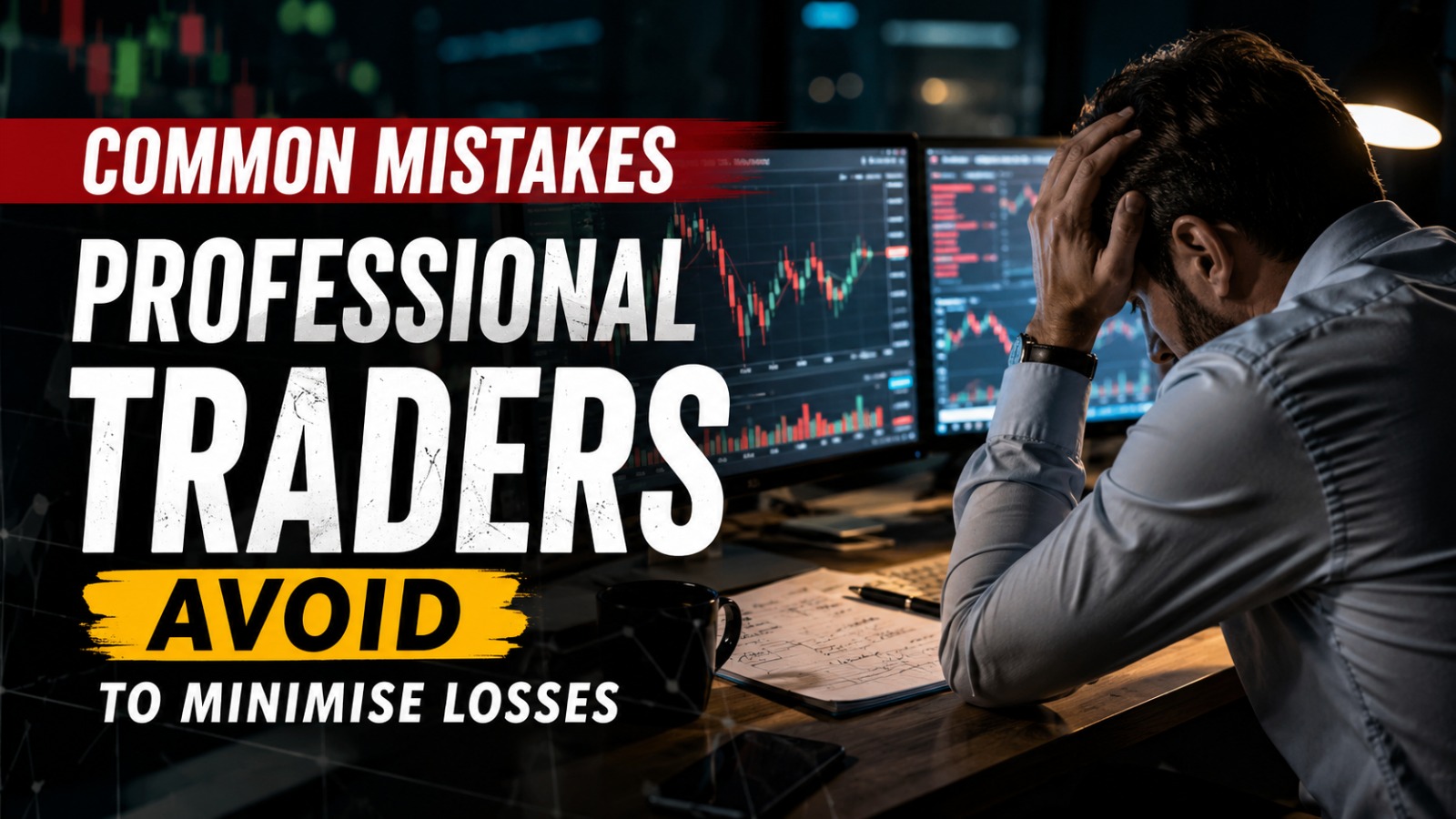
Trading in financial markets offers significant opportunities, but it also comes with substantial risks. Professional traders understand that long-term success is not determined by how often they win, but by how effectively they manage losses. Instead of chasing quick profits, they focus on building a disciplined strategy that protects their capital during both favourable and unfavourable market conditions.
Many beginner traders make avoidable mistakes that gradually reduce their trading capital. By learning from experienced professionals, traders can improve their decision-making, reduce unnecessary risks, and create a more sustainable trading journey. Understanding these common mistakes is one of the most effective ways to become a more confident and consistent trader.
IGNORING RISK MANAGEMENT
One of the biggest mistakes inexperienced traders make is trading without a proper risk management plan. Professional traders never enter a position without determining how much capital they are willing to risk. They understand that preserving capital is more important than making a quick profit. Every trade should have a clearly defined stop-loss and acceptable risk level before execution.
Rather than risking a large percentage of their account on a single trade, professionals often limit their exposure to a small percentage of their trading capital. This disciplined approach allows them to survive losing streaks without significant financial damage. Capital preservation remains their highest priority because there will always be new trading opportunities in the future.
TRADING WITHOUT A CLEAR STRATEGY
Many traders lose money because they buy and sell based on emotions, rumours, or social media opinions. Professional traders rely on a structured trading strategy that has been tested over time. Their decisions are based on predefined rules rather than sudden market excitement.
A consistent strategy helps remove uncertainty and emotional decision-making. Professionals continuously evaluate and improve their trading systems based on market performance and historical data. They understand that no strategy wins every trade, but consistency leads to better long-term results.
LETTING EMOTIONS CONTROL DECISIONS
Fear and greed are two of the most dangerous emotions in trading. Fear may cause traders to close profitable positions too early, while greed often encourages excessive risk-taking. Emotional discipline is one of the defining characteristics of successful professional traders.
Experienced traders follow their trading plans regardless of temporary market fluctuations. They avoid making impulsive decisions after a winning or losing trade. Maintaining emotional stability allows them to analyse market conditions objectively and make rational decisions based on facts rather than feelings.
OVERTRADING IN SEARCH OF QUICK PROFITS
Overtrading occurs when traders execute too many trades without high-quality opportunities. Some traders believe that more trades automatically lead to higher profits, but this often increases transaction costs and unnecessary exposure to market risk. Professional traders understand that patience is a valuable trading skill.
Instead of constantly entering the market, professionals wait for setups that match their predefined criteria. They recognise that sometimes the best trading decision is to stay out of the market. Focusing on quality over quantity significantly improves trading consistency and reduces avoidable losses.
NEGLECTING MARKET ANALYSIS
Successful trading requires continuous market analysis before opening any position. Professional traders combine technical analysis, fundamental analysis, and current market conditions to make informed decisions. They never rely solely on predictions or speculation.
Market conditions can change rapidly because of economic announcements, geopolitical events, or shifts in investor sentiment. Staying informed helps traders adjust their strategies accordingly. Careful preparation increases confidence and reduces the likelihood of making costly mistakes.
FAILING TO KEEP A TRADING JOURNAL
Many beginner traders underestimate the importance of maintaining a trading journal. Professional traders carefully record every trade, including entry points, exit points, reasons for the trade, emotional state, and overall results. This information becomes an invaluable learning resource.
Reviewing previous trades helps identify recurring mistakes and successful trading habits. Over time, traders can refine their strategies based on actual performance rather than assumptions. Continuous evaluation supports long-term growth and consistent improvement.
IGNORING THE IMPORTANCE OF CONTINUOUS LEARNING
Financial markets constantly evolve as new technologies, regulations, and economic conditions emerge. Professional traders never assume they know everything. They invest time in improving their knowledge through books, market research, webinars, and practical experience.
Continuous education allows traders to adapt to changing market environments. Developing new analytical skills and understanding different market conditions strengthens decision-making abilities. Lifelong learning remains one of the most valuable investments any trader can make.
CONCLUSION
Avoiding common trading mistakes is just as important as identifying profitable opportunities. Professional traders succeed because they prioritise risk management, follow a proven trading strategy, maintain emotional discipline, perform thorough market analysis, and commit to continuous improvement. They understand that losses are part of trading, but unnecessary losses can often be prevented through preparation and discipline.
Building long-term success in trading requires patience, consistency, and a willingness to learn from every experience. By avoiding these common mistakes, traders can minimise losses, protect their capital, and improve their chances of achieving sustainable profitability in today's competitive financial markets.
About the Author
Gusti Ayu Tita P
Author — STEKOM University
An active author focused on academic issues, educational technology, and human resource development in the campus environment.