
Costs You Should Prepare for Resolving a Land Dispute
Gusti Ayu Tita P
2 September 2026
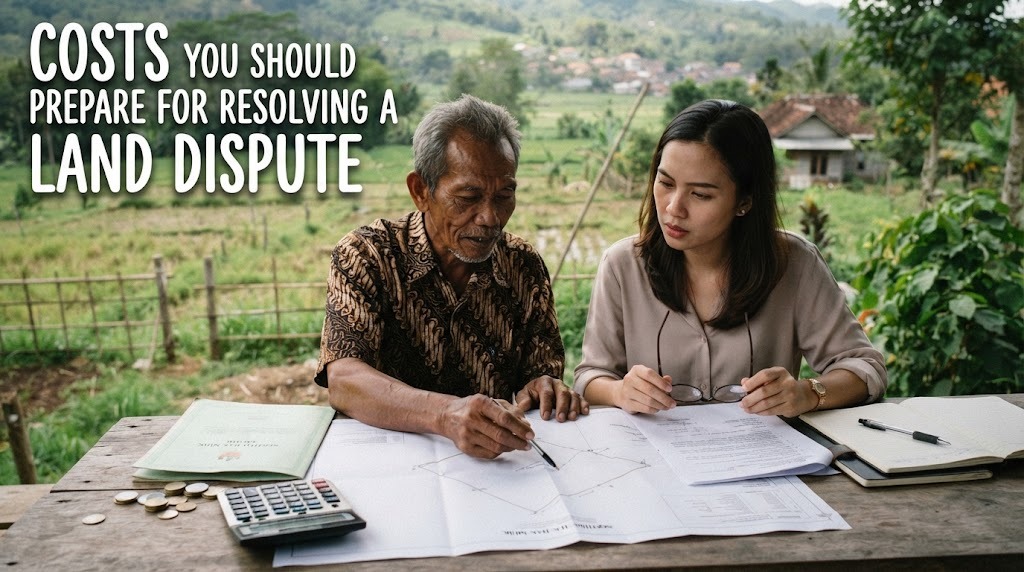
Resolving a land dispute can involve more than legal arguments and ownership documents. The parties may also need to prepare for administrative fees, mediation expenses, legal assistance, surveys, and court costs depending on the chosen resolution process. The total amount cannot be determined with one fixed figure because every land dispute has different circumstances. Understanding the possible expenses in advance can help property owners plan their finances more carefully.
LAND ADMINISTRATION AND VERIFICATION COSTS
The first costs may arise when checking the legal and administrative status of the disputed property. Property owners may need to obtain land records, verify ownership information, or request certain services from the relevant land authority. Official fees can vary depending on the type of service and applicable regulations. Therefore, the current official tariff should always be checked before submitting an application.
Document verification is particularly important when the dispute involves conflicting ownership claims or unclear property records. Although these expenses may seem relatively small, they can provide useful information before taking further legal action. Early verification can also help prevent unnecessary costs later.
MEDIATION AND SETTLEMENT COSTS
Mediation can be an alternative to litigation when the parties are willing to negotiate a solution. In some situations, mediation may involve little or no significant expense, while professional mediation services may require a fee. Additional costs can also arise from legal consultations or preparing a formal settlement agreement. The exact amount depends on the institution, mediator, and complexity of the dispute.
A successful settlement can potentially reduce the time and expenses associated with a lengthy court case. Both parties should clearly document any agreement reached during mediation. The agreement should also be prepared in a legally appropriate manner to reduce the possibility of another dispute.
LEGAL FEES
Hiring a lawyer is not always necessary for every land dispute, but professional legal assistance can be valuable when the case involves complex ownership issues or litigation. Legal fees can vary considerably depending on the lawyer, location, complexity of the case, and scope of services. Some lawyers may charge based on specific stages of the case, while others may use a different fee arrangement.
Before hiring a lawyer, clients should ask for a clear explanation of the services included in the fee. It is important to understand whether the quoted amount covers consultation, document preparation, mediation, court representation, or other legal procedures. A clear written fee agreement can help prevent misunderstandings between the lawyer and client.
COURT FEES
When a land dispute proceeds to court, the parties may need to prepare for court-related expenses. These can include filing fees, summons, notifications, and other administrative costs associated with the proceedings. The amount can differ depending on the court, location, and procedural requirements. Parties should obtain information about the applicable court fees directly from the relevant court.
Court expenses may also increase if additional hearings or procedural steps are required. Therefore, it is better to prepare a budget for the entire process rather than focusing only on the initial filing fee. Court costs are also separate from lawyer fees and other expenses that may arise during the case.
LAND SURVEY AND MEASUREMENT COSTS
Some disputes require clarification of land boundaries, size, or physical location. In such cases, a survey or official measurement may be necessary. The cost depends on the type of service, the property, and the applicable official regulations. A survey can be particularly useful when the physical boundaries do not appear to match existing land records.
Property owners should avoid changing or moving boundary markers on their own. An appropriate measurement or verification process can provide more reliable information. Keeping survey records can also help support future property administration.
EVIDENCE AND WITNESS EXPENSES
Additional expenses may arise when parties need to prepare supporting evidence or arrange for witnesses. These may include document copying, certification, transportation, or other administrative needs. The exact requirements depend on the dispute and the resolution process. Evidence should always be relevant, authentic, and obtained through lawful means.
Property owners should collect documents as early as possible. Organizing evidence chronologically can reduce unnecessary administrative work and make legal consultations more efficient. Important original documents should also be stored securely while copies are prepared for use when appropriate.
ADDITIONAL LEGAL PROCEDURE COSTS
A dispute may continue beyond the initial resolution process if one of the parties pursues an available legal remedy. Additional legal stages can involve further administrative expenses and professional fees. The potential costs depend on the type of case and the procedural steps available under applicable law. Before continuing to another stage, parties should understand the potential financial and legal consequences.
It is therefore important to consider the overall cost rather than focusing only on the immediate expense. A dispute that lasts for a long time may require additional spending on legal assistance, travel, documentation, and evidence. Professional legal advice can help parties evaluate their options before committing to further proceedings.
HOW TO REDUCE LAND DISPUTE COSTS
One of the most effective ways to control costs is to address the dispute as early as possible. If communication remains possible, negotiation or mediation may provide a less expensive alternative to prolonged litigation. Complete ownership documents and transaction records can also make the process more efficient. Property owners should avoid paying individuals who promise instant solutions without a clear legal basis.
People with limited financial resources may also investigate whether legal aid services are available and whether they meet the relevant eligibility requirements. The cheapest option is not always the safest, so legality and the quality of assistance should also be considered. Careful planning can help prevent unnecessary expenses throughout the dispute.
CONCLUSION
The costs of resolving a land dispute can include land administration, verification, mediation, legal fees, court expenses, surveys, evidence preparation, and other procedural costs. There is no single fixed amount because expenses depend on the complexity of the dispute and the resolution method chosen. Preparing documents early and considering negotiation or mediation may help reduce unnecessary costs. Before spending significant amounts of money, property owners should understand their legal position, available evidence, and the potential expenses of each resolution option.
About the Author
Gusti Ayu Tita P
Author — STEKOM University
An active author focused on academic issues, educational technology, and human resource development in the campus environment.