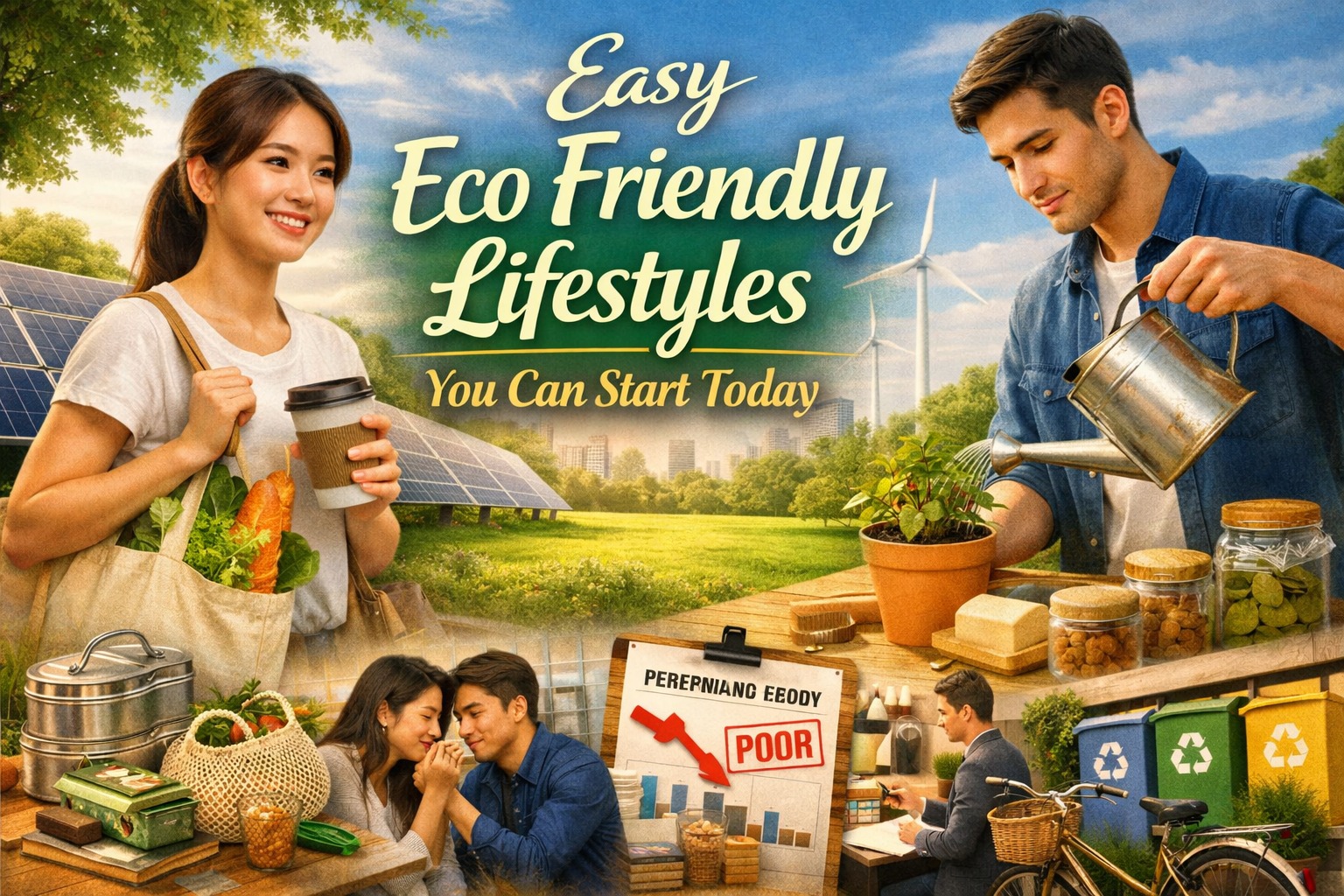
Living an eco friendly lifestyle does not require major changes or expensive investments. Simple daily habits can make a positive impact on the environment while helping people reduce waste, conserve natural resources, and create a healthier future.
As environmental challenges continue to grow, adopting sustainable practices has become more important than ever. By making small changes in everyday life, everyone can contribute to protecting the planet for future generations.
REDUCE SINGLE USE PLASTIC
One of the easiest ways to live an eco friendly lifestyle is by reducing the use of single-use plastics. Carrying a reusable shopping bag, water bottle, and food container helps minimize plastic waste that often ends up in landfills or oceans.
Replacing disposable products with reusable alternatives also saves money over time. Small actions performed consistently can create a significant positive impact on the environment.
Reducing plastic consumption supports cleaner communities and healthier ecosystems.
SAVE ENERGY AT HOME
Saving energy is another simple way to protect the environment. Turning off lights when leaving a room, unplugging unused electronics, and using energy-efficient appliances can reduce electricity consumption.
These habits not only lower energy use but also help reduce household utility costs. Conserving energy supports efforts to decrease carbon emissions and protect natural resources.
Every small action contributes to a more sustainable future.
CONSERVE WATER
Water conservation is essential because clean water is a valuable natural resource. Simple practices such as turning off the tap while brushing your teeth, fixing leaks, and using water wisely can make a difference.
Using water efficiently also helps reduce energy consumption associated with water treatment and distribution. Responsible water use benefits both the environment and local communities.
Developing water-saving habits is an easy step toward sustainable living.
CHOOSE SUSTAINABLE TRANSPORTATION
Using sustainable transportation helps reduce air pollution and greenhouse gas emissions. Walking, cycling, using public transportation, or carpooling are practical alternatives to driving alone.
These choices not only protect the environment but also improve personal health through increased physical activity. Reducing vehicle emissions contributes to cleaner air and healthier cities.
Whenever possible, choosing environmentally friendly transportation supports long-term sustainability.
REDUCE FOOD WASTE
Food waste has a significant environmental impact. Planning meals, storing food properly, and using leftovers wisely help reduce unnecessary waste while saving money.
Composting food scraps is another environmentally friendly practice that reduces landfill waste and creates natural fertilizer. Responsible food consumption helps conserve valuable resources used in food production.
Small changes in food habits can produce meaningful environmental benefits.
SUPPORT ECO FRIENDLY PRODUCTS
Choosing eco friendly products encourages businesses to adopt sustainable manufacturing practices. Products made from recycled materials, biodegradable packaging, or renewable resources help reduce environmental impact.
Consumers can also support local businesses that prioritize environmentally responsible production. Every purchasing decision sends a message about the importance of sustainability.
Buying responsibly contributes to a greener economy and a healthier planet.
SPREAD ENVIRONMENTAL AWARENESS
Living sustainably also means encouraging others to adopt eco friendly habits. Sharing useful information with family, friends, and communities can inspire more people to take positive environmental actions.
Community participation strengthens environmental protection efforts and creates long-term positive change. Working together makes sustainable living more achievable for everyone.
Education and awareness remain powerful tools for protecting the environment.
CONCLUSION
An eco friendly lifestyle begins with simple daily choices such as reducing plastic waste, saving energy, conserving water, minimizing food waste, and supporting sustainable products. Although these actions may seem small, they create meaningful environmental benefits when practiced consistently. By starting today, everyone can help build a cleaner, healthier, and more sustainable future.
About the Author
Gusti Ayu Tita P
Author — STEKOM University
An active author focused on academic issues, educational technology, and human resource development in the campus environment.