
Effective Ways District Heads Can Improve Local Governance
Gusti Ayu Tita P
12 Agustus 2026
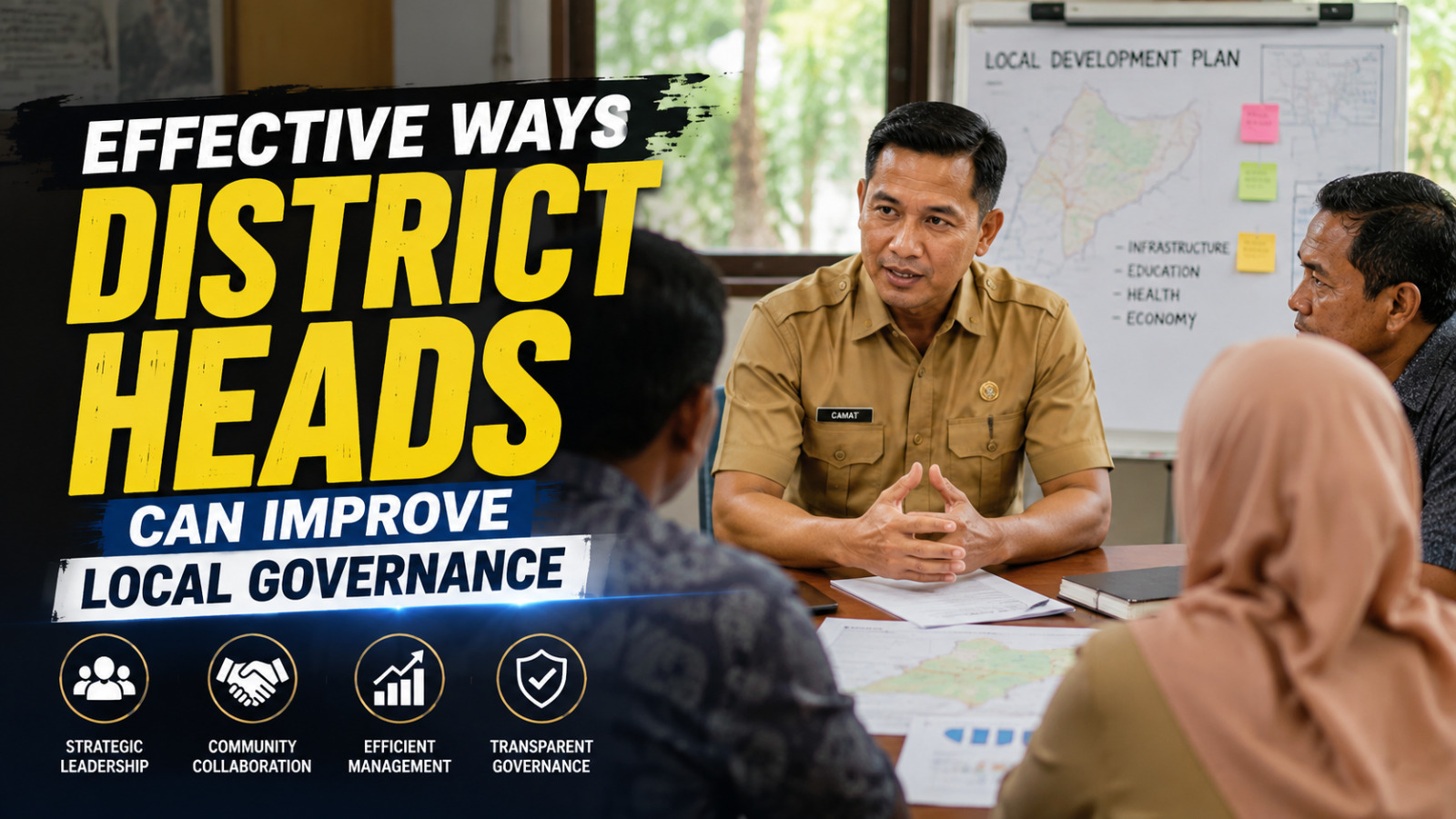
A District Head plays an important role in connecting local government with communities at the district level. The position involves coordinating government activities, supervising public services, and ensuring that government programs reach residents effectively. A District Head also works with village governments, community organizations, and other local institutions. Good coordination helps prevent overlapping programs and makes local administration more organized. Therefore, strong leadership is essential for creating effective local governance.
A District Head must also understand the needs and conditions of the local community. By communicating directly with residents and local officials, the District Head can identify problems that require immediate attention. This information can then support better planning and decision making. Responsive leadership allows government programs to become more relevant to community needs.
IMPROVING THE QUALITY OF PUBLIC SERVICES
One effective way to improve local governance is by strengthening public services. District Heads can encourage government offices to provide services that are fast, transparent, accessible, and responsive. They can monitor whether administrative services are operating according to applicable procedures. Regular evaluations can also help identify delays, complaints, and other problems. This approach can increase public satisfaction and trust in local government.
Technology can further support better services at the district level. Digital administrative systems can make information easier to access and reduce unnecessary paperwork. District Heads can encourage staff to use appropriate digital tools while ensuring that residents who have limited access to technology are not left behind. Service innovation should therefore focus on convenience, fairness, and accessibility.
STRENGTHENING COORDINATION WITH VILLAGE GOVERNMENTS
Effective local governance requires strong cooperation between the district government and village governments. District Heads can coordinate development programs so that they support broader regional priorities. They can also provide guidance and facilitate communication when villages experience administrative or development challenges. Regular meetings can help different levels of government exchange information and avoid unnecessary duplication of programs. Good coordination creates a more consistent approach to local development.
District Heads should also respect the responsibilities and authority of village governments. Cooperation should be based on clear communication, mutual respect, and compliance with applicable regulations. When coordination works well, village-level programs can be better aligned with district priorities. This can ultimately improve the delivery of development and community services.
ENCOURAGING COMMUNITY PARTICIPATION
Local governance becomes stronger when residents are actively involved in decision making. District Heads can create opportunities for communities to express their concerns, suggestions, and priorities. Public discussions, community meetings, and consultation forums can provide useful information for government planning. Community participation also helps residents understand government programs and their objectives.
Listening to residents is not enough if their input is not considered in government decisions. District Heads should establish appropriate mechanisms for reviewing community feedback and following up on important concerns. Transparent communication about what can and cannot be implemented can also build public trust. In this way, citizens become active partners rather than simply recipients of government services.
INCREASING TRANSPARENCY AND ACCOUNTABILITY
Transparency and accountability are important foundations of good local governance. District Heads can promote transparent administrative procedures and encourage government employees to provide clear information about public programs. Important decisions should be communicated appropriately so that residents understand their purpose and expected benefits. Clear documentation can also make government activities easier to monitor and evaluate.
Accountability requires government officials to take responsibility for their duties and performance. District Heads can support this by conducting regular evaluations and addressing problems through appropriate administrative mechanisms. Complaints from residents should be handled professionally and fairly. Strong accountability can reduce administrative weaknesses and strengthen public confidence.
SUPPORTING LOCAL DEVELOPMENT PROGRAMS
District Heads can contribute to local development by coordinating programs that respond to community needs. These programs may involve infrastructure, education, health services, economic activities, social welfare, and environmental management. Effective coordination helps ensure that available resources are directed toward meaningful priorities. District Heads can also monitor progress and encourage relevant agencies to resolve implementation problems.
Development should not focus only on physical infrastructure. Community empowerment is equally important because residents need opportunities to improve their skills and economic capacity. Supporting local businesses, community groups, and productive activities can contribute to stronger local economies. A balanced development approach can create benefits that are more sustainable for communities.
DEVELOPING CAPABLE AND RESPONSIVE STAFF
The quality of local governance depends greatly on the people who deliver government services. District Heads can encourage professional development through training, supervision, and performance evaluation. Staff members should understand their responsibilities and be able to communicate effectively with residents. They should also demonstrate integrity, discipline, and a willingness to solve problems.
A supportive leadership environment can motivate employees to perform better. District Heads can encourage teamwork and recognize employees who demonstrate good performance. At the same time, weaknesses should be addressed through fair and appropriate evaluation. Competent public servants can make local government services more efficient and responsive.
USING DATA FOR BETTER DECISION MAKING
Modern local governance increasingly depends on accurate information. District Heads can use local data to understand population conditions, service needs, development priorities, and community problems. Reliable information can help officials determine which programs should receive attention first. It can also support better monitoring of whether a program has achieved its intended results.
Data should be collected and used responsibly. District officials need to ensure that information is relevant, accurate, and handled according to applicable rules. Combining data with community feedback can provide a more complete picture of local conditions. Evidence-based decisions can make government policies more practical and targeted.
CONCLUSION
Effective local governance requires strong leadership, coordination, transparency, and public participation. District Heads can improve governance by strengthening public services, working closely with village governments, encouraging community involvement, and supporting local development. They can also improve administrative performance by developing capable staff and using reliable data for decision making. These efforts can help local government become more responsive to changing community needs.
Ultimately, a District Head is not only responsible for coordinating government activities but also for helping build trust between government institutions and residents. Through effective leadership and continuous evaluation, local administration can become more efficient, inclusive, and accountable. Strong cooperation between government officials and communities is an important foundation for sustainable local development.
About the Author
Gusti Ayu Tita P
Author — STEKOM University
An active author focused on academic issues, educational technology, and human resource development in the campus environment.