Essential Skills Every Engineering Student Needs in Today’s Workplace
Gusti Ayu Tita P
10 Oktober 2026
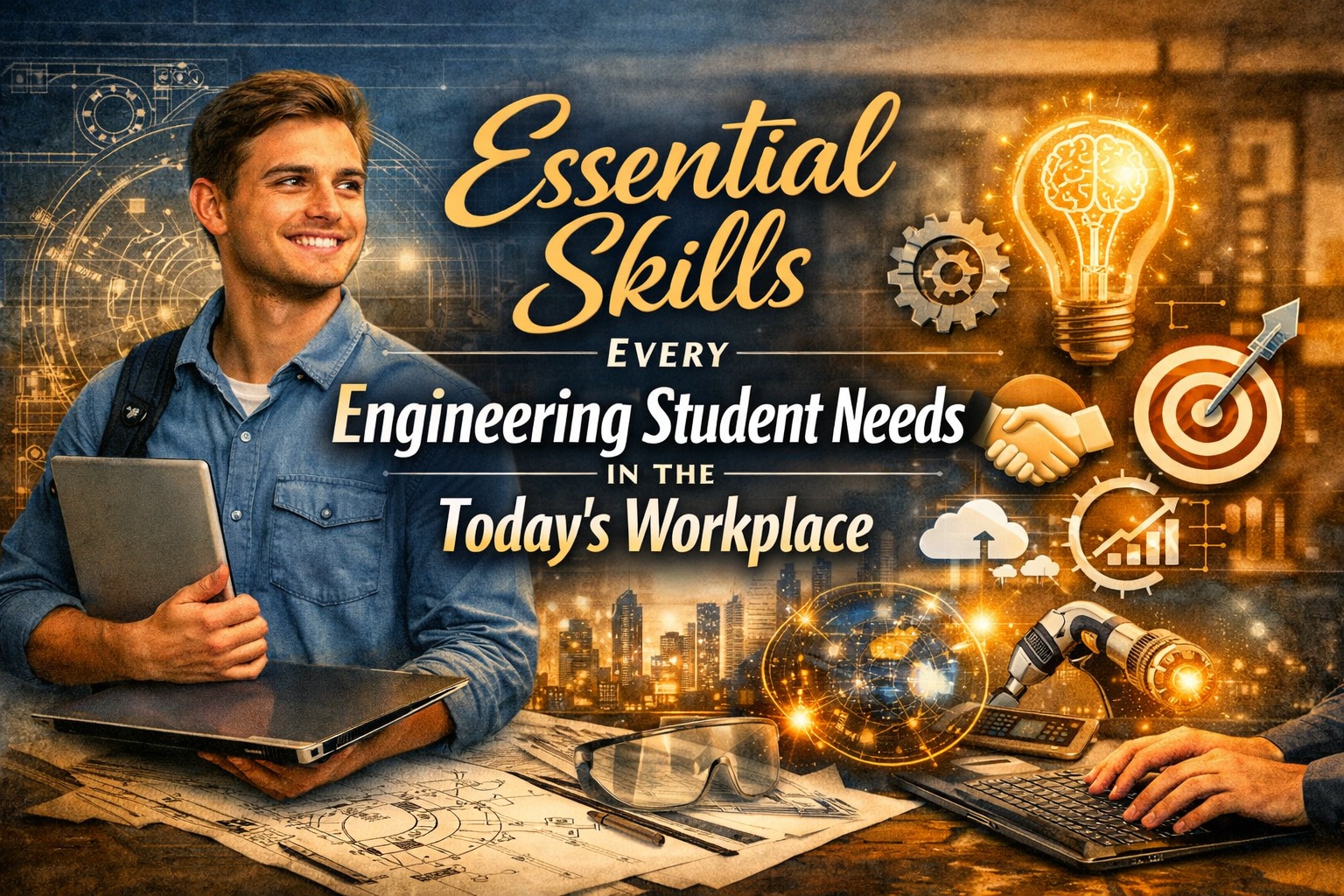
The modern workplace is evolving rapidly due to technological advancements, automation, and digital transformation. As a result, engineering students are expected to possess more than just strong academic knowledge. Employers are increasingly looking for candidates who combine technical expertise, problem-solving abilities, and professional attitudes. Developing the right skills before graduation helps engineering students adapt to industry demands and remain competitive in the job market. By mastering both technical and interpersonal skills, future engineers can build successful and sustainable careers.
BUILD A STRONG TECHNICAL FOUNDATION
A solid understanding of engineering fundamentals is the first step toward becoming a successful professional. Every engineering discipline relies on core concepts that support advanced technologies and practical applications. Students who master these fundamentals can analyze problems more effectively and develop reliable solutions. Strong technical knowledge also enables graduates to adapt quickly to new tools and innovations introduced in the workplace.
Beyond classroom learning, engineering students should connect theory with practical experience. Participating in laboratory sessions, technical projects, and design challenges strengthens their understanding of real-world engineering processes. Continuous learning, critical thinking, and technical accuracy are essential qualities that employers highly value.
DEVELOP PRACTICAL EXPERIENCE THROUGH PROJECTS
Academic knowledge becomes far more valuable when combined with hands-on experience. Engineering students should actively participate in internships, industrial training, research projects, and engineering competitions. These experiences expose them to real workplace environments and improve their ability to solve practical engineering challenges. Employers often prioritize candidates who have demonstrated their skills outside the classroom.
Working on individual or team-based projects also helps students build an impressive portfolio. Practical experience improves confidence while developing technical and organizational skills simultaneously. The more real-world exposure students gain, the better prepared they will be for professional responsibilities after graduation.
IMPROVE COMMUNICATION AND TEAMWORK SKILLS
Many engineering projects require collaboration between different departments and professionals. Therefore, communication skills are just as important as technical knowledge. Engineers must be able to explain ideas clearly, prepare technical reports, and present solutions to clients, managers, and colleagues. Effective communication minimizes misunderstandings and increases project efficiency.
Likewise, teamwork is a fundamental skill in today's workplace. Engineering professionals frequently collaborate with designers, managers, technicians, and business teams to achieve common goals. Being respectful, adaptable, and willing to share ideas creates a productive work environment and supports successful project outcomes.
EMBRACE DIGITAL TECHNOLOGY AND INNOVATION
The rise of Industry 4.0 has transformed engineering careers across multiple sectors. Technologies such as Artificial Intelligence, Internet of Things, cloud computing, and automation are becoming standard in many industries. Engineering students should continuously update their knowledge to stay relevant in this fast-changing environment. Learning modern software and digital tools significantly increases career opportunities.
Innovation also plays a critical role in engineering success. Students should develop the habit of exploring new ideas, conducting research, and identifying creative solutions to technical challenges. Employers highly appreciate professionals who demonstrate curiosity, adaptability, and a commitment to continuous improvement.
STRENGTHEN PROFESSIONALISM AND LEADERSHIP
Technical excellence alone is not enough to achieve long-term career success. Professionalism includes responsibility, integrity, discipline, and the ability to manage time effectively. These qualities build trust among colleagues and employers while creating opportunities for career advancement. A positive work ethic also contributes to better performance and stronger professional relationships.
Leadership is another valuable skill for engineering students. Taking initiative during projects, making informed decisions, and motivating team members prepare future engineers for managerial roles. Developing leadership abilities early can accelerate career growth and increase professional confidence.
CONCLUSION
Success in today's engineering industry requires a combination of technical knowledge, practical experience, communication skills, innovation, and professionalism. Engineering students who continuously improve these competencies will be better prepared to meet workplace expectations and technological advancements. Investing in both hard skills and soft skills creates a strong competitive advantage in the global job market. By embracing lifelong learning and professional development, future engineers can build rewarding careers and contribute meaningfully to modern industries.
About the Author
Gusti Ayu Tita P
Author — STEKOM University
An active author focused on academic issues, educational technology, and human resource development in the campus environment.