How to Identify Fake News and Evaluate Information Wisely?
Gusti Ayu Tita P
7 Agustus 2026
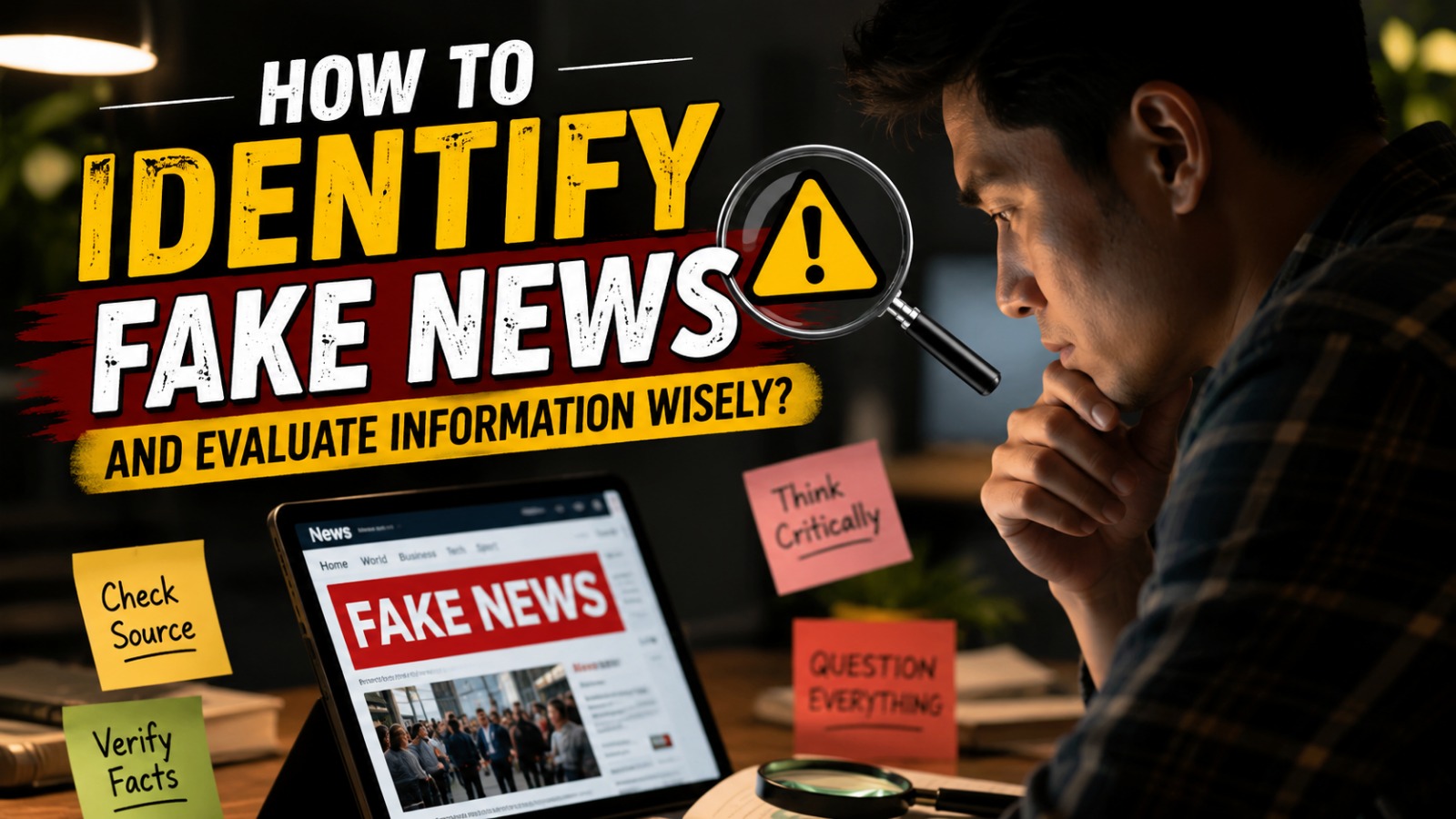
In today's digital world, information spreads faster than ever through social media, websites, and messaging applications. While this makes access to knowledge easier, it also increases the risk of encountering fake news and misleading content. False information can influence opinions, create unnecessary panic, and lead to poor decision-making. Therefore, learning how to identify fake news and evaluate information wisely has become an essential skill for everyone.
Developing digital literacy and critical thinking helps individuals distinguish reliable information from misleading claims. By following simple verification methods and thinking carefully before sharing content, people can contribute to a more informed and responsible online community.
UNDERSTANDING WHAT FAKE NEWS IS
Fake news refers to false or misleading information presented as if it were factual. It may be created intentionally to influence opinions, attract attention, or generate online engagement. Fake news can appear in the form of articles, videos, edited images, or social media posts. Because it often resembles legitimate news, many people unknowingly believe and share it.
Not all inaccurate information is created with harmful intentions. Sometimes misinformation spreads because people fail to verify the facts before sharing. Understanding this difference encourages users to become more careful and responsible when consuming online content.
CHECK THE SOURCE OF INFORMATION
One of the most effective ways to evaluate reliable sources is by examining where the information comes from. Trusted news organizations, educational institutions, and official government websites usually provide accurate and verified information. Before believing an article, check the publisher, author, publication date, and available references. Reliable sources are generally transparent about their editorial standards and evidence.
It is also important to avoid relying on anonymous websites or social media posts without credible references. Comparing the same information with multiple trusted sources increases confidence in its accuracy. This simple habit greatly reduces the risk of accepting false information.
VERIFY FACTS BEFORE SHARING
Before forwarding any article or social media post, take time to practice fact checking. Read the complete content instead of judging only by the headline, as misleading titles are often used to attract attention. Look for supporting evidence, official statements, or expert opinions that confirm the information. Careful verification prevents the spread of misinformation.
Images and videos should also be examined carefully. Edited visuals or content taken out of context can create false impressions. Verifying visual content through reliable sources helps ensure that the information accurately reflects real events.
DEVELOP CRITICAL THINKING SKILLS
Strong critical thinking helps individuals evaluate information objectively rather than reacting emotionally. Instead of immediately accepting a claim, ask questions such as whether the evidence is sufficient, whether multiple sources support the information, and whether any bias may exist. Logical analysis leads to more informed conclusions. This habit is valuable in both online and offline situations.
Critical thinking also encourages curiosity. People become more willing to investigate information thoroughly before making decisions or sharing opinions. As a result, they become more responsible consumers of digital information.
RECOGNIZE COMMON SIGNS OF FAKE NEWS
Many examples of misleading content share similar characteristics. Sensational headlines, emotional language, exaggerated claims, and a lack of supporting evidence are common warning signs. Some fake articles also encourage readers to share the content immediately without verification. Recognizing these patterns helps users become more cautious.
Poor grammar, suspicious website addresses, and missing author information may also indicate unreliable content. While these signs do not always prove that information is false, they should encourage further investigation before accepting the claims as true.
BUILD RESPONSIBLE DIGITAL HABITS
Practicing digital literacy means using technology responsibly and thoughtfully. Individuals should verify information before sharing, respect credible sources, and avoid spreading rumors or unconfirmed stories. These habits protect both personal credibility and the broader online community. Responsible digital behavior contributes to healthier public discussions.
Educational activities such as reading reliable news, attending digital literacy workshops, and learning media evaluation skills further strengthen these habits. Continuous learning helps individuals adapt to the constantly changing digital environment.
THE LONG TERM BENEFITS OF INFORMATION LITERACY
Developing strong information literacy provides lasting advantages. Individuals become better decision-makers because they rely on verified facts instead of assumptions or emotional reactions. They are also less likely to become victims of scams, misinformation, or online manipulation. These benefits support both personal and professional success.
Furthermore, promoting accurate information strengthens trust within communities. When more people verify facts before sharing content, the spread of misinformation decreases, creating a healthier and more informed society for everyone.
CONCLUSION
How to identify fake news and evaluate information wisely begins with understanding fake news, checking reliable sources, practicing fact checking, and developing strong critical thinking skills. These habits enable individuals to make informed decisions and reduce the spread of misleading content.
In an age of unlimited digital information, responsible media consumption is more important than ever. By strengthening digital literacy and verifying information before sharing it, everyone can contribute to a safer, smarter, and more trustworthy online environment.
About the Author
Gusti Ayu Tita P
Author — STEKOM University
An active author focused on academic issues, educational technology, and human resource development in the campus environment.