Is Academic Competition Important for Developing High Quality Students
Gusti Ayu Tita P
24 Agustus 2026
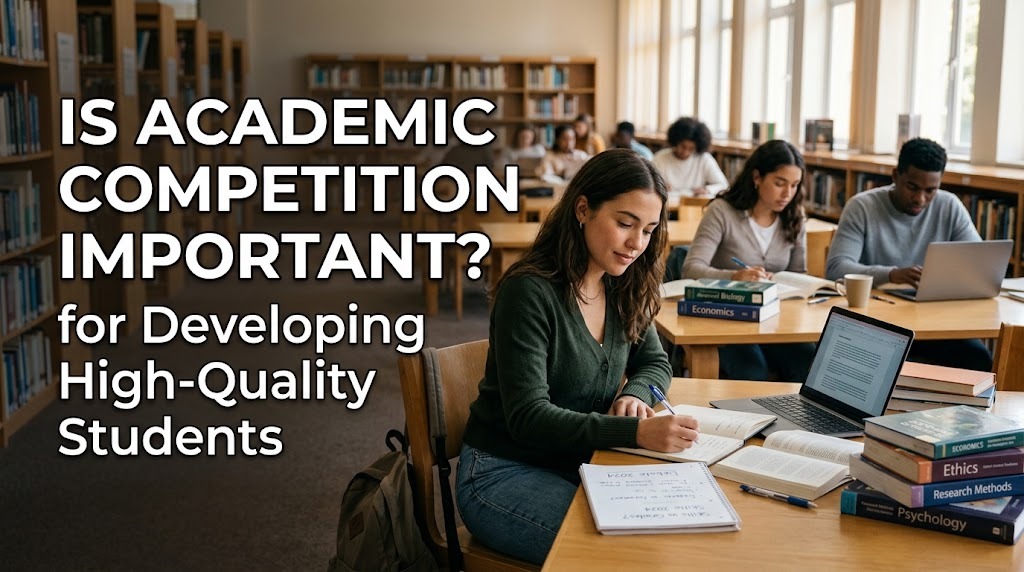
Academic competition is often associated with high achievement, strong motivation, and better academic performance. Through competitions, students may be encouraged to study more seriously, improve their knowledge, and challenge themselves. However, competition is not the only factor that determines whether a student can become high quality. Character, practical skills, communication, creativity, discipline, and adaptability are equally important in education and future careers. Therefore, academic competition should be viewed as one development tool rather than the sole measure of student quality.
THE ROLE OF ACADEMIC COMPETITION IN STUDENT DEVELOPMENT
Academic competition can encourage students to set clear learning targets. When students prepare for an examination, debate, research contest, or academic challenge, they often need to study more systematically. This process can strengthen their knowledge and train them to manage their preparation. Competition can create an additional reason for students to improve their academic abilities.
Competition can also introduce students to challenging situations. They may need to perform under time limits, solve difficult problems, or present their ideas in front of others. These experiences can improve confidence when challenges are managed properly. Healthy competition can encourage students to move beyond their comfort zones.
COMPETITION CAN BUILD DISCIPLINE
Preparing for academic competitions usually requires regular practice. Students need to organize their study schedules and divide large learning goals into smaller tasks. This process can develop discipline and time management skills. Consistent preparation is often more important than relying on last minute effort.
The discipline developed through competition can also be applied to other areas. Students may become more accustomed to setting deadlines and monitoring their progress. These habits can become useful when they enter higher education or professional environments. Good study habits can become valuable long term skills.
WHEN ACADEMIC COMPETITION BECOMES TOO MUCH
Excessive competition can create unnecessary pressure. Students may become overly focused on grades, rankings, or awards and begin comparing themselves constantly with others. If this pressure is not managed properly, it can reduce enjoyment of learning and discourage students from taking healthy risks. Competition should not make students believe that their personal value depends on achievement.
Students also need time for rest, relationships, creativity, and activities outside academics. A balanced educational experience can help prevent achievement from becoming the only source of self confidence. Students should be encouraged to pursue excellence while understanding their personal limits. Balance is essential for sustainable academic growth.
COMPETITION SHOULD BE COMBINED WITH COLLABORATION
The ability to compete is useful, but students also need to learn how to cooperate. Many academic and professional projects require people to share ideas, divide responsibilities, and solve problems together. Collaboration teaches students to respect different perspectives and communicate effectively. Teamwork is an essential part of becoming a well rounded student.
Schools and universities can combine competitions with group projects and collaborative activities. Students can compete individually in some situations while working together in others. This balance allows them to develop both independence and cooperation. Strong students should be able to compete fairly and collaborate effectively.
PRACTICAL EXPERIENCE ALSO BUILDS QUALITY
Students can develop important abilities through internships, projects, organizations, volunteering, and entrepreneurship. These experiences allow them to apply theoretical knowledge to real situations. They may also encounter communication problems, deadlines, teamwork challenges, and unexpected obstacles. Practical experience can develop skills that academic competition alone cannot provide.
For this reason, academic institutions should provide students with diverse learning opportunities. Competitions can be included as part of the development process without becoming the entire focus of education. Students need opportunities to connect knowledge with practical situations. A combination of academic and real world learning can produce more complete graduates.
THE ROLE OF TEACHERS AND EDUCATIONAL INSTITUTIONS
Teachers play an important role in ensuring that competition supports student development. They can help students set realistic goals and understand that failure does not define their abilities. Constructive feedback can help students identify areas for improvement. Guidance can turn competition into a meaningful learning experience.
Educational institutions should also create opportunities for students with different strengths. Academic contests, creative projects, leadership programs, internships, and community activities can be offered together. This approach gives students more than one pathway to demonstrate their abilities. A diverse educational environment can support different types of student potential.
IS ACADEMIC COMPETITION IMPORTANT FOR HIGH QUALITY STUDENTS?
Academic competition can be important because it may encourage discipline, motivation, critical thinking, confidence, and problem solving. However, it is not a mandatory requirement for every student to become high quality. Its effectiveness depends on how the competition is designed and how students respond to it. Competition should support learning rather than replace other forms of development.
High quality students need a combination of academic knowledge and broader abilities. They should be capable of thinking critically, communicating clearly, working with others, adapting to change, and taking responsibility. Academic competition is one useful tool, but it should be combined with collaboration and practical learning. This balanced approach can prepare students for both academic challenges and future professional demands.
CONCLUSION
Academic competition can contribute to the development of high quality students by encouraging motivation, discipline, problem solving, and continuous improvement. Nevertheless, competition alone cannot determine the overall quality of a student. Academic achievement should be supported by character, communication, teamwork, creativity, practical experience, and adaptability.
The most effective educational environment is not one that forces every student to compete constantly. Instead, it provides healthy challenges, supportive guidance, collaborative experiences, and opportunities to develop individual strengths. When used appropriately, academic competition can become a valuable part of student development without becoming the only definition of success.
About the Author
Gusti Ayu Tita P
Author — STEKOM University
An active author focused on academic issues, educational technology, and human resource development in the campus environment.