Job Fair Guide for Fresh Graduates Looking for Work
Gusti Ayu Tita P
27 Agustus 2026
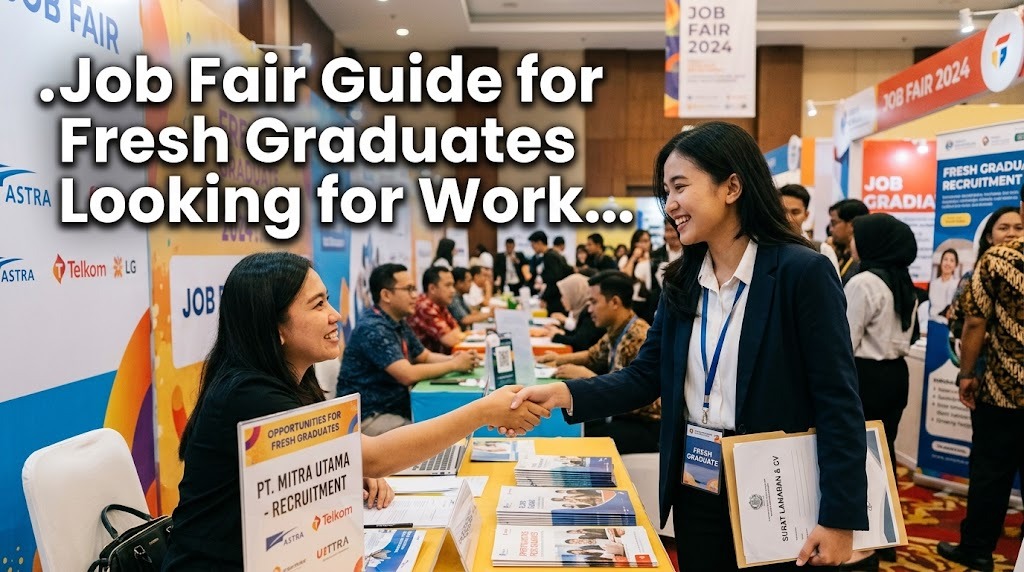
A job fair can be an excellent opportunity for fresh graduates who are looking for their first professional job. It allows new graduates to meet recruiters, learn about available positions, and understand what companies expect from entry level candidates. Unlike ordinary online applications, a job fair provides an opportunity to communicate directly with employers. With proper preparation, fresh graduates can use the event to introduce their skills and increase their chances of entering the recruitment process.
Many fresh graduates worry because they have limited work experience. However, internships, campus organizations, academic projects, volunteer activities, certifications, and other experiences can demonstrate valuable skills. The key is knowing how to present those experiences clearly and professionally. A well planned approach can make a job fair more productive and less stressful.
UNDERSTAND HOW A JOB FAIR WORKS
A job fair brings multiple employers and job seekers together in one event. Companies may provide information about their organization, advertise vacancies, collect resumes, conduct initial interviews, or explain their recruitment process. Some job fairs are held physically, while others may be organized online or in a hybrid format. The recruitment process can differ from one event to another. Therefore, fresh graduates should read the event information carefully before attending.
Before the event, check the participating companies, available positions, registration requirements, schedule, and location. If the organizer provides a list of vacancies, identify positions that match your education and skills. This preparation helps you avoid spending too much time at companies that do not offer suitable opportunities. Understanding the event structure also allows you to plan your time more effectively.
RESEARCH TARGET COMPANIES
Researching companies before a job fair is one of the most important steps for fresh graduates. Learn about the company's industry, products or services, work culture, and available positions. Pay close attention to the qualifications listed in job descriptions. This information helps you determine which employers are most relevant to your career goals. It also gives you useful topics to discuss with recruiters.
Create a priority list of companies you want to visit. Start with employers that offer positions closely related to your background and interests. Prepare a few questions for each priority company based on your research. Showing that you understand the company can make your conversation more meaningful. It also demonstrates that your interest goes beyond simply looking for any available job.
PREPARE A STRONG RESUME
A professional resume is essential for fresh graduates attending a job fair. Include your education, internships, relevant projects, organizational experience, certifications, skills, achievements, and contact information. You do not need years of work experience to create a strong resume. The important thing is to highlight experiences that demonstrate skills relevant to the position. Keep the format simple, organized, and easy for recruiters to scan.
Avoid sending exactly the same resume to every company if you are applying for different types of positions. Adjust the skills and experiences you emphasize based on each job description. Use clear descriptions that explain what you did and what you achieved. If possible, include measurable results that accurately represent your contribution. Bring printed copies when appropriate and keep a digital version ready for online applications.
BUILD A RELEVANT PORTFOLIO
A portfolio can strengthen a fresh graduate's application when the target position requires evidence of practical skills. Students in design, writing, programming, marketing, photography, video production, and other fields can use portfolios to demonstrate their abilities. Academic projects can also be included when they are relevant and show meaningful work. Select your strongest examples rather than including every assignment. A focused portfolio is easier for recruiters to review.
Prepare the portfolio in a convenient digital format such as a PDF or professional website. Check every link before the event and make sure the files can be accessed from your smartphone. Be ready to explain your role, the problem you addressed, and the result of each important project. This helps recruiters understand your actual contribution. A portfolio can also give you useful material to discuss during an interview.
PRACTICE YOUR SELF INTRODUCTION
Fresh graduates should be prepared to introduce themselves confidently when approaching recruiters. A good introduction can include your name, educational background, relevant skills, career interests, and the position you are seeking. Keep it short because recruiters may have many candidates to meet. Avoid memorizing a long speech word for word. Practice the main points until you can explain them naturally.
Use one or two relevant experiences to support your introduction. For example, you can mention an internship, campus project, organization, or certification related to the position. Explain what you learned or contributed instead of simply naming the activity. This gives recruiters a clearer picture of your potential. Practicing beforehand can also help reduce nervousness during the event.
SHOWCASE YOUR TRANSFERABLE SKILLS
Fresh graduates often have transferable skills even when they lack extensive professional experience. Communication, teamwork, leadership, problem solving, time management, adaptability, and creativity can be developed through campus activities. These skills can be valuable across many entry level positions. The key is to provide real examples that demonstrate how you used them. Avoid simply listing soft skills without supporting evidence.
For example, an organizational role can demonstrate teamwork and leadership, while a group project can show communication and problem solving. An internship can demonstrate adaptability and professional responsibility. Explain the situation, your role, and the result when discussing these experiences. Honest and specific examples are more convincing than exaggerated claims. This approach can help recruiters see your potential beyond your limited work history.
COMMUNICATE EFFECTIVELY WITH RECRUITERS
Communication is one of the biggest advantages of attending a job fair. When approaching a company booth, greet the recruiter politely and introduce yourself. Explain the position you are interested in and briefly connect it to your background. Listen carefully and respond to questions clearly. Avoid interrupting or dominating the conversation.
Do not treat the interaction as simply an opportunity to hand over your resume. Ask relevant questions about the position, required skills, recruitment process, or training opportunities. Pay attention to the recruiter's response and take notes afterward if necessary. A respectful and focused conversation can create a stronger impression than submitting a resume without any meaningful interaction.
PREPARE FOR ON THE SPOT INTERVIEWS
Some companies may conduct short screening interviews during a job fair. Fresh graduates should therefore prepare for common interview questions before attending. Questions may cover your background, strengths, career interests, relevant experience, and reasons for applying. Review your resume carefully because recruiters may ask about any information listed there. Prepare examples that demonstrate your skills and achievements.
You do not need to memorize perfect answers. Instead, understand your experiences well enough to explain them naturally. If you do not know something, be honest and show your willingness to learn. Employers understand that fresh graduates are still developing professionally. Confidence, honesty, and a positive attitude can make a strong impression.
DRESS APPROPRIATELY AND BRING ESSENTIAL ITEMS
Your appearance should be clean, neat, and suitable for a professional environment. Business casual or formal clothing is generally a safe choice when the event does not provide a specific dress code. Choose comfortable shoes because job fairs may require several hours of walking or standing. Good grooming also contributes to a professional first impression. Your goal is to look prepared while remaining comfortable.
Bring several copies of your resume, a portfolio if relevant, identification, a notebook, and a pen. A smartphone with sufficient battery is also useful for accessing digital resumes, portfolios, QR codes, and application forms. Consider bringing a power bank if you expect to stay at the event for a long time. Keep your documents organized in a folder or suitable bag. Preparation of these basic items can prevent unnecessary stress.
ASK SMART QUESTIONS
Asking thoughtful questions can help fresh graduates learn more about the company and demonstrate genuine interest. You can ask about the main responsibilities of the position, skills that successful candidates usually have, or the next stage of recruitment. Questions about training and professional development may also be useful for entry level candidates. Avoid asking questions that can easily be answered by reading the company's job description. Prepare different questions based on your target companies.
Listen carefully to the answers and avoid turning the conversation into an interrogation. The purpose is to create a professional discussion, not simply to impress the recruiter. Write down important information after the conversation so you can remember the details later. This information can be useful when preparing applications or interviews. Good questions can also help you decide whether a company is suitable for your career goals.
FOLLOW UP AFTER THE EVENT
Your job fair strategy should continue after the event ends. Review the notes you made and identify the companies and positions that interest you most. Complete any online application or additional steps requested by recruiters. If appropriate, send a brief and professional follow up message to thank the recruiter for the conversation. Follow the company's instructions rather than sending repeated messages without a clear purpose.
Use the experience to improve your future job search. Consider which questions were difficult, which skills recruiters emphasized, and which parts of your resume received attention. If you do not receive an immediate response, continue applying to other suitable positions. One job fair does not determine the success of your entire job search. Each event can provide experience that makes you better prepared for future opportunities.
AVOID COMMON MISTAKES
Fresh graduates should avoid attending a job fair without researching participating companies. Other mistakes include bringing an outdated resume, exaggerating skills, arriving unprepared for interviews, and communicating too casually with recruiters. Submitting the same resume everywhere without considering job requirements can also reduce its effectiveness. Avoid focusing only on the number of resumes you distribute. The quality of your preparation and interactions matters more.
It is also important not to become discouraged by rejection or a lack of immediate responses. Job searching can take time, especially for candidates entering the workforce for the first time. Use feedback and experience to improve your resume, communication, interview skills, and career strategy. Stay honest about your abilities while showing a willingness to learn. A professional attitude can help you build a stronger foundation for your career.
CONCLUSION
A job fair can be a valuable starting point for fresh graduates looking for work. By researching companies, preparing a strong resume, creating a relevant portfolio, practicing self introductions, and understanding available positions, graduates can approach employers with greater confidence. Communication skills and the ability to explain campus experiences are equally important because recruiters want to understand the potential of entry level candidates.
The goal should not be to visit as many company booths as possible. Instead, focus on employers and positions that match your skills, interests, and career goals. Prepare carefully, communicate professionally, and follow up after the event when appropriate. With consistent preparation and a willingness to learn, fresh graduates can turn a job fair into a meaningful opportunity to begin their professional journey.
About the Author
Gusti Ayu Tita P
Author — STEKOM University
An active author focused on academic issues, educational technology, and human resource development in the campus environment.