Mediation as a Solution for Resolving Land Disputes
Gusti Ayu Tita P
2 September 2026
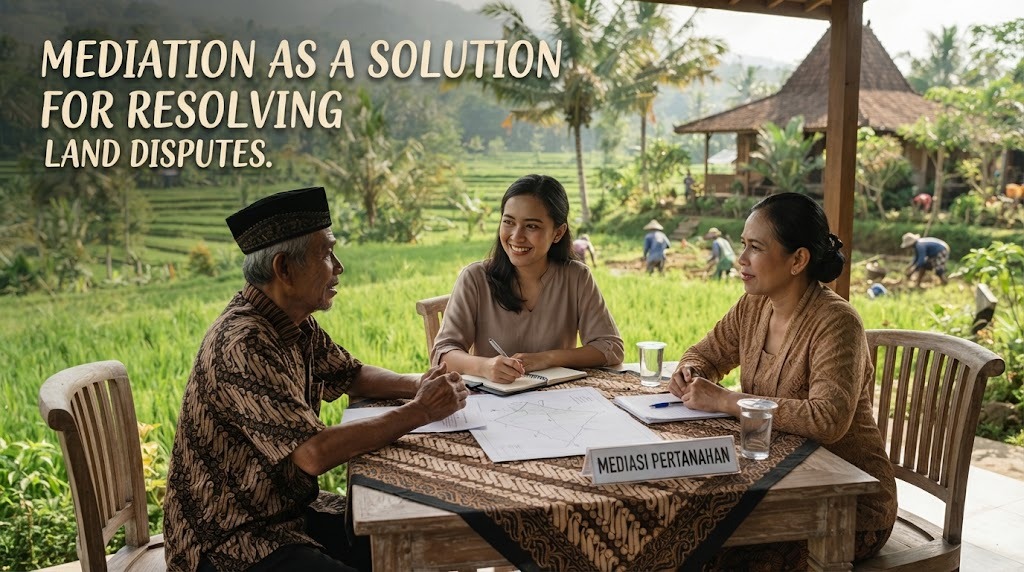
Land disputes can arise from various issues, including ownership claims, unclear boundaries, inheritance, property transactions, or conflicting documents. If not handled properly, these disputes can take a long time and cause financial and personal losses. Mediation is one alternative that can help parties resolve land disputes without immediately going through a lengthy court process. It focuses on communication and finding a solution that is acceptable to both sides.
WHAT IS MEDIATION IN A LAND DISPUTE
Mediation is a dispute resolution process that involves a neutral third party known as a mediator. The mediator helps the parties communicate, identify the main issues, and explore possible solutions. Unlike a judge, a mediator does not normally decide which party wins or loses. Instead, the parties themselves have control over whether they reach an agreement.
In land disputes, mediation can be used to discuss issues such as ownership, boundaries, compensation, or the use of property. The process can take place before a dispute reaches court or as part of a formal legal process where applicable. Its effectiveness depends largely on the willingness of both parties to participate in good faith.
WHY MEDIATION CAN BE AN OPTION
One major advantage of mediation is that it gives the parties an opportunity to find a flexible solution. Instead of focusing only on legal claims, the parties can discuss their interests and possible compromises. Mediation may also take less time and cost less than prolonged litigation, although the actual duration and expenses depend on the complexity of the dispute. It can also help preserve relationships between neighbors, relatives, or business partners.
Mediation is not guaranteed to succeed. It may fail when one party refuses to negotiate or when the legal and factual differences are too significant. If no agreement is reached, the parties can consider other legal options. Therefore, mediation is best viewed as an alternative pathway rather than a guaranteed solution.
STEPS IN LAND DISPUTE MEDIATION
The mediation process generally begins by identifying the parties and defining the main issues in dispute. Each side is given an opportunity to explain its position, provide relevant information, and present supporting documents. The mediator then helps organize the discussion so that it remains focused on finding possible solutions. This stage is important because land disputes often involve different versions of the ownership history.
After the main issues are understood, the parties can discuss possible settlement options. If they reach an agreement, the terms should be recorded in a clear written settlement document. The agreement should explain what each party must do and how the settlement will be implemented. If the mediation fails, the parties may continue with another dispute resolution process according to applicable law.
IMPORTANCE OF LAND DOCUMENTS
Documents are essential when resolving land disputes through mediation. Relevant evidence may include land certificates, survey documents, sale agreements, inheritance documents, tax records, and other ownership evidence. Each party should prepare documents that support their position and ensure that the information can be verified. Clear documentation can help the mediator and the parties understand the factual background of the dispute.
The final settlement should also be documented carefully. If the agreement involves a transfer or change of land rights, the parties must follow the applicable land administration procedures. Depending on the transaction, assistance from a PPAT or legal professional may be necessary. This helps ensure that the settlement can be properly implemented rather than remaining only a verbal promise.
ROLE OF THE MEDIATOR
The mediator acts as a neutral facilitator throughout the dispute resolution process. The mediator helps create an environment where both parties can communicate their concerns without unnecessary confrontation. The mediator may identify areas of disagreement and help the parties consider possible solutions. However, the mediator should not force either party to accept a particular outcome.
A good mediator also helps reduce emotional tension during discussions. Land disputes can involve significant financial interests as well as family or community relationships. Keeping the discussion focused on facts and possible solutions can make negotiations more productive. Legal representation may still be useful when the dispute involves complicated ownership or legal issues.
TIPS FOR SUCCESSFUL LAND MEDIATION
Preparation is important before entering mediation. Each party should understand the ownership documents, chronology of events, boundaries, and main issues involved in the dispute. It is also helpful to determine which solutions are acceptable and which conditions are difficult to compromise. Having realistic expectations can make negotiations more productive.
During mediation, communicate based on facts and avoid threats or personal attacks. Listen carefully to the other party because some disputes may result from misunderstandings or incomplete information. If an agreement is reached, read every term carefully before signing. Make sure the responsibilities, deadlines, and implementation procedures are clearly stated.
WHEN LEGAL ASSISTANCE MAY BE NEEDED
Not every land dispute is simple enough to resolve through direct negotiation. Professional legal assistance may be appropriate when several parties claim ownership, documents are disputed, inheritance issues are complicated, or the matter has already entered legal proceedings. A lawyer can help explain the legal position and potential risks of different settlement options. A PPAT may also be involved when the settlement requires a deed or other land-related legal action within their authority.
Legal assistance does not necessarily make mediation more confrontational. Instead, it can help ensure that the settlement protects the parties' rights and complies with applicable regulations. The parties can still prioritize negotiation while receiving professional advice. This approach can make the mediation process more structured and legally secure.
CONCLUSION
Mediation can be an effective alternative for resolving land disputes because it gives the parties an opportunity to communicate and reach a mutually acceptable agreement. With the assistance of a neutral mediator, issues involving ownership, boundaries, inheritance, and property transactions can be discussed in a more organized way. Mediation may also reduce the time, cost, and conflict associated with prolonged litigation.
However, successful mediation requires good faith, openness, and adequate evidence from both sides. When a dispute involves complex legal issues, professional legal assistance can provide additional protection. With proper preparation and a willingness to negotiate, mediation can become a practical step toward resolving land disputes peacefully.
About the Author
Gusti Ayu Tita P
Author — STEKOM University
An active author focused on academic issues, educational technology, and human resource development in the campus environment.