Personal Shopper Business Trends and Opportunities Amid the Growth of Online Shopping
Gusti Ayu Tita P
10 September 2026
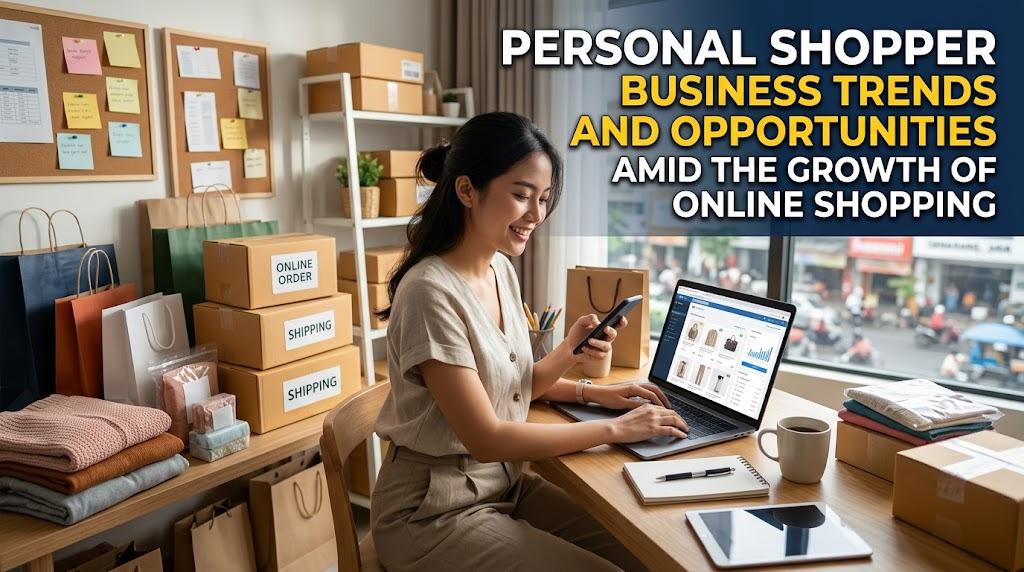
The growth of online shopping has changed the way people search for, purchase, and receive products. Customers can now discover products from different cities without traveling directly to the store. This situation creates opportunities for a personal shopper business that helps customers obtain products from specific locations. Personal shoppers can serve customers who want local products, limited items, or products that are difficult to find in their area. As digital commerce continues to develop, this business model has the potential to grow alongside changing consumer needs.
THE GROWTH OF ONLINE SHOPPING AND PERSONAL SHOPPER SERVICES
The increasing use of digital platforms has made online shopping more convenient for consumers. Customers can compare products, communicate with sellers, and arrange deliveries through their smartphones. However, not every product is available through major online marketplaces. Some products are still sold mainly through local stores, traditional markets, shopping centers, or specific regional businesses. This creates a useful role for personal shoppers who can purchase these products on behalf of customers.
A personal shopper service connects customers with products that may be difficult to access directly. The shopper usually receives an order, purchases the requested product, and arranges delivery. The customer pays for the product, service fee, and applicable delivery costs. This simple business model can be operated through social media and messaging applications. Its flexibility makes personal shopper services relevant to the changing habits of modern consumers.
UNIQUE PRODUCTS CREATE NEW BUSINESS OPPORTUNITIES
One important opportunity in the personal shopper business comes from products with strong local characteristics. Food, fashion, souvenirs, handicrafts, beauty products, and regional specialties may attract customers from other areas. Products that are difficult to find outside their original location can create a specific target market. Personal shoppers can focus on these products instead of competing directly with large online marketplaces. This strategy can help create a clear business identity.
The popularity of local products can also encourage shoppers to explore new markets. A shopper who understands the products and shopping locations in a particular city can provide valuable information to customers. For example, the shopper can introduce products that are popular locally but not widely known elsewhere. Product selection should still consider demand, quality, price, and shipping requirements. Careful research can help reduce the risk of unsold products and unnecessary expenses.
SOCIAL MEDIA IS BECOMING AN IMPORTANT MARKETING CHANNEL
Social media marketing has become an important part of promoting personal shopper services. Platforms such as Instagram, TikTok, Facebook, and messaging applications allow shoppers to communicate directly with potential customers. Product photos, short videos, customer reviews, and shopping updates can be used to attract attention. Social media also allows businesses to reach customers outside their immediate geographic area. This makes promotion more flexible and potentially more affordable than traditional marketing.
Personal shoppers can use engaging content to show what makes their service different. Content can include product recommendations, shopping locations, price information, order procedures, and behind-the-scenes shopping activities. Consistent and useful content can help establish credibility. However, promotional information should remain accurate and should not make misleading claims. Building trust through social media is important for encouraging customers to place their first order.
CONVENIENCE AND PERSONALIZED SERVICE BECOME COMPETITIVE ADVANTAGES
Convenience is one of the main reasons customers use personal shopper services. Some customers do not have enough time to visit stores, while others live far away from specific shopping locations. A personal shopper can save customers time by handling the purchasing process for them. This convenience becomes more valuable when the desired product is available only in a particular city. Personalized assistance can therefore become an important competitive advantage.
Personal shoppers can also provide a more personalized shopping experience than standard online stores. Customers may ask about product variants, availability, quality, or recommendations before making a purchase. A shopper who responds quickly and provides honest information can create stronger customer relationships. Good service can encourage repeat orders and recommendations. This relationship-based approach can help smaller businesses compete in an increasingly digital marketplace.
TECHNOLOGY CAN IMPROVE BUSINESS EFFICIENCY
Technology provides many opportunities to improve personal shopper business management. Digital spreadsheets and bookkeeping applications can help shoppers record orders, payments, expenses, and profits. Messaging applications can be used to confirm orders and provide delivery updates. Social media platforms can support marketing and customer communication. These tools can make daily operations more organized without requiring complicated infrastructure.
Technology can also help shoppers analyze customer preferences and sales trends. By reviewing previous orders, shoppers can identify products that are frequently requested and determine which items have stronger demand. This information can support better purchasing decisions. Digital payment and delivery tracking systems can also make transactions more convenient. Using technology effectively can improve both operational efficiency and customer satisfaction.
CHALLENGES AND RISKS IN THE PERSONAL SHOPPER BUSINESS
Despite its opportunities, a personal shopper business also has several challenges. Product availability can change quickly, prices may increase, and customers may cancel orders after the shopper has made a purchase. Shipping problems, damaged products, and inaccurate orders can also create financial losses. Competition from online marketplaces and other personal shoppers can make it harder to attract customers. Therefore, careful planning and clear business policies are necessary.
Customer trust and financial management are also major concerns. Shoppers need to communicate prices, service fees, payment procedures, and delivery conditions clearly. They should keep transaction records and separate business funds from personal money. Establishing clear rules for cancellations, refunds, and unavailable products can reduce misunderstandings. Managing these risks professionally can help maintain a stable business and protect the shopper's reputation.
CONCLUSION
The growth of online shopping continues to create opportunities for personal shopper services, particularly for products that are unique, locally available, or difficult to access from other areas. Social media, digital payment systems, and online communication tools make it easier for personal shoppers to promote and manage their businesses. Convenience, personalized assistance, and knowledge of local products can become important competitive advantages. However, successful personal shopper business trends must be supported by careful financial management, reliable service, transparent communication, and effective use of technology. With the right strategy, personal shopper services can continue to develop as a flexible business opportunity in the expanding digital commerce market.
About the Author
Gusti Ayu Tita P
Author — STEKOM University
An active author focused on academic issues, educational technology, and human resource development in the campus environment.