Strategies For Implementing MBG To Create Healthier Indonesian Children
Gusti Ayu Tita P
20 Agustus 2026
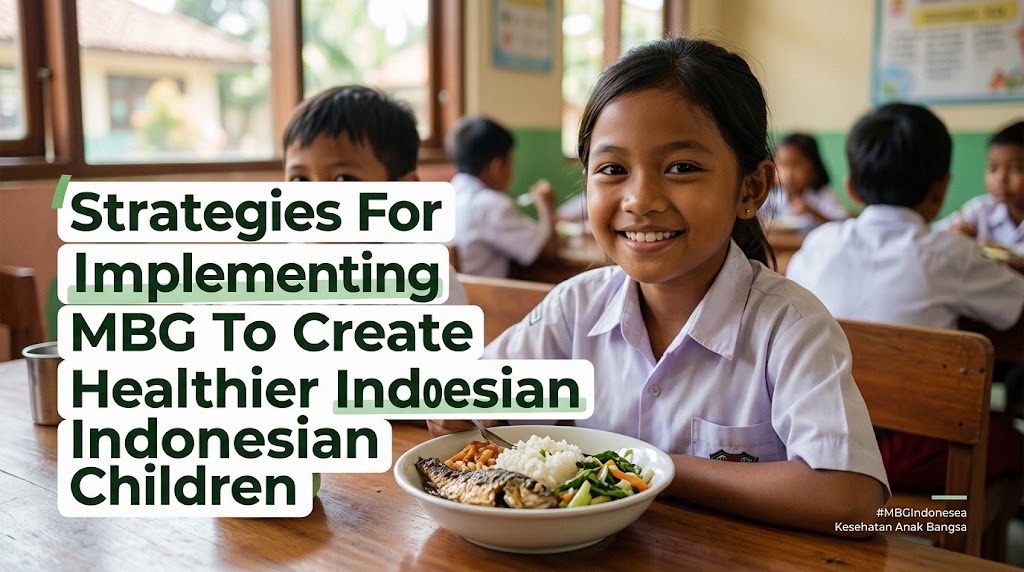
Makan Bergizi Gratis (MBG) is an important government initiative aimed at improving access to nutritious food for targeted beneficiaries, including children and students. The program has the potential to support healthy growth, learning readiness, and overall child wellbeing. However, providing meals on a large scale requires careful planning, strong food safety systems, and continuous evaluation. Effective implementation is essential to ensure that children receive meals that are not only available but also nutritious, safe, and appropriate. With the right strategies, MBG can become an important part of Indonesia's efforts to build a healthier young generation.
UNDERSTANDING THE GOALS OF MBG
The main purpose of MBG is to improve access to nutritious and safe food for eligible beneficiaries. For children, adequate nutrition is important because they need sufficient energy and nutrients for physical growth and development. A well-designed meal can provide sources of protein, carbohydrates, vegetables, fruits, vitamins, and minerals. The program can also help introduce children to healthier dietary patterns.
MBG should not be viewed simply as a program for distributing free food. It can also support nutrition education, food security, and human resource development. Children can learn about balanced diets through the meals they receive and related educational activities. A clear understanding of these broader goals can help schools, families, communities, and program managers work toward the same outcomes.
PROVIDING BALANCED AND NUTRITIOUS MENUS
One of the most important strategies is ensuring that MBG meals have appropriate nutritional quality. Menus should provide a suitable combination of carbohydrates, protein, healthy fats, vitamins, minerals, and dietary fiber. The nutritional composition should consider children's age and nutritional requirements. Menu planning should also promote variety so children receive different nutrients from different foods.
Using safe local ingredients can make meals more familiar and potentially support local food producers. Indonesia has diverse food resources that can be incorporated into nutritious menus when they meet food safety and nutritional requirements. Menu planning should also consider cultural preferences and local availability. Regular review by qualified nutrition professionals can help maintain the quality of meals.
STRENGTHENING FOOD SAFETY AND HYGIENE
Food safety must be a major priority in every stage of MBG implementation. Meals need to be prepared in clean facilities using safe ingredients and appropriate food handling procedures. Storage and transportation must also protect food from contamination and unsuitable temperatures. Staff involved in food preparation should receive appropriate hygiene and food safety training.
Monitoring should continue after meals are delivered to schools. Schools need clear procedures for receiving, storing, serving, and reporting problems related to food. Any suspected food safety incident should be handled quickly and systematically. Strong quality control and accountability can reduce health risks and increase public confidence in the program.
IMPROVING DISTRIBUTION AND LOGISTICS
Large-scale meal distribution requires an efficient food supply and logistics system. Ingredients need to reach preparation facilities on time and in suitable condition. Prepared meals must then be delivered to schools according to schedules that allow students to consume them safely. Good coordination is particularly important in remote areas where transportation may be more difficult.
Technology and data systems can help improve distribution planning. Accurate information about the number of students, school locations, meal requirements, and delivery schedules can reduce waste and shortages. Local authorities and schools can also coordinate to identify logistical challenges early. Efficient logistics can help ensure that nutritious meals reach the intended children consistently.
INVOLVING SCHOOLS AND TEACHERS
Schools have an important role in ensuring that MBG operates effectively. Teachers and school staff can help communicate meal schedules, encourage good hygiene, and support students in developing healthy eating habits. Schools can also provide feedback about menu acceptance and possible implementation problems. Their direct interaction with students makes them valuable partners in the program.
MBG can also be integrated with nutrition education. Teachers can explain the importance of balanced nutrition, drinking enough water, handwashing, and healthy food choices. Students can learn why different food groups are included in their meals. This approach can turn the meal program into a practical learning experience rather than simply a food distribution activity.
STRENGTHENING FAMILY AND COMMUNITY PARTICIPATION
Families play an important role because children's nutritional needs continue outside school. Parents can complement MBG meals by providing healthy food at home and encouraging balanced dietary habits. Schools can communicate simple nutrition information to parents so that healthy practices are reinforced. Cooperation between schools and families can make the program more consistent.
Local communities can also contribute to successful implementation. Community members and local food producers may participate in food supply chains when they meet appropriate safety and quality requirements. Local involvement can improve understanding of community needs and strengthen program ownership. Community participation can therefore support both implementation and sustainability.
USING LOCAL FOOD RESOURCES WISELY
Indonesia has a wide variety of local nutritious foods that can be used in meal planning. Foods such as fish, eggs, legumes, vegetables, fruits, rice, and other staple foods can contribute different nutrients to balanced meals. Using local ingredients can also make menus more culturally familiar to children. However, food choices must always meet appropriate nutritional and safety standards.
Local sourcing may also create economic opportunities for farmers, fishers, food producers, and other suppliers. When managed responsibly, the program can connect child nutrition with local food systems. Supply chains should still be monitored carefully to maintain consistency in quality and availability. This can help create benefits beyond the school meal itself.
MONITORING CHILDREN'S NUTRITIONAL OUTCOMES
Effective implementation requires regular monitoring and evaluation. Program managers should assess whether meals are meeting nutritional standards and reaching the intended beneficiaries. Other indicators can include food acceptance, food waste, attendance, and implementation quality. Where appropriate and ethically managed, nutritional status data can also help evaluate broader outcomes.
Evaluation should not focus only on the number of meals distributed. It should examine whether MBG is contributing to meaningful improvements in children's dietary quality, health, and learning readiness. Feedback from students, parents, teachers, nutrition professionals, and local authorities can provide useful information. Results should then be used to improve menus, logistics, safety procedures, and program management.
REDUCING FOOD WASTE AND IMPROVING EFFICIENCY
Another important strategy is controlling food waste. Menus should consider children's preferences while maintaining nutritional quality so that meals are more likely to be consumed. Portion planning can also reduce unnecessary leftovers. Schools can monitor which foods are frequently left uneaten and provide feedback for future menu development.
Efficient resource management is important because MBG operates on a large scale. Reducing waste can help ensure that available resources are used effectively without compromising nutritional quality. However, efforts to reduce costs should never undermine food safety or nutritional standards. The priority should remain providing safe and nutritious meals to children.
BUILDING STRONG COORDINATION AND ACCOUNTABILITY
MBG involves many stakeholders, including government institutions, schools, food suppliers, nutrition professionals, families, and communities. Clear responsibilities are necessary so each party understands its role. Strong coordination can reduce communication problems and help resolve implementation challenges more quickly. Transparency and accountability are also important for maintaining public trust.
Regular reporting and independent evaluation can help identify problems and measure progress. Decisions should be based on reliable data rather than assumptions. Program managers should be willing to adjust strategies when evidence shows that improvements are needed. This continuous improvement approach can make MBG more effective and sustainable over time.
CONCLUSION
Successful MBG implementation requires more than providing free meals. The program needs balanced menus, strict food safety, efficient distribution, trained personnel, nutrition education, and active participation from families and communities. Regular monitoring can help ensure that meals reach the intended children and provide meaningful nutritional benefits. Using local food resources responsibly and reducing waste can also improve efficiency and sustainability. With strong coordination and continuous improvement, MBG can contribute to creating healthier Indonesian children and stronger future human resources.
About the Author
Gusti Ayu Tita P
Author — STEKOM University
An active author focused on academic issues, educational technology, and human resource development in the campus environment.