The Importance Of Managerial Competence For Structural Position Holders
Gusti Ayu Tita P
12 Agustus 2026
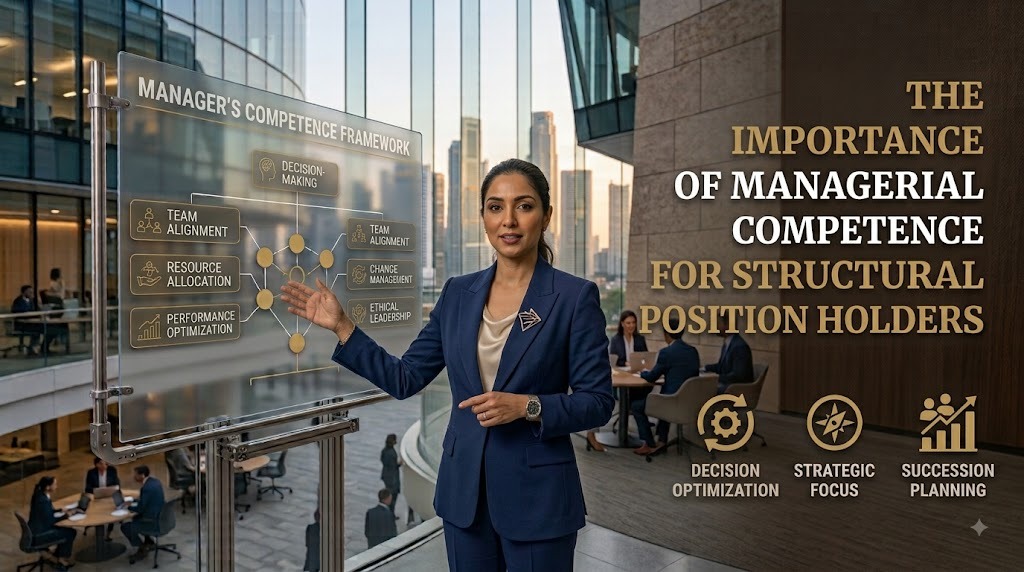
Managerial competence is an essential requirement for individuals who hold structural positions in an organization. Structural position holders are responsible for coordinating employees, managing resources, making decisions, and ensuring that organizational objectives are achieved. These responsibilities require more than technical knowledge because leaders must also understand how to manage people and organizational processes. Strong managerial competence helps structural leaders perform their duties effectively, consistently, and professionally.
Organizations operate in increasingly complex environments, where leaders must respond to technological changes, employee expectations, limited resources, and operational challenges. A leader with good managerial skills can identify priorities, solve problems, and coordinate different teams more effectively. Managerial competence also supports better decision making and accountability. Therefore, developing these competencies is important for maintaining organizational efficiency and sustainable performance.
UNDERSTANDING MANAGERIAL COMPETENCE
Managerial competence refers to the knowledge, skills, abilities, and behaviors required to manage organizational activities effectively. It includes planning, organizing, coordinating, directing, monitoring, and evaluating work. A competent manager can connect organizational goals with practical activities performed by employees. Managerial competence therefore provides an important foundation for structural leadership.
Managerial competence is not limited to technical knowledge. Structural leaders also need interpersonal skills, analytical thinking, communication abilities, and problem solving skills. These competencies help leaders deal with different situations and employee characteristics. A balanced combination of technical and interpersonal abilities supports effective organizational management.
THE ROLE OF MANAGERIAL COMPETENCE IN STRUCTURAL POSITIONS
Structural position holders have formal authority and responsibility within an organizational hierarchy. They need to use that authority appropriately while coordinating employees and organizational resources. Managerial competence helps them understand how to distribute responsibilities, establish priorities, and monitor results. Competent management can make organizational processes more organized and efficient.
A structural leader also acts as a connection between strategic management and operational activities. Leaders need to communicate organizational objectives clearly and ensure that employees understand their responsibilities. They must monitor implementation and make adjustments when problems occur. This role requires coordination, leadership, and accountability.
MANAGING EMPLOYEE PERFORMANCE
Structural leaders are responsible for ensuring that employees understand their roles and performance expectations. Managerial competence allows leaders to establish appropriate targets and monitor progress. Performance discussions should focus on objective results and opportunities for improvement. Fair performance management can encourage employees to develop their abilities.
Leaders should also provide constructive feedback and recognize meaningful achievements. Employees need to understand how their work contributes to broader organizational goals. When performance problems occur, managers should identify their causes and provide appropriate guidance. Effective performance management contributes to employee motivation and organizational productivity.
MANAGING ORGANIZATIONAL RESOURCES
Structural position holders may be responsible for financial resources, facilities, equipment, information, technology, and human resources. Managerial competence helps leaders allocate these resources according to organizational priorities. Resources should be used efficiently and responsibly. Effective resource management can prevent waste and improve organizational capacity.
Managers should regularly review whether resources are producing the intended results. They also need to identify potential shortages, inefficiencies, or risks. Proper documentation and monitoring can support responsible resource use. Good resource management strengthens efficiency, accountability, and sustainability.
MANAGING CONFLICTS AND WORKPLACE PROBLEMS
Conflict can occur because employees have different opinions, responsibilities, expectations, or working styles. Structural leaders need to address conflicts professionally before they affect organizational performance. Managerial competence helps leaders analyze the causes of disagreements and identify appropriate solutions. Conflict management skills are therefore important for maintaining workplace stability.
Leaders should listen to the parties involved and avoid making conclusions without sufficient information. Solutions should be based on fairness, organizational policies, and relevant facts. Leaders should also maintain confidentiality when dealing with sensitive situations. Professional conflict management promotes cooperation and healthy workplace relationships.
ADAPTING TO CHANGE
Organizations must continuously respond to technological, economic, regulatory, and social changes. Structural leaders need managerial competence to guide employees through these transitions. They should explain why changes are necessary and how employees will be affected. Change management skills help organizations adapt without losing focus on their objectives.
Employees may require training and support when new systems or procedures are introduced. Leaders should monitor the implementation process and collect feedback from employees. If problems arise, managers should adjust strategies based on evidence and organizational needs. Effective adaptation strengthens organizational resilience and long term performance.
USING TECHNOLOGY IN MANAGEMENT
Modern management increasingly depends on digital tools for communication, reporting, data analysis, project management, and coordination. Structural leaders need sufficient digital competence to select and use appropriate technologies. Technology should simplify processes and improve decision making rather than create unnecessary complexity. Digital management skills are increasingly valuable for structural position holders.
Leaders must also consider information security and data privacy. Employees should receive appropriate guidance about responsible use of organizational systems. Digital tools should be evaluated regularly to determine whether they provide meaningful benefits. Responsible technology use supports efficiency, accuracy, and organizational security.
BUILDING ETHICAL AND ACCOUNTABLE MANAGEMENT
Managerial competence must be supported by ethics and integrity. Structural leaders should use their authority responsibly and avoid favoritism, conflicts of interest, or misuse of organizational resources. Decisions should be based on professional responsibilities rather than personal interests. Ethical management strengthens trust among employees and stakeholders.
Accountability means that leaders are willing to explain their decisions and accept responsibility for organizational outcomes. Performance reports, monitoring systems, and appropriate evaluations can strengthen accountability. Leaders should also acknowledge mistakes and take corrective action when necessary. Ethical and accountable management creates a professional organizational culture.
DEVELOPING MANAGERIAL COMPETENCE CONTINUOUSLY
Managerial competence should be developed throughout a leader's career. Organizations can support development through training, coaching, mentoring, workshops, and leadership programs. Practical experience is also valuable because managers can learn from real organizational challenges. Continuous professional development helps leaders remain relevant and effective.
Self evaluation is another important part of development. Leaders should identify their strengths, weaknesses, and areas that require improvement. Feedback from employees, colleagues, and supervisors can provide additional perspectives. Continuous learning allows structural leaders to improve competence, confidence, and leadership effectiveness.
CONCLUSION
The importance of managerial competence for structural position holders can be seen in planning, decision making, employee management, resource allocation, communication, conflict resolution, and organizational change. Structural leaders need a combination of technical, interpersonal, analytical, and leadership skills to perform their responsibilities effectively. Strong managerial competence helps organizations achieve objectives while maintaining efficiency and accountability.
Managerial competence should be developed continuously rather than treated as a fixed qualification. By strengthening planning skills, leadership, communication, decision making, resource management, digital competence, and ethical behavior, structural position holders can improve their performance. Competent managers ultimately contribute to stronger teams, better organizational processes, and sustainable organizational success.
About the Author
Gusti Ayu Tita P
Author — STEKOM University
An active author focused on academic issues, educational technology, and human resource development in the campus environment.