The Role of Notaries in Preparing a Will
Gusti Ayu Tita P
2 September 2026
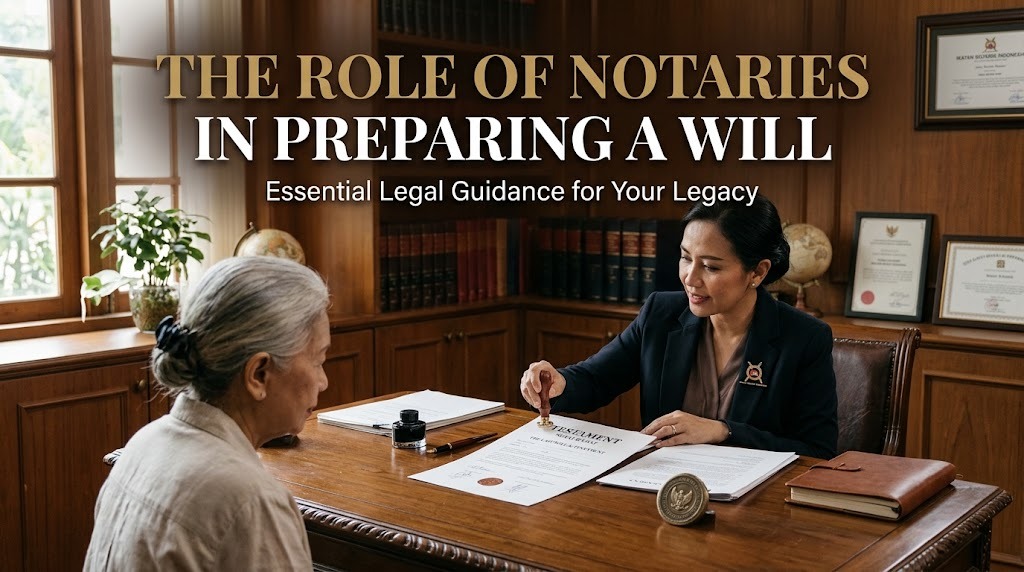
Preparing a will is an important part of estate planning, especially for people who want their wishes to be clearly communicated to their families. However, creating a will can involve legal requirements, inheritance rules, and formal procedures that are not always easy to understand. This is where a notary may play an important role, depending on the applicable legal system and the type of will being prepared. Professional assistance can help make the document clearer and more organized. Understanding the role of a notary can help people make better decisions when preparing their estate plans.
UNDERSTANDING THE ROLE OF A NOTARY
A notary is a legal professional whose responsibilities can include preparing or authenticating certain legal documents within the authority granted by law. In estate planning, a notary may assist with the preparation of a will where the relevant legal system provides for notarial involvement. The exact role can vary depending on the jurisdiction and the type of testamentary document. A notary does not simply act as a witness to a person's wishes. Their involvement may also help ensure that the document follows applicable formal procedures.
The person making the will should understand what the notary is legally authorized to do. Notarial procedures are not identical in every country or legal system. Some wills may be prepared directly before a notary, while other forms may follow different procedures. This is why general information should not be treated as a substitute for advice about a specific situation. Understanding the applicable procedure can prevent incorrect assumptions about the legal status of a will.
HELPING PREPARE THE WILL DOCUMENT
One of the potential benefits of working with a notary is assistance in creating a properly structured legal document. The person making the will can communicate their intentions, while the notary helps prepare the document according to the relevant formal requirements. This can be particularly useful when the estate contains several assets or the family situation is complicated. Clear drafting can reduce ambiguity in important provisions. It can also make the document easier to administer later.
A notary may also help identify information that needs to be clarified before the document is finalized. This can include asset details, beneficiary information, and other relevant legal circumstances. The goal is not to decide who should receive the person's property, but to document the person's legally permissible intentions appropriately. The person making the will remains responsible for their decisions. Professional assistance helps turn those decisions into a more structured legal document.
VERIFYING THE TESTATOR’S INTENTIONS
Another important aspect of notarial involvement can be confirming that the person making the will understands the document and expresses their wishes voluntarily. This is particularly important because a will represents decisions that may have significant consequences for family members. The process can provide greater confidence that the instructions reflect the person's actual intentions. It can also help address concerns about misunderstanding or improper influence. Specific procedures depend on the applicable law.
The testator should have the opportunity to understand the provisions before signing. If something is unclear, questions should be raised before the document is finalized. A professional can explain the legal meaning and formal process within the scope of their role. This can help prevent mistakes caused by assumptions or unfamiliar legal terminology. Careful review is an important part of responsible estate planning.
ENSURING FORMAL REQUIREMENTS ARE FOLLOWED
Wills may be subject to specific legal formalities concerning signing, witnessing, notarization, or other procedures. These requirements can differ depending on the jurisdiction and the form of will being used. A notary can help ensure that the relevant formal process is followed when notarial involvement is required or appropriate. This can reduce the risk of technical problems. However, notarial involvement should not be assumed to be necessary for every type of will.
Following the correct procedure is important because a detailed document can still encounter difficulties if mandatory formal requirements are ignored. A notary can explain which procedures apply within their legal authority. The person making the will should also retain relevant records according to appropriate guidance. Proper documentation can make future estate administration easier. This is one reason professional assistance may be valuable for complex estate planning.
HELPING CLARIFY ASSET AND BENEFICIARY INFORMATION
A well-prepared will should contain clear information about important assets and intended beneficiaries. A notary may help organize this information into a legally appropriate document. Property, financial assets, business interests, and other valuable items may require careful identification. Clear descriptions can reduce the risk of confusion between similar assets. However, ownership and inheritance rules must still be considered.
The person making the will should also understand that not every asset can necessarily be distributed freely. Joint ownership, marital property arrangements, debts, and protected inheritance rights may affect what can be included. A notary can help address these matters within their professional authority, although additional legal or financial advice may sometimes be appropriate. Properly identifying assets before drafting the will can make the process more efficient. It can also reduce the likelihood of contradictory instructions.
REDUCING POTENTIAL FAMILY DISPUTES
A clear and properly prepared will can help reduce uncertainty among family members. When beneficiaries understand what the document says, there may be fewer questions about the deceased person's intentions. Notarial preparation can contribute to a more formal and organized estate-planning process. This may be particularly useful when family relationships are complicated or significant assets are involved. Nevertheless, no will can guarantee that disputes will never occur.
The best protection against unnecessary conflict is clarity combined with legal compliance. A will should avoid vague language and should take applicable inheritance rights into account. The person making the will should also make decisions voluntarily rather than under pressure from relatives. Professional preparation can help identify potential issues before the document is finalized. These steps can make the eventual administration of the estate more manageable.
KEEPING THE WILL PROPERLY DOCUMENTED
Depending on the legal system, notarial involvement may provide a more organized way to document and preserve certain testamentary records. Proper record keeping can make it easier to establish which document represents the relevant wishes. This is especially important if the person later creates an updated will. Keeping track of the latest version can reduce uncertainty for family members and estate administrators.
The person making the will should also understand how the document is stored and accessed. Security is important, but the appropriate people may need to know how the document can be located when it becomes necessary. If a new will is created, previous documents may need to be addressed according to the applicable legal procedure. Professional guidance can help prevent confusion between different versions. Good document management is an important part of effective estate planning.
WHEN NOTARIAL ASSISTANCE MAY BE ESPECIALLY USEFUL
Notarial assistance may be particularly useful when an estate includes multiple properties, business interests, substantial assets, or complicated family relationships. It can also be valuable when the person is uncertain about the formal requirements for the type of will they intend to create. Professional involvement can provide a structured process for documenting important decisions. This may reduce avoidable administrative or technical problems. However, the appropriate professional and procedure depend on the relevant jurisdiction.
People should avoid assuming that a notary can solve every inheritance issue. Inheritance disputes, tax matters, ownership questions, and specialized financial issues may require additional professional advice. A notary's role is determined by law and should not be confused with the role of every other legal or financial professional. Understanding these boundaries helps people seek the right assistance. A coordinated approach can be especially helpful for complex estates.
REVIEWING THE WILL AFTER MAJOR CHANGES
Even when a will has been prepared with professional assistance, it should be reviewed when important circumstances change. Marriage, divorce, the birth or adoption of a child, the death of a beneficiary, or major changes in property ownership may affect the estate plan. Business interests and financial circumstances can also change significantly. An outdated will may no longer reflect the person's current wishes. Regular review helps keep the estate plan relevant.
When changes are necessary, they should be made through the appropriate legal procedure. Depending on the applicable law, this could involve an amendment or the preparation of a new will. A notary or other qualified legal professional can explain the appropriate process where relevant. Informal changes should not be assumed to have legal effect. Proper updates help maintain consistency between the person's current intentions and their estate documents.
CONCLUSION
The role of notaries in preparing a will can be valuable when professional drafting, formal procedures, and legal documentation are involved. Depending on the jurisdiction, a notary may help prepare or authenticate a will, clarify formal requirements, and document the testator's intentions. Their involvement can provide greater structure and help reduce avoidable uncertainty. However, not every will requires the same process, and inheritance rules vary between legal systems. For complex circumstances, obtaining appropriate professional advice can help ensure that the estate plan is clear, legally appropriate, and aligned with the person's wishes.
About the Author
Gusti Ayu Tita P
Author — STEKOM University
An active author focused on academic issues, educational technology, and human resource development in the campus environment.