The Role Of Structural Positions In Achieving Good Organizational Governance
Gusti Ayu Tita P
12 Agustus 2026
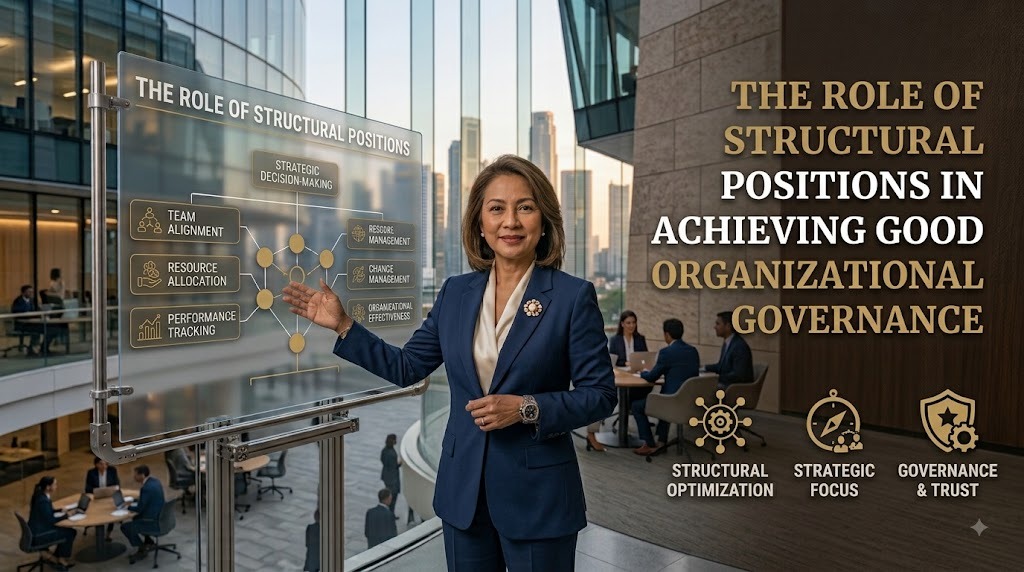
Good organizational governance is essential for ensuring that an organization operates effectively, responsibly, transparently, and according to established objectives. Structural positions play an important role because individuals in these positions have authority to manage people, resources, programs, and organizational decisions. Their actions can influence how policies are implemented and how responsibilities are distributed. Therefore, effective structural leadership is an important foundation for achieving good organizational governance.
Good governance is not created only through formal rules. It also requires leaders who can apply principles such as accountability, transparency, fairness, responsibility, and participation in daily management. Structural leaders must ensure that organizational decisions are made appropriately and that resources are used for legitimate purposes. When these principles are consistently applied, organizations can build stronger trust and improve their overall performance.
UNDERSTANDING STRUCTURAL POSITIONS
A structural position is a formal role within an organization that carries specific authority, responsibilities, and accountability. Structural leaders may include managers, supervisors, department heads, or other officials responsible for coordinating organizational activities. They are expected to translate organizational goals into practical programs and activities. Clear roles and authority help prevent confusion and overlapping responsibilities.
Structural positions also connect different levels of organizational management. Senior leaders establish strategic direction, while managers and supervisors help implement those decisions in daily operations. Effective coordination between these levels allows information and responsibilities to move more efficiently. A clear structure supports coordination, accountability, and organizational stability.
UNDERSTANDING GOOD ORGANIZATIONAL GOVERNANCE
Good organizational governance refers to a management approach that promotes responsible decision making, transparency, accountability, fairness, and effective use of resources. Governance provides a framework for organizations to achieve their objectives while maintaining appropriate standards of conduct. Structural leaders are important because they help translate governance principles into everyday practices. Good governance depends on both effective systems and responsible leadership.
Governance also involves monitoring how decisions are made and how organizational resources are managed. Leaders should ensure that processes can be reviewed and evaluated when necessary. Employees and relevant stakeholders should understand their responsibilities within the governance system. Strong governance contributes to organizational credibility and sustainable performance.
PROMOTING ACCOUNTABILITY
Accountability is a key principle of good organizational governance. Structural leaders need to understand that authority comes with responsibility for decisions and organizational outcomes. They should be prepared to explain their actions and evaluate whether activities have achieved their intended objectives. Clear accountability reduces the risk of negligence and misuse of authority.
Accountability should be supported by appropriate monitoring and reporting systems. Leaders need to establish clear responsibilities so that employees know who is responsible for particular tasks and decisions. Performance should be evaluated using relevant standards and evidence. Strong accountability creates responsible management and greater organizational trust.
STRENGTHENING TRANSPARENCY
Transparency allows relevant stakeholders to obtain appropriate and accurate information about organizational activities. Structural leaders should ensure that important policies, procedures, and decisions are communicated through suitable channels. Transparency does not require the disclosure of confidential information that should remain protected. Instead, it means providing information responsibly and appropriately.
Transparent management can reduce misunderstandings and strengthen confidence in organizational leadership. Leaders should provide clear explanations when decisions significantly affect employees or stakeholders. Proper documentation can also make organizational processes easier to review. Transparency supports trust, fairness, and effective governance.
ENSURING FAIR AND RESPONSIBLE DECISION MAKING
Structural leaders make many decisions involving employees, resources, programs, and organizational priorities. These decisions should be based on relevant information, established rules, organizational objectives, and objective considerations. Personal interests should not influence decisions that affect organizational responsibilities. Fair decision making is essential for maintaining governance quality.
Leaders should also consider the possible consequences of their decisions. When decisions involve complex issues, consultation with relevant parties may provide additional perspectives. Leaders should be willing to review decisions when reliable evidence shows that changes are necessary. Responsible decision making supports fairness, accountability, and organizational effectiveness.
MANAGING RISK AND UNCERTAINTY
Organizations face various risks related to finances, operations, technology, human resources, compliance, and reputation. Structural leaders need to identify important risks and determine appropriate ways to manage them. Risk management should be integrated into planning and decision making. Effective risk management helps organizations prepare for potential problems.
Leaders should also monitor whether existing controls remain appropriate as conditions change. New technologies, regulations, or organizational priorities may create new risks. Employees should understand their roles in identifying and reporting potential problems. A proactive approach can strengthen organizational resilience and governance quality.
USING DIGITAL TECHNOLOGY FOR BETTER GOVERNANCE
Digital technology can support governance through better data management, reporting, communication, and monitoring. Structural leaders can use digital systems to improve the efficiency and accessibility of organizational information. However, technology should be implemented according to actual organizational needs. Digital governance requires both technological capability and responsible management.
Data security and privacy should also be considered when using digital systems. Leaders should ensure that employees understand appropriate procedures for accessing, storing, and sharing organizational information. Digital systems should be regularly evaluated to determine whether they provide the expected benefits. Responsible technology use can strengthen transparency, efficiency, and decision making.
DEVELOPING PROFESSIONAL LEADERSHIP
Good governance depends heavily on the competence of structural leaders. Leaders need skills in planning, communication, decision making, problem solving, resource management, and employee development. These competencies should be strengthened through training, mentoring, professional education, and practical experience. Professional leadership supports consistent implementation of governance principles.
Leaders should also evaluate their own performance and accept constructive feedback. Learning from mistakes can help prevent similar problems in the future. Organizations should provide opportunities for leaders to develop both technical and interpersonal competencies. Continuous development contributes to stronger leadership and organizational effectiveness.
MONITORING AND EVALUATING PERFORMANCE
Governance requires regular monitoring to determine whether organizational activities are achieving their objectives. Structural leaders should establish appropriate performance indicators and review results periodically. Evaluation can identify weaknesses, risks, and opportunities for improvement. Performance monitoring provides evidence for better organizational decisions.
Evaluation should not only focus on problems. Leaders should also identify successful practices that can be maintained or expanded. Results should be communicated appropriately to support accountability and learning. A consistent evaluation process encourages continuous improvement and organizational responsibility.
BUILDING A GOVERNANCE ORIENTED CULTURE
Good governance becomes more effective when its principles are integrated into organizational culture. Structural leaders influence culture through their decisions, communication, and daily behavior. Employees are more likely to follow governance standards when leaders demonstrate them consistently. Governance oriented culture can make responsible behavior part of everyday organizational practice.
Organizations should encourage employees to value accountability, transparency, fairness, and integrity. Recognition and constructive feedback can reinforce positive behavior. At the same time, violations of important standards should be handled according to established procedures. A strong governance culture supports trust, professionalism, and sustainable organizational performance.
CONCLUSION
The role of structural positions in achieving good organizational governance is closely connected to leadership, accountability, transparency, ethical behavior, resource management, communication, and performance evaluation. Structural leaders translate organizational principles into practical actions and influence how employees perform their responsibilities. Their decisions can determine whether governance standards are applied consistently.
Achieving good governance requires more than creating policies. Organizations need structural leaders who demonstrate integrity, competence, fairness, responsibility, and accountability in their daily work. By strengthening leadership capabilities, improving transparency, managing resources responsibly, and encouraging continuous evaluation, organizations can build stronger governance systems and achieve sustainable performance.
About the Author
Gusti Ayu Tita P
Author — STEKOM University
An active author focused on academic issues, educational technology, and human resource development in the campus environment.