The Role Of Structural Positions In Improving Organizational Performance
Gusti Ayu Tita P
12 Agustus 2026
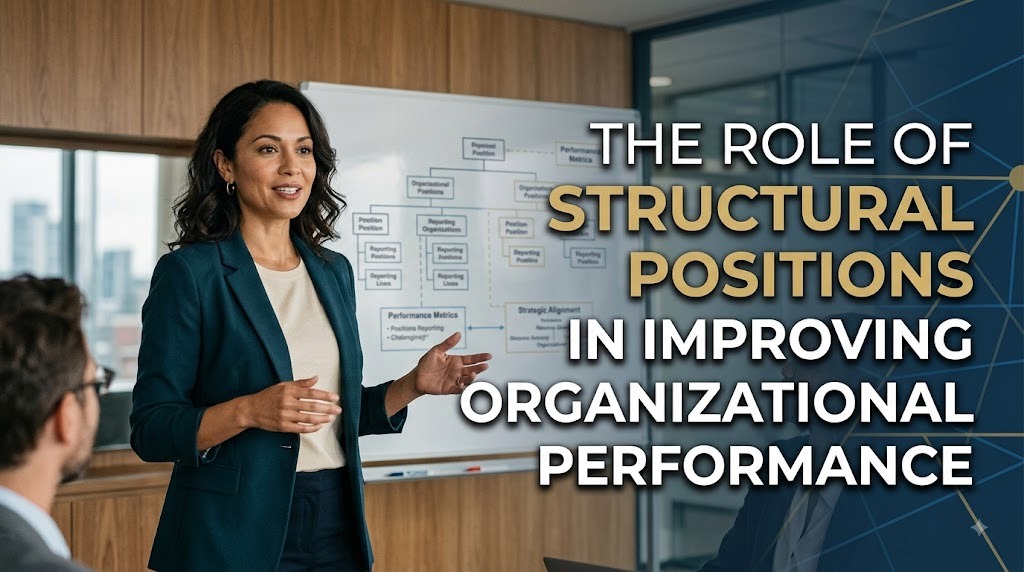
Structural positions play an important role in determining how an organization is managed and how effectively its goals are achieved. People who hold these positions are generally responsible for leading teams, coordinating activities, managing resources, making decisions, and monitoring performance. Their leadership can influence both daily operations and the long term direction of an organization.
In modern organizations, structural roles require more than authority or formal responsibility. Leaders need strong managerial skills, effective communication, integrity, and the ability to respond to changing conditions. When structural positions are managed properly, they can support better productivity, stronger teamwork, efficient resource use, and improved organizational performance.
UNDERSTANDING STRUCTURAL POSITIONS IN AN ORGANIZATION
A structural position is a role that carries specific responsibilities and authority within an organizational hierarchy. It normally involves coordinating people, managing activities, and ensuring that assigned objectives are achieved. Structural leaders may supervise employees, manage programs, or coordinate different organizational units. Their responsibilities depend on the size, structure, and objectives of the organization.
The effectiveness of a structural position depends on how authority is used. A leader should not only give instructions but also understand the needs of employees and the organization. Clear responsibilities and appropriate authority help prevent confusion and overlapping duties. When roles are clearly defined, employees can understand what is expected from them and work toward common objectives.
THE IMPORTANCE OF LEADERSHIP IN ORGANIZATIONAL PERFORMANCE
Leadership is one of the most important elements of a structural position. A leader is responsible for providing direction and helping employees understand organizational goals. Good leadership can increase employee motivation and encourage stronger cooperation. Effective leaders also create a working environment where employees feel respected and supported.
Leaders must also demonstrate consistency between their words and actions. Employees are more likely to follow rules when managers show discipline, responsibility, and professionalism. A leader who communicates clearly can reduce misunderstandings and improve teamwork. Therefore, strong leadership can directly contribute to better organizational performance.
IMPROVING WORK PLANNING AND ORGANIZATION
Structural leaders have an important responsibility in planning organizational activities. Good planning helps determine priorities, deadlines, available resources, and expected results. Without proper planning, employees may spend time on activities that do not directly support organizational objectives. Effective work planning helps organizations use their resources more efficiently.
Organization is equally important because employees need clear responsibilities. Managers should distribute tasks according to employee capabilities and organizational needs. They also need to coordinate activities between different teams to avoid duplication or delays. With clear planning and task distribution, organizations can improve efficiency, productivity, and accountability.
SUPPORTING EFFECTIVE DECISION MAKING
People in structural positions often make decisions that affect employees, resources, and organizational activities. These decisions should be based on relevant information, organizational objectives, and applicable rules. Leaders need to identify problems, consider alternatives, and evaluate possible risks before making important decisions. Data based decision making can help reduce unnecessary errors and improve organizational outcomes.
Effective decision making also requires the ability to respond to unexpected situations. Leaders may have to make decisions when information is incomplete or circumstances change quickly. In such situations, managers should remain objective and consider the potential consequences of each option. After implementation, decisions should be evaluated to determine whether they produced the expected results.
STRENGTHENING COMMUNICATION AND COORDINATION
Communication is essential for maintaining effective relationships within an organization. Structural leaders need to communicate goals, instructions, policies, and expectations clearly. They should also listen to employees and provide opportunities for feedback. Two way communication can help identify problems early and prevent misunderstandings.
Coordination ensures that different teams work toward the same organizational goals. A manager may need to connect several departments when a task involves multiple areas of responsibility. Regular coordination can reduce duplicated work and improve the flow of information. Strong communication and coordination can therefore support better teamwork and organizational efficiency.
MANAGING CHANGE AND DIGITAL TRANSFORMATION
Organizations must continuously adapt to changes in technology, customer expectations, regulations, and market conditions. Structural leaders have an important role in helping employees understand and accept these changes. Managers should explain why change is necessary and provide appropriate support during implementation. Change management skills can reduce resistance and improve the chances of successful transformation.
Digital transformation also requires leaders to understand how technology can improve organizational processes. Digital tools can support communication, data management, monitoring, and service delivery. However, technology alone does not guarantee better performance. Leaders must ensure that employees have the necessary skills and that digital systems are used responsibly and securely.
PROMOTING INTEGRITY IN LEADERSHIP
Organizational performance should never be achieved by ignoring ethical standards. Structural leaders must use their authority responsibly and avoid conflicts of interest or misuse of organizational resources. Integrity and ethical leadership help create trust between managers, employees, and other stakeholders. Leaders who demonstrate honesty can encourage employees to follow similar standards.
Integrity is particularly important when leaders make decisions involving people, budgets, or organizational resources. Managers should apply rules consistently and avoid favoritism. They should also be willing to acknowledge mistakes and take corrective action when necessary. An ethical leadership culture can reduce organizational risks while strengthening its reputation.
MEASURING THE IMPACT OF STRUCTURAL LEADERSHIP
The effectiveness of structural positions should be evaluated through measurable organizational results. Relevant indicators may include productivity, service quality, employee performance, efficiency, achievement of targets, and stakeholder satisfaction. Evaluation helps leaders identify areas that are working well and areas that require improvement. Performance measurement should therefore become part of regular organizational management.
Evaluation should not only focus on weaknesses or failures. Successful practices should also be identified and developed so they can be applied more widely. Leaders can use evaluation results to improve planning, resource allocation, and employee development. Continuous evaluation creates a culture of learning and improvement within the organization.
CHALLENGES FACED BY STRUCTURAL LEADERS
Structural leaders may face many challenges, including limited resources, communication problems, employee resistance, changing priorities, and complex organizational issues. Some problems cannot be solved through a single decision because they involve multiple departments or stakeholders. Leaders need patience, analytical thinking, and effective communication to manage such situations. Adaptability is especially important when organizational conditions change rapidly.
Another challenge is maintaining employee motivation during periods of uncertainty. Managers need to provide clear direction while remaining open to feedback and new ideas. They should also avoid making decisions based only on personal assumptions. By combining professionalism, flexibility, and accountability, structural leaders can respond to challenges more effectively.
STRATEGIES TO IMPROVE ORGANIZATIONAL PERFORMANCE
Structural leaders can improve organizational performance by setting clear objectives and aligning employee activities with those objectives. They should establish measurable targets and regularly review progress. Employee capabilities should be developed through training and practical experience. Continuous improvement should become part of the organization's daily culture rather than a temporary program.
Organizations can also benefit from technology, data analysis, collaboration, and transparent evaluation systems. Leaders should encourage employees to identify inefficient processes and propose practical improvements. Successful changes should be monitored to ensure that they produce sustainable results. With effective leadership, competent employees, clear systems, and responsible resource management, structural positions can contribute significantly to organizational success.
CONCLUSION
The role of structural positions in improving organizational performance is closely connected to leadership, decision making, planning, communication, resource management, and accountability. Structural leaders provide direction, coordinate employees, and ensure that organizational activities remain aligned with strategic objectives. Their ability to manage people and processes can significantly influence productivity, efficiency, and service quality.
Strong structural leadership requires more than formal authority. Leaders need managerial competence, integrity, adaptability, communication skills, and a commitment to continuous improvement. When these qualities are supported by clear organizational systems and effective performance evaluation, structural positions can become a strong foundation for sustainable organizational growth and better results.
About the Author
Gusti Ayu Tita P
Author — STEKOM University
An active author focused on academic issues, educational technology, and human resource development in the campus environment.