Transforming Structural Positions To Face Change In The Digital Era
Gusti Ayu Tita P
12 Agustus 2026
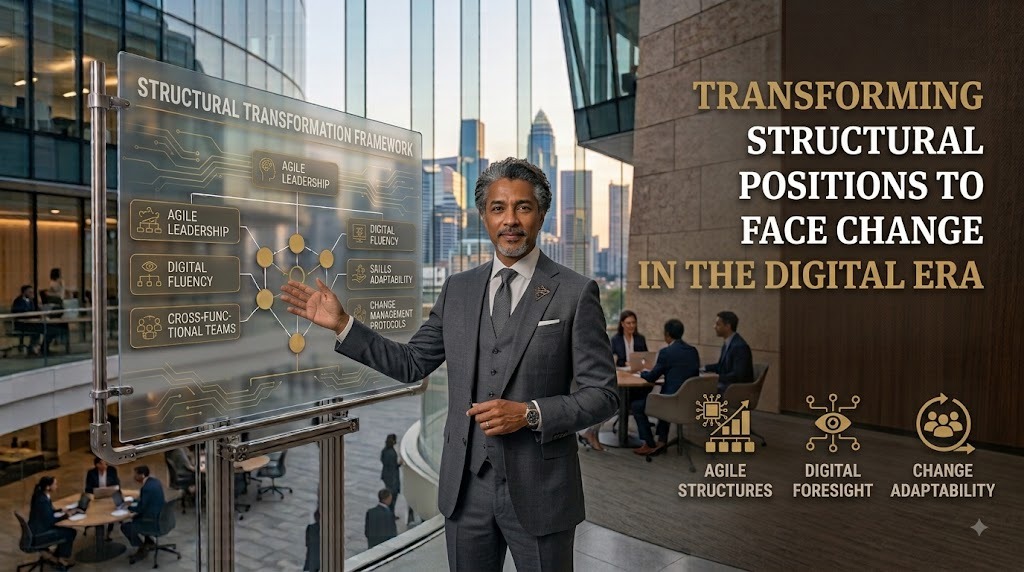
Digital transformation is changing the way organizations operate, communicate, manage information, and deliver services. These changes also affect structural positions because leaders must manage employees and processes in an environment that increasingly depends on technology. Traditional management approaches may no longer be sufficient when organizations face rapid technological development and changing stakeholder expectations. Therefore, transforming structural positions is important to ensure that leadership remains relevant, effective, and responsive.
Digital transformation is not simply about replacing manual processes with digital systems. It also involves changes in organizational culture, employee competencies, decision making, communication, and management practices. Structural leaders need to understand technology while maintaining human centered leadership. A successful transformation requires digital competence, adaptability, innovation, collaboration, and responsible leadership.
UNDERSTANDING STRUCTURAL POSITIONS IN THE DIGITAL ERA
Structural positions are formal roles that carry authority, responsibility, and accountability within an organization. In the digital era, these responsibilities increasingly involve managing digital information, technology based workflows, remote collaboration, and data driven decisions. Leaders must understand how technology affects their teams and organizational processes. Modern structural leadership therefore requires broader competencies than traditional administrative management.
Digitalization also changes how leaders communicate with employees and monitor organizational performance. Meetings, reports, collaboration, and decision support can increasingly be conducted through digital platforms. Leaders need to ensure that these tools improve productivity rather than create unnecessary complexity. Effective structural management should combine technology with sound managerial judgment.
WHY STRUCTURAL POSITIONS NEED TRANSFORMATION
Organizations face rapid changes in technology, customer expectations, competition, regulations, and working methods. Structural leaders who rely entirely on outdated procedures may find it difficult to respond effectively. Transformation allows leadership roles to adapt to new organizational requirements. Organizational adaptability becomes an important factor in maintaining long term performance.
Transformation can also reduce unnecessary administrative work. Digital systems may automate repetitive activities and provide faster access to information. This allows leaders to spend more time on strategic planning, employee development, and problem solving. When implemented carefully, transformation can improve efficiency, responsiveness, and decision quality.
DEVELOPING DIGITAL LEADERSHIP COMPETENCE
Digital leadership does not require every structural leader to become a technology specialist. However, leaders need enough knowledge to understand digital systems, data, cybersecurity, automation, and technology related risks. They should be able to evaluate whether a particular technology is appropriate for organizational needs. Digital leadership competence helps managers make better decisions about technological transformation.
Leaders should also encourage employees to develop digital skills. Training, mentoring, workshops, and practical learning can help employees adapt to new systems. Managers need to recognize different levels of digital readiness within their teams. Supporting employee development creates a more capable and adaptable workforce.
USING DATA FOR BETTER DECISION MAKING
Digital transformation provides organizations with greater access to data. Structural leaders can use reliable data to monitor performance, identify trends, evaluate risks, and support planning. However, data should not automatically determine every decision. Leaders still need professional judgment and contextual understanding.
Managers should ensure that data is accurate, relevant, and obtained through appropriate processes. They also need to consider privacy and information security when handling organizational data. Employees should understand how data is collected, stored, analyzed, and used. Responsible data management supports evidence based decision making.
IMPROVING DIGITAL COMMUNICATION
Digital platforms have changed how employees communicate and collaborate. Email, messaging applications, video conferences, project management systems, and shared documents can make communication faster. Structural leaders should establish clear rules about which channels should be used for different types of information. Effective digital communication helps reduce confusion and improve coordination.
Leaders should also recognize that digital communication can create challenges. Excessive messages, unclear instructions, and constant notifications may reduce productivity. Important information should be communicated clearly, concisely, and through appropriate channels. Good digital communication requires clarity, discipline, responsiveness, and respect.
PROMOTING FLEXIBLE WORKING METHODS
Digital technology allows some organizations to implement flexible working arrangements, including remote or hybrid work where appropriate. Structural leaders need to focus on outcomes rather than relying solely on physical presence. Clear objectives, measurable responsibilities, and regular communication are important for maintaining performance. Flexible management can improve adaptability when supported by appropriate systems.
However, flexible work also requires careful coordination. Employees may experience communication difficulties, isolation, or unequal access to digital resources. Leaders should ensure that employees have the tools and support necessary to perform their responsibilities. Balanced management can maintain productivity and employee engagement.
AUTOMATING ADMINISTRATIVE PROCESSES
Automation can help organizations reduce repetitive administrative activities. Tasks such as data entry, scheduling, reporting, document processing, and routine notifications may be supported by digital tools. Structural leaders should identify processes where automation can provide meaningful benefits. Process automation can allow employees to focus on more complex and valuable activities.
Automation should not be introduced without evaluating its potential effects. Leaders need to consider cost, security, accuracy, employee readiness, and the possibility of errors. Human oversight remains important, especially for decisions that have significant consequences. Responsible automation can improve efficiency while maintaining accountability.
ENCOURAGING INNOVATION AND COLLABORATION
Digital transformation creates opportunities for organizations to develop new products, services, and work processes. Structural leaders should encourage employees to identify problems and propose practical improvements. Innovation should be connected to organizational objectives rather than pursued simply because a technology is new. Strategic innovation can create meaningful improvements.
Collaboration is also important because digital transformation often involves multiple departments and areas of expertise. Leaders should encourage teams to share information and work across organizational boundaries. Cross functional collaboration can produce more complete solutions to complex problems. A collaborative approach supports creativity, efficiency, and organizational learning.
DEVELOPING CONTINUOUS LEARNING
Technology changes quickly, so structural leaders and employees cannot depend only on knowledge gained in the past. Organizations should provide opportunities for continuous learning and competency development. Leaders can encourage online courses, workshops, mentoring, professional communities, and practical projects. Continuous learning helps employees remain prepared for new responsibilities.
Leaders should also evaluate whether training produces useful improvements. Learning should be connected to real organizational problems and measurable outcomes whenever possible. Employees should be encouraged to share knowledge with colleagues. A learning oriented organization becomes more capable of adapting to technological change.
EVALUATING DIGITAL TRANSFORMATION
Digital transformation should be evaluated regularly to determine whether it produces the expected benefits. Structural leaders can monitor indicators such as efficiency, service quality, employee productivity, user satisfaction, cost, and security. Evaluation provides evidence about which approaches are successful and which need adjustment. Performance measurement is therefore an important part of transformation.
Leaders should not assume that every digital initiative will succeed immediately. Some systems may require modification, additional training, or even replacement when they do not meet organizational needs. Feedback from employees and users can provide valuable information for improvement. Continuous evaluation supports sustainable digital transformation.
MAINTAINING ETHICS IN DIGITAL LEADERSHIP
Digital transformation creates ethical issues involving data, privacy, automated decisions, surveillance, and access to technology. Structural leaders need to ensure that technology is used responsibly and does not unnecessarily harm employees or stakeholders. Decisions involving digital systems should consider fairness, transparency, security, and human impact. Ethical digital leadership is essential for maintaining trust.
Leaders should also ensure that technology does not replace appropriate human judgment in situations that require context and empathy. Automated systems should be monitored for errors or unfair outcomes. Employees should understand their responsibilities when using organizational technology. Ethical management helps ensure that digital transformation remains responsible and human centered.
CONCLUSION
Transforming structural positions to face change in the digital era requires leaders to develop digital competence while maintaining strong managerial and ethical principles. Structural leaders need to understand technology, use data responsibly, improve communication, support flexible work, and manage organizational change. They must also help employees develop the skills needed to work effectively in a digital environment.
Digital transformation should be treated as an ongoing organizational process rather than a one time technology project. By strengthening digital leadership, continuous learning, cybersecurity, innovation, collaboration, and change management, structural leaders can make organizations more adaptable and competitive. The most successful transformation combines technological progress with responsible leadership and the development of people.
About the Author
Gusti Ayu Tita P
Author — STEKOM University
An active author focused on academic issues, educational technology, and human resource development in the campus environment.