Understanding The Functions And Responsibilities Of Structural Positions
Gusti Ayu Tita P
12 Agustus 2026
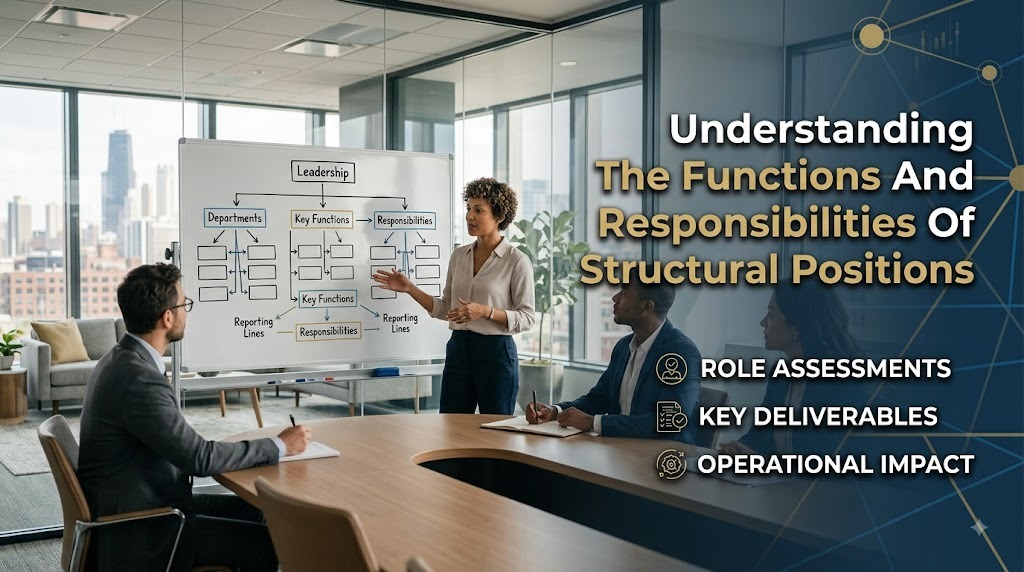
Structural positions are important roles within an organization because they provide authority, direction, and responsibility for managing people and organizational activities. Individuals in these positions are expected to coordinate work, make decisions, manage resources, and ensure that organizational objectives are achieved. Their responsibilities can vary depending on the organization's size, structure, and type of work. However, every structural position requires clear duties and appropriate accountability.
Understanding the functions and responsibilities of structural positions is important for creating an organized and effective workplace. When responsibilities are clearly defined, employees understand their roles and can work more efficiently. Leaders can also monitor performance and identify problems more easily. A well-managed structure supports coordination, accountability, productivity, and organizational effectiveness.
THE MEANING OF STRUCTURAL POSITIONS
A structural position refers to a formal role within an organizational hierarchy that carries specific duties and authority. It usually involves responsibility for directing employees, coordinating activities, and managing organizational resources. Structural positions can exist at different management levels, from supervisors to senior managers. The exact responsibilities depend on the organization's structure and operational needs.
A structural role is different from simply having a job title. The position gives an individual specific authority to perform certain functions and requires the person to be accountable for the results. Clear authority and responsibility help prevent confusion between employees and departments. When these elements are properly defined, organizational activities can be carried out in a more coordinated manner.
THE MAIN FUNCTIONS OF STRUCTURAL POSITIONS
One of the main functions of a structural position is to provide direction for employees and organizational activities. Leaders establish priorities and ensure that daily work supports broader organizational objectives. They also coordinate different tasks so that employees can work toward common goals. Without effective direction, organizational activities may become disconnected or inefficient.
Another important function is monitoring organizational performance. Structural leaders need to review progress, identify obstacles, and take corrective action when necessary. They may also evaluate whether resources are being used appropriately. Through effective supervision, organizations can maintain quality, efficiency, and accountability in their operations.
PLANNING AND ORGANIZING WORK
Planning is an essential responsibility of structural leaders. It involves determining objectives, identifying necessary activities, setting priorities, and allocating available resources. Good planning allows employees to understand what needs to be accomplished and when it should be completed. It also helps organizations prepare for potential risks and changes.
Organizing involves dividing work and assigning responsibilities to the appropriate people or teams. Structural leaders must consider employee skills, workload, and organizational priorities when distributing tasks. They also need to establish effective coordination between departments. Proper planning and organization can reduce duplication, delays, and unnecessary use of resources.
DECISION MAKING AND PROBLEM SOLVING
Structural positions involve making decisions that can affect employees and organizational performance. Leaders should base their decisions on relevant information, organizational policies, and available evidence. They need to identify the main problem before considering possible solutions. Objective decision making can reduce unnecessary risks and improve organizational outcomes.
Problem solving requires leaders to analyze situations rather than immediately reacting to them. They should consider different alternatives and evaluate the potential consequences of each option. When a decision has been implemented, its results should also be reviewed. This approach allows organizations to learn from experience and improve future decision making.
RESOURCE MANAGEMENT RESPONSIBILITIES
Structural leaders are often responsible for managing various organizational resources. These resources can include employees, budgets, facilities, equipment, time, information, and technology. Leaders need to ensure that resources are used appropriately and support organizational priorities. Efficient resource management can help organizations achieve better results without unnecessary waste.
Human resources require particular attention because employee capabilities directly influence organizational performance. Managers should assign tasks according to employee skills and workload. They should also identify opportunities for training and professional development. Responsible resource management helps maintain productivity, efficiency, and organizational sustainability.
ACCOUNTABILITY AND PROFESSIONAL RESPONSIBILITY
Accountability means that individuals are responsible for the decisions they make and the results of their work. Structural leaders should establish clear expectations and monitor whether responsibilities are being fulfilled. They also need to provide reports or explanations when required by organizational procedures. Accountability helps create a culture where employees understand that their actions have consequences.
Professional responsibility also requires leaders to act ethically and consistently. They should follow applicable rules and avoid using their authority for personal interests. Fair treatment of employees is important for maintaining trust within the organization. When leaders demonstrate integrity and professionalism, employees are more likely to respect organizational standards.
MANAGING CHANGE AND DIGITAL DEVELOPMENT
Organizations constantly face changes in technology, customer expectations, regulations, and working methods. Structural leaders have a responsibility to help employees adapt to these changes. They should explain the purpose of changes and provide appropriate guidance during implementation. Change management is therefore an important part of modern structural leadership.
Digital development can also improve organizational processes when implemented carefully. Leaders may use digital tools for communication, data management, monitoring, and service delivery. However, technology should be introduced according to organizational needs and supported by adequate employee skills. Leaders must also consider data security, privacy, and responsible technology use.
MAINTAINING ETHICS AND INTEGRITY
Ethics and integrity are essential responsibilities for anyone holding a position of authority. Structural leaders should make decisions fairly and avoid conflicts of interest. They must not misuse organizational resources or authority for personal benefit. Ethical leadership creates trust and strengthens the credibility of an organization.
Integrity should also be demonstrated through consistent behavior. Leaders should follow the same standards they expect from employees. If mistakes occur, responsible leaders should acknowledge them and take appropriate corrective action. A strong ethical culture can reduce misconduct and support long term organizational trust.
CHALLENGES IN STRUCTURAL POSITIONS
People in structural positions may face various challenges, including limited resources, employee disagreements, changing priorities, and pressure to achieve targets. These challenges can make leadership more complex, especially when different stakeholders have different expectations. Leaders need strong analytical and communication skills to handle difficult situations. Adaptability and emotional intelligence can also help leaders respond effectively.
Another challenge is maintaining a balance between organizational goals and employee needs. Leaders must achieve targets while ensuring that employees receive fair treatment and appropriate support. They also need to respond to changes without losing sight of organizational values. By using clear communication, objective decisions, and continuous evaluation, structural leaders can manage these challenges more effectively.
THE IMPACT OF EFFECTIVE STRUCTURAL POSITIONS
Effective structural positions can have a significant impact on organizational performance. Clear leadership can improve coordination, employee productivity, and decision making. Proper supervision also helps organizations identify problems and correct them before they become larger issues. As a result, the organization can operate with greater efficiency and consistency.
Strong structural leadership can also improve employee satisfaction and trust. When employees understand their responsibilities and receive fair guidance, they are more likely to contribute actively. Effective leaders can create a culture based on accountability, cooperation, and continuous improvement. Therefore, well-managed structural positions are an important foundation for sustainable organizational success.
CONCLUSION
Understanding the functions and responsibilities of structural positions is essential for building an effective and well-organized workplace. Structural leaders are responsible for planning, organizing, decision making, employee development, communication, resource management, supervision, and accountability. These responsibilities require not only authority but also strong managerial skills and professional judgment.
Successful structural leadership depends on competence, integrity, communication, adaptability, and accountability. Leaders who understand their responsibilities can guide employees more effectively and ensure that organizational resources are used properly. By performing their functions consistently and ethically, structural leaders can improve productivity, strengthen teamwork, and support the achievement of long term organizational goals.
About the Author
Gusti Ayu Tita P
Author — STEKOM University
An active author focused on academic issues, educational technology, and human resource development in the campus environment.