
Why Can Neighborhood Watch Activities Strengthen Community Cooperation?
Gusti Ayu Tita P
18 September 2026
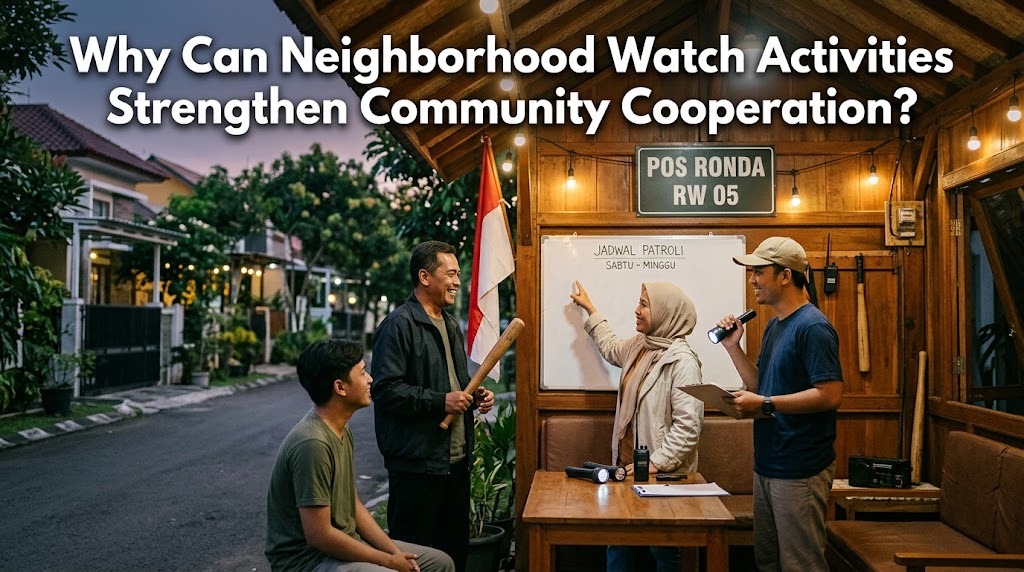
Community safety is not only the responsibility of security officers or local authorities. Residents also have an important role in creating an environment that feels safe, peaceful, and comfortable. One practical way to encourage this involvement is through neighborhood watch activities, where residents work together to monitor and maintain security in their surroundings.
Beyond security, neighborhood watch activities can build stronger relationships among residents. Regular interaction during patrols, discussions, and community activities creates opportunities for people to communicate and understand one another. When residents cooperate consistently, they can develop a stronger sense of community responsibility and respond to local concerns more effectively.
BUILDING COMMUNICATION BETWEEN RESIDENTS
Neighborhood watch activities provide residents with opportunities to communicate directly. People who rarely meet during their daily routines can interact while participating in patrols or security discussions. Regular communication helps residents become more familiar with one another and makes it easier to share important information about their surroundings. Good communication can also reduce misunderstandings and encourage residents to solve minor concerns through discussion.
A neighborhood watch post can become a central place for these interactions. Residents can discuss security concerns, neighborhood conditions, and possible improvements in a relaxed setting. Open communication also allows people to exchange useful information about unusual situations without creating unnecessary panic. Over time, these interactions can strengthen trust and make cooperation more natural.
ENCOURAGING SHARED RESPONSIBILITY
Neighborhood watch activities teach residents that community safety is a shared responsibility. Instead of leaving security matters to a small group of people, residents can contribute according to their abilities and availability. Some people may participate in night patrols, while others can help coordinate schedules or maintain the watch post. This division of responsibilities makes community security efforts more organized.
Shared responsibility can also create a stronger sense of belonging. When residents contribute to the same goal, they become more aware of how their individual actions affect other people. Cooperation becomes easier when everyone understands that maintaining a safe environment requires consistent participation. This approach can encourage residents to care not only about their own homes but also about the wider neighborhood.
CREATING TRUST AND SOCIAL CONNECTIONS
Trust is an important part of effective community cooperation. Residents are more likely to work together when they know and trust the people around them. Neighborhood watch activities create regular opportunities for residents to interact, which can gradually develop stronger social connections. Familiarity can make people more comfortable asking for help or reporting concerns.
These relationships can be useful beyond security activities. Residents who have developed good connections may support each other during emergencies, community events, or other local needs. A strong social network can make a neighborhood more responsive when unexpected situations occur. Therefore, neighborhood watch activities can contribute to social cooperation as well as security awareness.
IMPROVING AWARENESS OF LOCAL CONDITIONS
Neighborhood watch activities encourage residents to pay closer attention to what happens around them. During patrols, residents may notice poor lighting, damaged public facilities, unfamiliar activity, or other environmental concerns. Identifying these issues can help the community discuss appropriate solutions before they become bigger problems. Increased awareness does not mean residents should confront suspicious individuals themselves, but rather that they should observe responsibly and contact the appropriate authorities when necessary.
A well organized neighborhood watch system can also improve the flow of local information. Residents can share verified information through agreed communication channels instead of spreading unconfirmed rumors. Accurate information sharing helps the community respond calmly and appropriately. This makes cooperation more effective because residents can base their actions on clear information.
DEVELOPING A CULTURE OF COOPERATION
Consistent participation can gradually create a culture of cooperation within a neighborhood. When residents see others contributing their time and effort, they may become more willing to participate themselves. Simple activities such as arranging patrol schedules, cleaning the watch post, or attending community meetings can strengthen collective habits. These habits can make cooperation part of everyday community life rather than an occasional activity.
A cooperative culture also helps communities manage differences. Residents may have different schedules, opinions, and priorities, so neighborhood activities require communication and flexibility. By discussing responsibilities and finding practical arrangements, people can learn how to work together despite differences. This experience can strengthen the community's ability to handle other local challenges.
CONCLUSION
Neighborhood watch activities can strengthen community cooperation by creating opportunities for communication, shared responsibility, trust, and social interaction. Their value is not limited to monitoring neighborhood conditions because regular participation can also help residents build stronger relationships. When people communicate openly and understand their respective responsibilities, community efforts can become more organized and sustainable.
A successful neighborhood watch system does not require every resident to participate in exactly the same way. What matters is consistent cooperation, responsible observation, accurate information sharing, and mutual respect. With these principles, neighborhood watch activities can support both community safety and stronger social relationships.
About the Author
Gusti Ayu Tita P
Author — STEKOM University
An active author focused on academic issues, educational technology, and human resource development in the campus environment.