Benefits of Joining Student Council to Develop Soft Skills and Student Confidence
Gusti Ayu Tita P
6 Oktober 2026
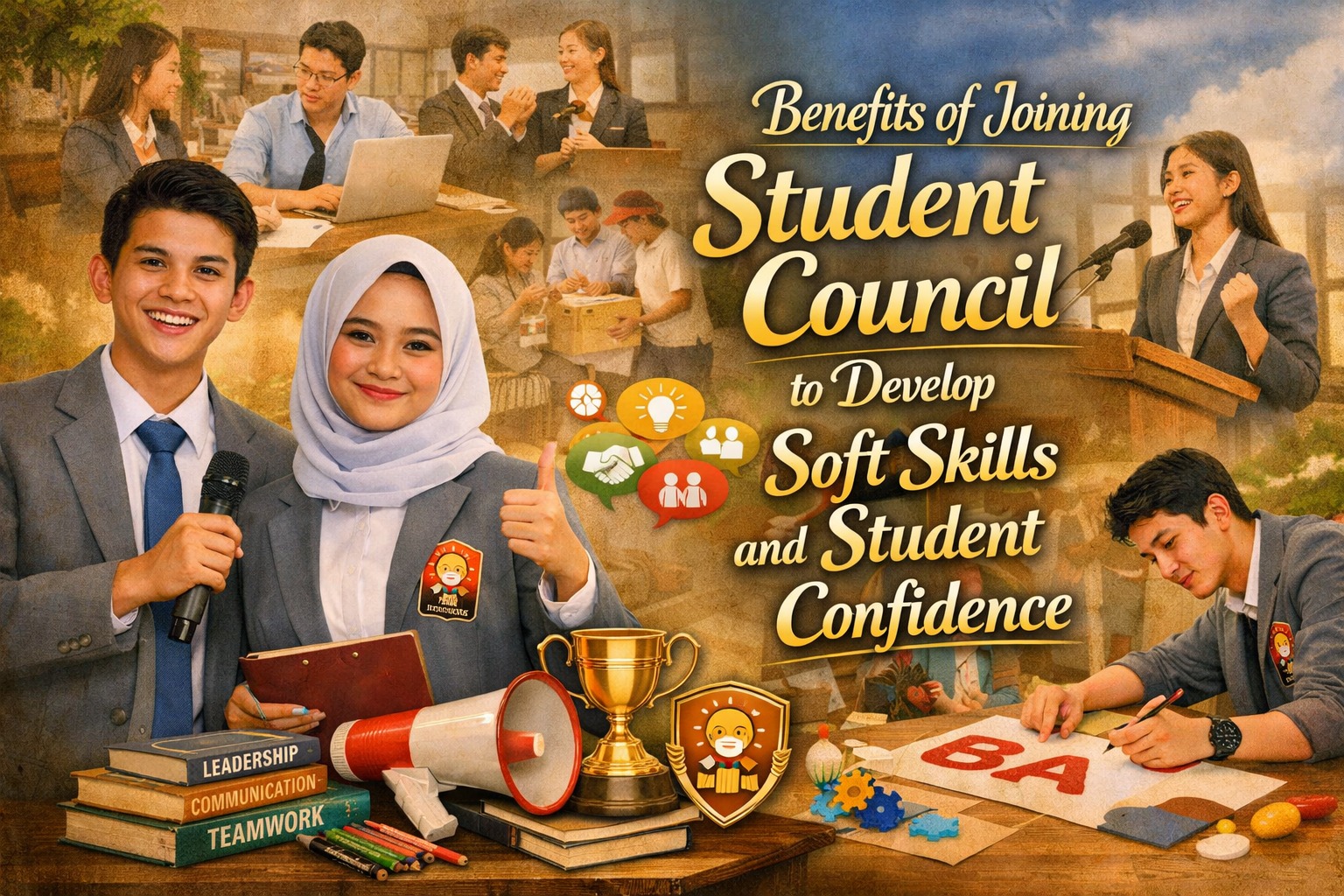
Joining the student council is one of the best ways for students to gain practical experience outside the classroom while improving their personal development. Besides organizing school activities, student council members learn how to communicate effectively, work with others, solve problems, and become responsible leaders. These experiences help students strengthen their soft skills and increase their self-confidence in various situations. The lessons gained through student council participation often become valuable assets for higher education and future careers. Therefore, joining the student council is an excellent opportunity for students who want to grow academically, socially, and personally.
UNDERSTANDING THE ROLE OF STUDENT COUNCIL
The student council is a student-led organization that represents the interests and aspirations of students within a school. Members collaborate with teachers and school administrators to organize educational events, leadership programs, social activities, and community service initiatives. They also encourage student participation in creating a positive and engaging school environment. Every responsibility provides meaningful opportunities for learning and personal growth.
Being involved in the student council allows students to experience leadership in real situations. Members must communicate with different people, organize projects, and work together to accomplish shared goals. These practical experiences help students develop responsibility, discipline, and confidence. As a result, the student council becomes an important platform for character development.
DEVELOPING ESSENTIAL SOFT SKILLS
One of the greatest benefits of joining the student council is the opportunity to strengthen soft skills. These skills include communication, teamwork, leadership, problem-solving, adaptability, and emotional intelligence. Unlike technical knowledge, soft skills are developed through real interactions and practical experiences. Student council activities provide countless opportunities to practice these abilities.
Members regularly participate in discussions, coordinate events, and collaborate with classmates and teachers. These experiences improve interpersonal relationships while teaching students how to express ideas clearly and respectfully. They also learn how to handle disagreements professionally and find solutions through cooperation. Strong soft skills become valuable advantages throughout life.
BUILDING STUDENT CONFIDENCE
Active participation in the student council significantly improves student confidence. Members frequently speak during meetings, present ideas, organize public events, and interact with different groups of people. These responsibilities gradually reduce fear of public speaking and strengthen self-belief. Confidence grows naturally through consistent practice.
Students also become more comfortable making decisions and accepting leadership responsibilities. Successfully completing projects gives them a sense of achievement and motivates them to accept greater challenges. Every accomplishment reinforces their belief in their own abilities. This confidence supports both academic success and future professional development.
IMPROVING LEADERSHIP AND RESPONSIBILITY
The student council provides an ideal environment for developing leadership skills. Members learn how to motivate others, organize activities, delegate responsibilities, and make thoughtful decisions that benefit the school community. Leadership also teaches accountability because every decision influences the success of organizational programs. These experiences prepare students to become responsible leaders.
Responsibility extends beyond completing assigned tasks. Student council members must demonstrate honesty, discipline, commitment, and respect while representing their school. They also learn the importance of keeping promises and meeting deadlines. These habits contribute to strong personal character and long-term success.
STRENGTHENING TEAMWORK AND PROBLEM SOLVING
Successful student council activities depend on effective teamwork. Members work together by sharing responsibilities, respecting different opinions, and supporting one another throughout every project. Collaboration teaches students how to value diversity and appreciate each person's contribution. Strong teamwork creates better outcomes for the organization.
Student council members also strengthen their problem-solving abilities by facing real challenges. Unexpected situations such as scheduling conflicts, limited resources, or event changes require quick thinking and creative solutions. Working through these challenges improves adaptability and critical thinking. These practical experiences prepare students for future academic and workplace environments.
PREPARING FOR FUTURE SUCCESS
The knowledge and experiences gained from the student council continue to benefit students long after graduation. Universities and employers highly value applicants who demonstrate leadership, communication, responsibility, and teamwork. Student council participation shows initiative and commitment to personal development. It also reflects the ability to balance multiple responsibilities successfully.
In addition, former student council members often adapt more easily to leadership opportunities in higher education and professional settings. Their experience managing projects and working with diverse groups gives them greater confidence when facing new challenges. These advantages contribute to lifelong personal and career success.
CONCLUSION
Joining the student council offers far more than extracurricular participation. It provides valuable opportunities to develop soft skills, strengthen student confidence, improve leadership abilities, and build responsibility through practical experiences. Students also gain teamwork, communication, and problem-solving skills that are highly valuable in education and future careers. By actively participating in student council activities, students become more confident, capable, and prepared for future challenges. Investing time in student leadership today creates lifelong benefits that extend well beyond the school environment.
Tentang Penulis
Gusti Ayu Tita P
Penulis — Universitas STEKOM
Penulis aktif yang berfokus pada isu-isu akademik, teknologi pendidikan, dan pengembangan sumber daya manusia di lingkungan kampus.