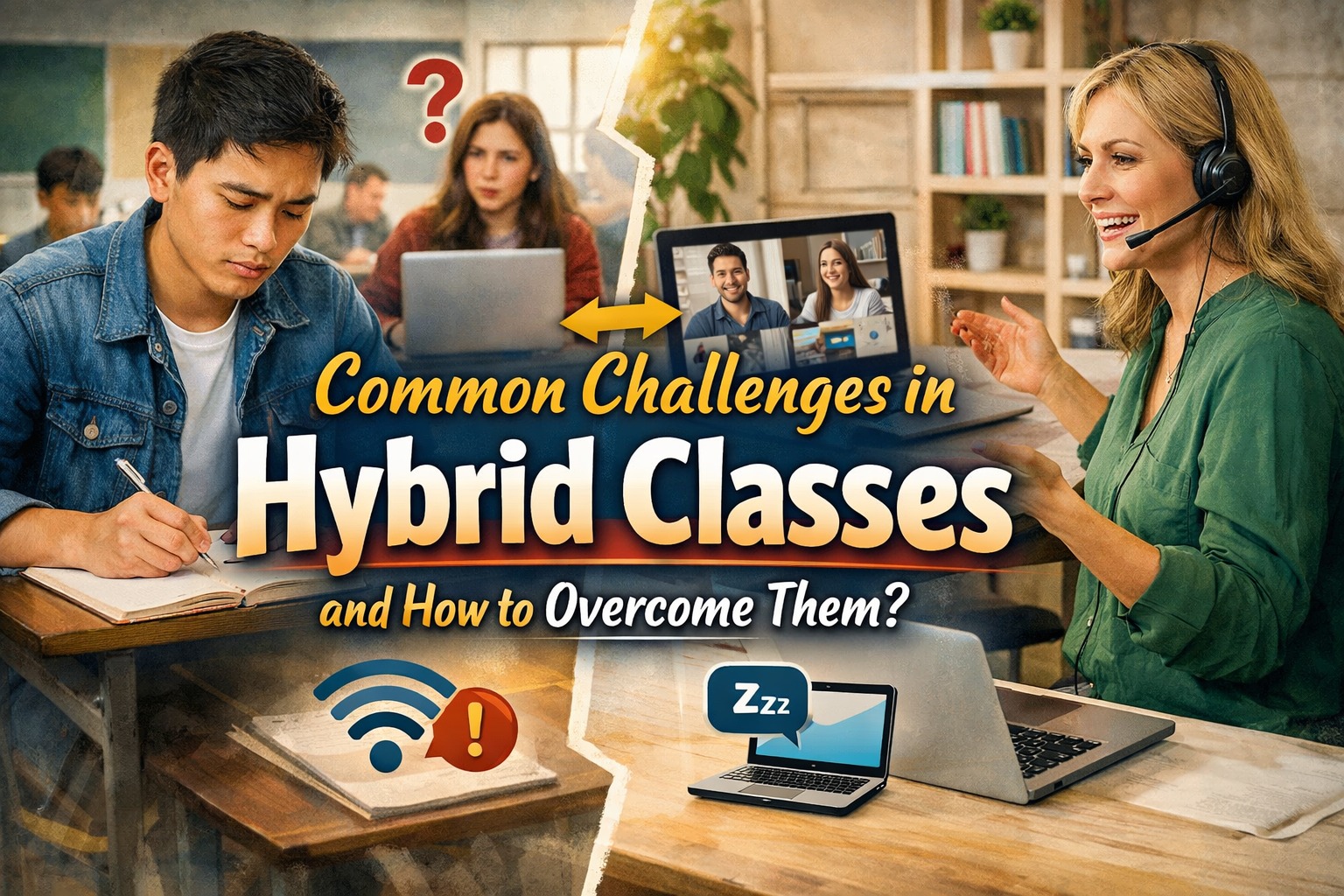
The rapid growth of digital education has made hybrid classes increasingly popular in schools, colleges, and training programs. This learning model combines face-to-face instruction with online learning, offering flexibility and wider access to education. While hybrid learning provides many benefits, it also introduces unique challenges for both students and educators.
Understanding these challenges is essential for creating a productive learning environment. By identifying common obstacles and applying effective solutions, students can improve their academic performance while educators can enhance the overall learning experience.
DIFFICULTIES IN MAINTAINING STUDENT ENGAGEMENT
One of the most common challenges in hybrid classes is keeping students actively engaged. In a hybrid environment, some students attend lessons in person while others participate remotely. This difference can create unequal learning experiences, causing online students to feel disconnected from classroom activities.
To overcome this issue, educators should use interactive learning methods such as live polls, group discussions, quizzes, and collaborative projects. Incorporating engaging digital tools can help remote learners participate more actively. Students should also make an effort to stay focused by minimizing distractions and actively contributing during lessons.
TECHNOLOGY AND INTERNET CONNECTIVITY ISSUES
Hybrid learning relies heavily on technology, making technical problems a significant concern. Unstable internet connections, software glitches, and device malfunctions can interrupt lessons and reduce learning effectiveness. These disruptions often cause frustration among both students and teachers.
Educational institutions can address this challenge by providing reliable digital platforms and technical support. Students should ensure that their devices are updated and their internet connection is stable before class begins. Having backup solutions, such as recorded lectures or alternative communication channels, can also help minimize disruptions.
COMMUNICATION GAPS BETWEEN STUDENTS AND TEACHERS
Effective communication is crucial in any educational setting, but it can be more challenging in hybrid classes. Remote students may hesitate to ask questions, while teachers may find it difficult to monitor participation levels across different learning environments.
Clear communication guidelines can significantly improve interaction. Teachers should establish regular feedback sessions and encourage students to ask questions through multiple channels, such as chat features, email, or discussion forums. Maintaining open communication helps create a more inclusive and supportive learning atmosphere.
TIME MANAGEMENT AND SELF-DISCIPLINE CHALLENGES
Hybrid learning offers flexibility, but it also requires strong time management and self-discipline. Without proper planning, students may struggle to balance coursework, assignments, and personal responsibilities. This can lead to missed deadlines and decreased academic performance.
Students can overcome this challenge by creating a structured study schedule and setting realistic goals. Using digital calendars, task management applications, and reminder tools can help keep track of important deadlines. Developing consistent study habits also contributes to long-term academic success.
ENSURING EQUAL LEARNING OPPORTUNITIES
Another challenge in hybrid classes is ensuring that all students receive the same quality of education. Sometimes, classroom discussions and activities naturally favor in-person participants, leaving remote learners with fewer opportunities to engage.
Educators can create a more balanced learning experience by designing activities that include both online and in-person students equally. Utilizing collaborative platforms and encouraging teamwork across learning modes can help bridge the gap. Equal participation promotes a stronger sense of community and improves learning outcomes for everyone.
MANAGING ASSESSMENTS AND ACADEMIC INTEGRITY
Assessing student performance fairly in hybrid environments can be complex. Teachers must ensure that evaluations accurately measure learning while maintaining academic integrity. Online assessments may present challenges related to monitoring and preventing dishonest practices.
To address this issue, educators can use a variety of assessment methods, including projects, presentations, open-book exams, and collaborative assignments. These approaches focus on understanding and application rather than simple memorization. Clear assessment guidelines also help maintain fairness and transparency.
CONCLUSION
Hybrid classes offer flexibility, accessibility, and innovative learning opportunities. However, challenges such as student engagement, technology issues, communication gaps, time management difficulties, and assessment concerns can affect the learning experience if not properly addressed.
By implementing effective strategies and maintaining strong collaboration between students and educators, hybrid learning can become more productive and enjoyable. With the right tools, planning, and commitment, the benefits of hybrid education can far outweigh its challenges.
Tentang Penulis
Gusti Ayu Tita P
Penulis — Universitas STEKOM
Penulis aktif yang berfokus pada isu-isu akademik, teknologi pendidikan, dan pengembangan sumber daya manusia di lingkungan kampus.