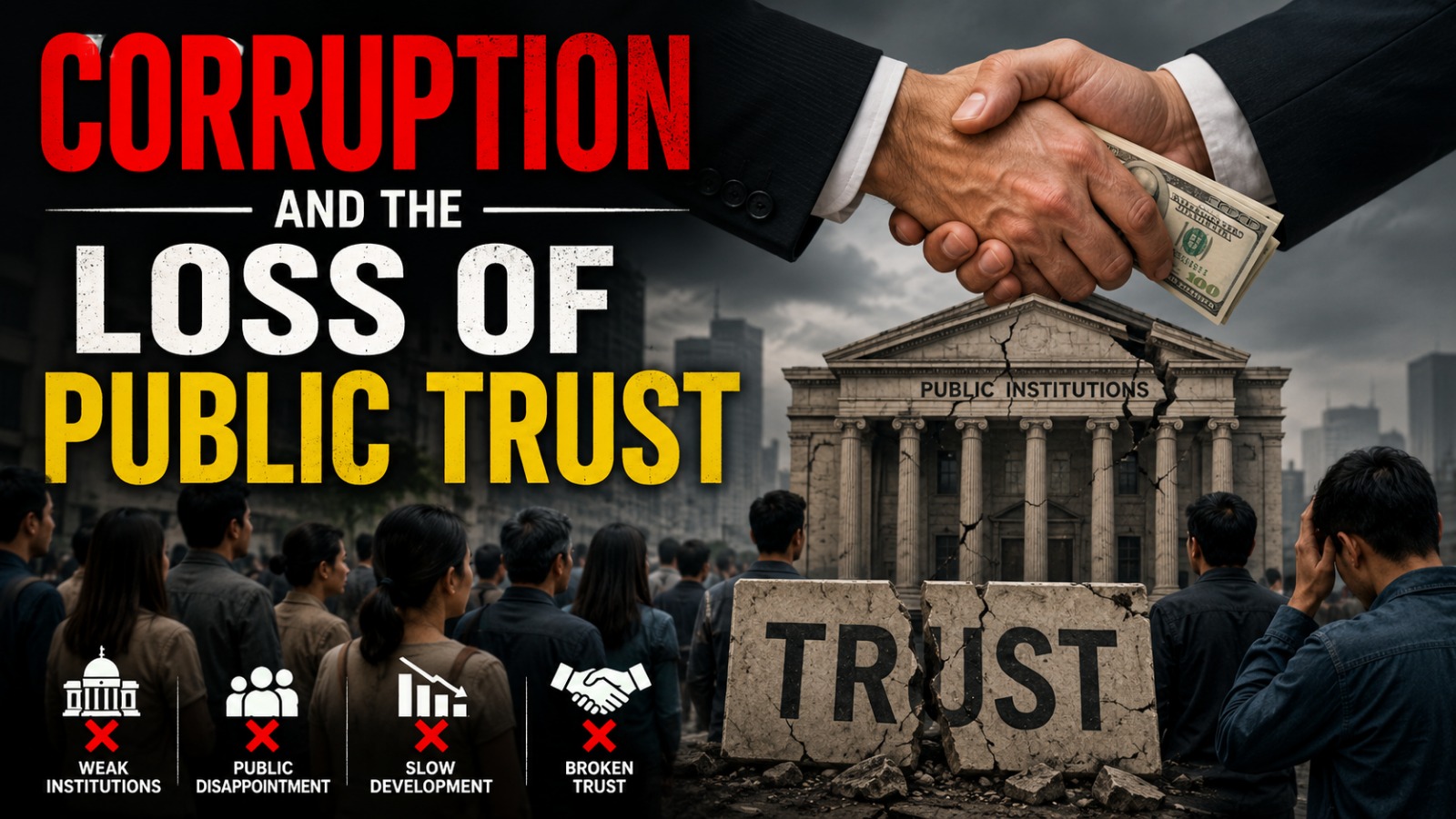
Corruption is one of the most damaging problems faced by societies around the world. It affects governments, businesses, educational institutions, and public services. While corruption often causes financial losses, its greatest impact may be the destruction of public trust. When people lose confidence in institutions and leaders, social stability and national development become difficult to maintain.
Public trust is the foundation of a healthy society. Citizens expect fairness, honesty, and accountability from those in positions of power. However, corruption weakens these expectations and creates doubt about whether systems truly serve the public interest.
UNDERSTANDING CORRUPTION
Corruption refers to the misuse of power or authority for personal gain. It can occur in many forms, including bribery, fraud, embezzlement, favoritism, and abuse of public resources.
Corruption may happen on a large scale involving high-ranking officials or in smaller daily activities such as illegal payments and dishonest practices in public services.
HOW CORRUPTION DESTROYS PUBLIC TRUST
Public trust decreases when people believe that institutions are unfair, dishonest, or manipulated for private interests.
1.REDUCING CONFIDENCE IN GOVERNMENT
Citizens expect governments to provide justice and equal opportunities. When corruption scandals become common, people begin to question the integrity of political leaders and public officials.
As trust declines, citizens may become less willing to participate in democratic processes or follow regulations.
2.WEAKENING PUBLIC SERVICES
Corruption often causes public resources to be misused. Funds intended for healthcare, education, and infrastructure may disappear due to dishonest practices.
Poor public services make communities feel neglected and disappointed with authorities.
3.CREATING SOCIAL INEQUALITY
Corruption benefits certain individuals while disadvantaging others. People without money, influence, or political connections may struggle to access fair opportunities.
This inequality increases frustration and social division within society.
4.ENCOURAGING CYNICISM
When corruption becomes widespread, many people start believing that dishonesty is normal and unavoidable. This mindset can reduce ethical behavior and weaken social responsibility.
THE ECONOMIC IMPACT OF LOST TRUST
The loss of public trust also affects economic development.
1.REDUCING INVESTMENT
Investors prefer transparent and stable environments. High levels of corruption create uncertainty and discourage business growth.
2.LOWERING PRODUCTIVITY
Corruption can slow administrative processes and increase unnecessary costs. Businesses and citizens may spend more time and money dealing with inefficient systems.
3.INCREASING POVERTY
When corruption limits access to public resources and opportunities, economic inequality often becomes worse, especially for vulnerable communities.
THE ROLE OF MEDIA AND TECHNOLOGY
Modern media and digital technology play important roles in exposing corruption and increasing transparency.
Investigative journalism, online reporting platforms, and social media allow citizens to monitor public activities more closely. Technology also helps governments create transparent digital systems that reduce opportunities for bribery and manipulation.
However, misinformation and political manipulation can also damage trust if information is not managed responsibly.
HOW TO REBUILD PUBLIC TRUST
Restoring public trust requires long-term commitment and cooperation from governments, institutions, and society.
1.STRENGTHENING TRANSPARENCY
Open access to information and transparent decision-making processes help citizens monitor public activities more effectively.
2.ENFORCING FAIR LAWS
Strong legal systems and equal punishment for corrupt behavior are necessary to demonstrate accountability.
3.PROMOTING ETHICAL EDUCATION
Teaching honesty, integrity, and social responsibility from an early age can help create future generations that reject corruption.
4.ENCOURAGING PUBLIC PARTICIPATION
Citizens should be encouraged to report corruption, participate in public discussions, and support ethical leadership.
CONCLUSION
Corruption not only causes financial damage but also destroys one of the most important elements of society: public trust. When trust disappears, governments become weaker, social inequality increases, and economic progress slows down.
Fighting corruption requires transparency, accountability, education, and strong public participation. By promoting integrity and fairness at every level of society, communities can rebuild trust and create a more stable and just future.
Tentang Penulis
Gusti Ayu Tita P
Penulis — Universitas STEKOM
Penulis aktif yang berfokus pada isu-isu akademik, teknologi pendidikan, dan pengembangan sumber daya manusia di lingkungan kampus.