How Do Hormonal Disorders Affect Skin Health?
Gusti Ayu Tita P
22 September 2026
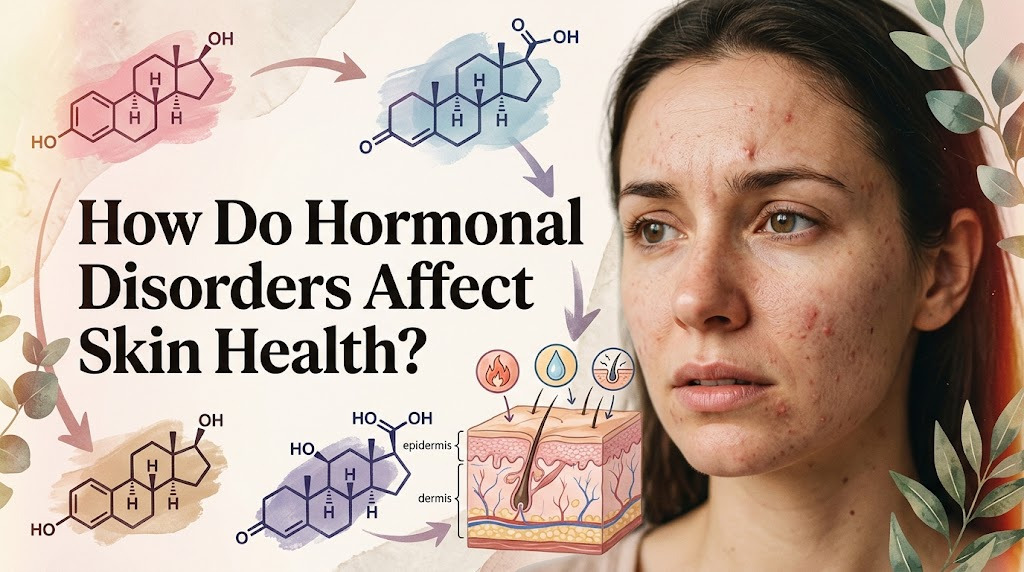
Hormones can influence skin health because they are involved in processes such as oil production, skin growth, inflammation, and hair development. When hormone levels or hormone activity change, these processes may also be affected.
Some hormonal disorders can therefore be associated with changes in the skin or hair. However, skin problems can have many causes, including genetics, skincare habits, environmental factors, medications, and other health conditions. A skin change alone does not confirm that a hormonal disorder is present.
HORMONES CAN AFFECT SKIN OIL PRODUCTION
Certain hormones influence the production of sebum, an oily substance produced by the skin. Androgens, for example, can stimulate sebaceous glands and affect how much oil the skin produces. Changes in hormonal activity may therefore be associated with differences in skin oiliness.
Excess oil can contribute to clogged pores in some people. However, skin oil production is also influenced by genetics, age, skincare routines, and other factors. Because of this, oily skin by itself is not enough to determine whether a hormonal problem exists.
HORMONAL CHANGES CAN BE ASSOCIATED WITH ACNE
Hormonal changes and acne can sometimes be connected because hormones can influence oil production and the processes involved in clogged pores and inflammation. Acne may become more noticeable during periods when hormone levels naturally change, such as puberty.
Some hormonal conditions can also be associated with persistent acne, particularly when acne occurs together with other signs of hormonal changes. However, acne is common and does not automatically indicate a hormonal disorder. A healthcare professional can evaluate the overall pattern when hormonal involvement is suspected.
HORMONES CAN AFFECT HAIR AND SKIN
Hormones can influence hair growth and hair patterns as well as skin function. Changes in certain hormones may be associated with differences in hair growth, hair thinning, or other changes involving the skin and hair.
Thyroid hormones and reproductive hormones can both influence different aspects of hair and skin health. However, changes in hair or skin can also result from nutritional factors, stress, genetics, medications, or other conditions. Identifying the underlying cause may require a broader health assessment.
SKIN CHANGES SHOULD BE CONSIDERED WITH OTHER SYMPTOMS
A possible hormonal skin problem should be considered in the context of other symptoms. For example, persistent skin changes occurring together with menstrual changes, unusual energy changes, or other physical symptoms may provide more information than a skin problem alone.
Doctors can review the person's medical history and examine the skin when necessary. If a hormonal disorder is suspected, laboratory tests may be recommended based on the symptoms and clinical findings. This helps distinguish hormonal causes from other possible explanations.
CONCLUSION
Hormonal disorders can affect skin health because hormones influence oil production, skin function, hair growth, and other processes. Hormonal changes may therefore be associated with acne, oily skin, changes in hair, or other skin-related symptoms.
However, skin and hair changes have many possible causes. Persistent or unusual changes, especially when accompanied by other symptoms, can be discussed with a healthcare professional to determine whether hormonal factors may be involved.
Tentang Penulis
Gusti Ayu Tita P
Penulis — Universitas STEKOM
Penulis aktif yang berfokus pada isu-isu akademik, teknologi pendidikan, dan pengembangan sumber daya manusia di lingkungan kampus.