How Do Volcanic Eruptions Affect The Environment?
Gusti Ayu Tita P
19 September 2026
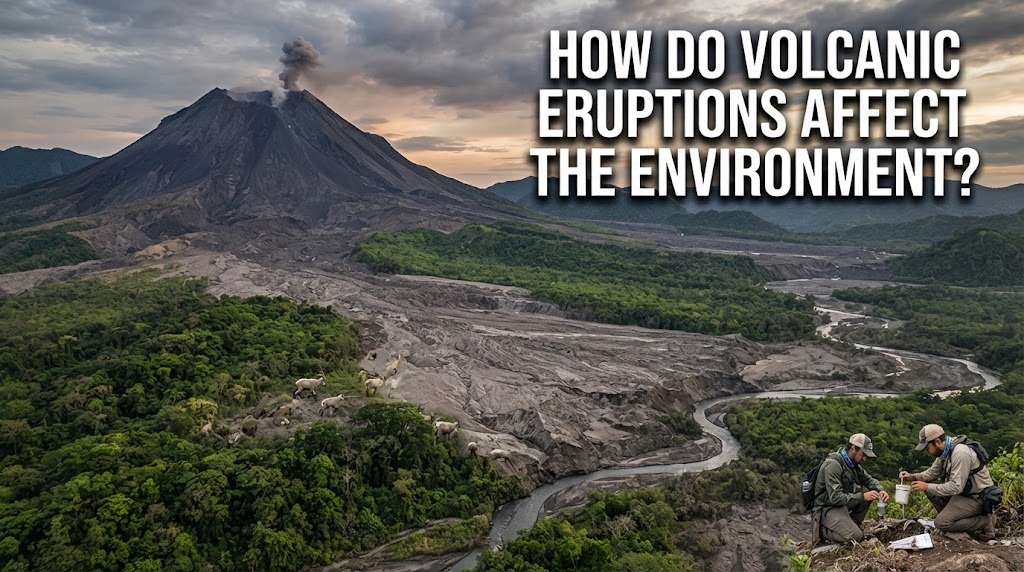
Volcanic eruptions can change the environment in both harmful and beneficial ways. An eruption may release ash, lava, volcanic gases, and rocks that affect the air, water, soil, plants, and animals. Some environmental effects happen immediately, while others can continue for months or years. However, volcanic activity can also contribute to long-term changes that support environmental recovery.
VOLCANIC ASH AFFECTS AIR QUALITY
One major environmental effect of a volcanic eruption is the release of volcanic ash into the atmosphere. Fine ash particles can spread through the air and reduce air quality around affected areas. Strong winds may carry ash over long distances, allowing it to reach places far from the volcano. Large amounts of ash in the atmosphere can also reduce visibility.
Ash does not remain in the air forever and gradually settles on the ground. After it falls, it can cover vegetation, buildings, roads, and water sources. Heavy ashfall can put stress on plants and make the environment difficult for some organisms. Communities may need to clean affected areas to reduce further problems.
LAVA AND ASH CHANGE THE LANDSCAPE
Lava flows can completely change the shape of the land. When hot lava reaches the surface, it can cover vegetation, soil, and existing land features. After cooling, lava becomes solid rock and may create new surfaces. These changes can transform forests, fields, and other natural areas.
Volcanic ash and rocks can also build up around the volcano. Over time, weathering can break volcanic materials into smaller particles and contribute to new soil formation. This process can take years, depending on environmental conditions. As the land recovers, plants can gradually begin to grow in the affected areas.
ERUPTIONS AFFECT WATER SOURCES
Volcanic materials can enter rivers, lakes, and other water sources during or after an eruption. Ash and other particles may make water cloudy and reduce its quality. Volcanic gases can also interact with water and change its chemical conditions. These changes may affect organisms that depend on clean water.
Another important risk is the movement of volcanic materials through rivers. Heavy rain can carry loose ash and rocks from volcanic slopes and create lahars. Lahars can damage river ecosystems and alter river channels. Water systems may gradually recover as volcanic materials settle and natural processes continue.
PLANTS AND ANIMALS ARE AFFECTED
Eruptions can have significant effects on plants and animals near a volcano. Lava, ash, and hot volcanic materials can destroy vegetation and reduce available food or shelter. Animals may leave affected areas to search for safer habitats. Aquatic organisms can also be affected when volcanic materials enter water.
However, nature can gradually recover after volcanic activity decreases. Some plants are able to grow again as ash becomes part of the soil and conditions improve. Over time, new habitats may develop on volcanic landscapes. This natural recovery can increase biodiversity in the long term.
VOLCANIC MATERIALS CAN IMPROVE SOIL
Although eruptions can initially damage land, volcanic materials may provide important minerals to the soil. As volcanic ash breaks down, nutrients can become available to plants. This can contribute to fertile soil in areas that recover after an eruption. Some volcanic regions are therefore suitable for agriculture after sufficient recovery.
The benefits do not happen immediately. Fresh volcanic deposits may be too thick, hot, or unstable for plants to grow. Weathering and natural recovery are needed before the land becomes more suitable for vegetation. Over time, plants can return and help rebuild the ecosystem.
CONCLUSION
Volcanic eruptions can affect the environment by changing air quality, landscapes, water sources, plants, and animals. The immediate effects can be destructive, but volcanic materials can also support soil development and ecosystem recovery over the long term. The speed of environmental recovery depends on the eruption, climate, landscape, and condition of the affected ecosystem. Understanding these effects helps communities protect natural resources and prepare for future volcanic activity.
Tentang Penulis
Gusti Ayu Tita P
Penulis — Universitas STEKOM
Penulis aktif yang berfokus pada isu-isu akademik, teknologi pendidikan, dan pengembangan sumber daya manusia di lingkungan kampus.