How Does Corruption Hinder National Development?
Gusti Ayu Tita P
22 September 2026
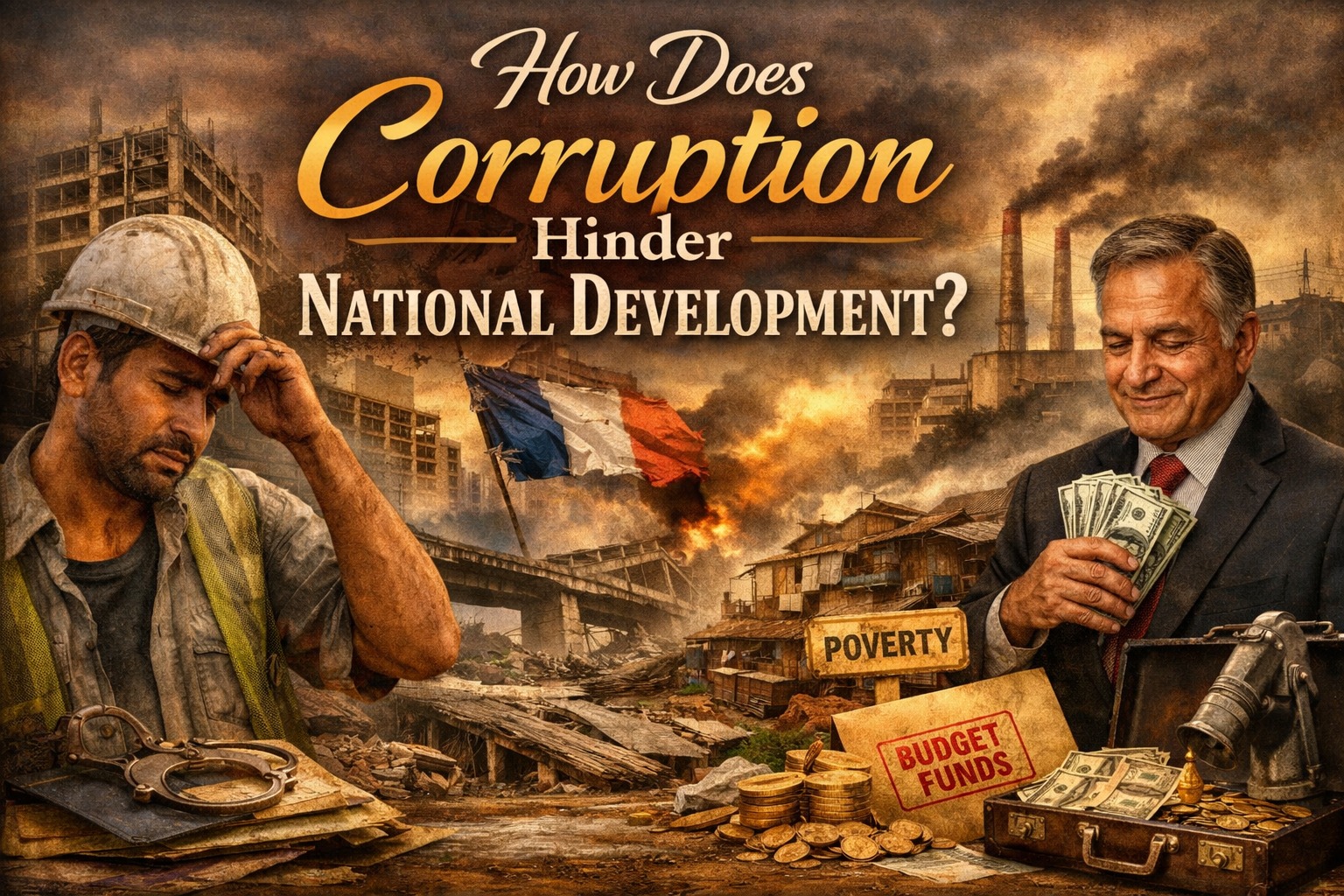
Corruption is one of the biggest obstacles to national development in many countries around the world. It occurs when individuals or groups misuse their power or authority for personal gain, often through bribery, fraud, embezzlement, or abuse of public resources. While corruption may provide short-term benefits to a few individuals, it creates long-term damage that affects society as a whole.
A nation cannot achieve sustainable growth if its institutions are weakened by corruption. It reduces public trust, wastes government resources, discourages investment, and slows economic progress. Understanding how corruption affects development is essential for creating stronger institutions and building a more prosperous future.
WHAT IS CORRUPTION?
Corruption refers to the misuse of authority, public office, or entrusted power for private benefit. It can occur in both the public sector and the private sector, taking many forms such as bribery, favoritism, nepotism, kickbacks, fraud, and embezzlement. These unethical practices undermine fairness and reduce the effectiveness of government institutions.
When corruption becomes widespread, it weakens the rule of law and creates inequality in society. Instead of rewarding honesty and competence, corrupt systems often benefit those with political connections or financial influence. As a result, talented individuals and ethical businesses may struggle to compete fairly.
REDUCES ECONOMIC GROWTH
One of the most serious consequences of corruption is its negative impact on economic growth. Government funds that should be used for infrastructure, healthcare, education, and public services are often diverted into private pockets. This reduces the quality of public projects and limits economic opportunities for citizens.
In addition, corruption increases the cost of doing business. Companies may be forced to pay illegal fees or bribes to obtain permits or government contracts. These unnecessary expenses discourage entrepreneurship, reduce productivity, and make the country less attractive to both domestic and foreign investors.
WEAKENS PUBLIC SERVICES
Strong public services are essential for improving people's quality of life. However, corruption often causes hospitals, schools, transportation systems, and public facilities to receive fewer resources than they actually need. This results in poor infrastructure, inadequate healthcare, and lower educational standards.
Citizens who cannot afford to pay unofficial fees may receive lower-quality services or experience significant delays. Such inequality creates frustration and widens the gap between different social and economic groups. Ultimately, corruption prevents governments from delivering services fairly and efficiently.
DISCOURAGES FOREIGN INVESTMENT
Foreign investors prefer countries with transparent regulations, fair competition, and stable legal systems. When corruption becomes common, businesses face uncertainty because contracts may not be honored fairly and government decisions may be influenced by bribery instead of law.
This lack of transparency increases financial risks for investors. Many international companies choose to invest in countries with stronger governance and lower corruption levels. As investment decreases, job creation slows, technological innovation declines, and economic development becomes more difficult.
INCREASES POVERTY AND SOCIAL INEQUALITY
Corruption often has the greatest impact on low-income communities. Public funds intended for poverty reduction, healthcare, housing, and education may never reach the people who need them most. Instead, these resources are misused for personal enrichment.
As opportunities become concentrated among a small group of powerful individuals, income inequality continues to grow. Poor families face greater difficulties accessing quality education, healthcare, and employment opportunities, making it harder for future generations to escape poverty.
WEAKENS DEMOCRACY AND PUBLIC TRUST
A healthy democracy depends on transparency, accountability, and public confidence in government institutions. Corruption damages these principles by encouraging unfair decision-making and reducing government credibility. Citizens begin to lose trust in public officials and political leaders.
When people believe that laws are applied unfairly, they become less willing to participate in elections, pay taxes, or support government programs. This decline in public trust weakens democratic institutions and makes national reforms more difficult to implement.
SLOWS INFRASTRUCTURE DEVELOPMENT
Infrastructure projects such as roads, bridges, schools, and public transportation require significant public investment. Unfortunately, corruption often leads to inflated project costs, poor-quality construction, and delayed completion due to dishonest procurement processes.
In some cases, contractors are selected based on political favoritism rather than technical qualifications. As a result, infrastructure projects may fail to meet safety standards or require costly repairs shortly after completion. This wastes public money and slows overall national development.
HOW TO REDUCE CORRUPTION
Reducing corruption requires cooperation between governments, businesses, civil society, and individual citizens. Governments should strengthen anti-corruption laws, improve transparency, digitalize public services, and enforce strict penalties for corrupt practices. Independent oversight institutions also play an important role in ensuring accountability.
Citizens can contribute by reporting corruption, supporting ethical leadership, refusing to pay bribes, and promoting integrity within their communities. Education about ethics and good governance also helps create a culture where honesty becomes the standard rather than the exception.
CONCLUSION
Corruption remains one of the greatest barriers to national development because it weakens institutions, slows economic growth, reduces foreign investment, damages public services, and increases poverty. Its effects extend far beyond financial losses, influencing social stability, political trust, and long-term prosperity.
Building a corruption-free society requires transparency, accountability, strong legal enforcement, and active public participation. By promoting integrity and responsible governance, countries can create sustainable development, improve public welfare, and ensure equal opportunities for future generations.
Tentang Penulis
Gusti Ayu Tita P
Penulis — Universitas STEKOM
Penulis aktif yang berfokus pada isu-isu akademik, teknologi pendidikan, dan pengembangan sumber daya manusia di lingkungan kampus.