How to Improve Leadership Skills and Build Confidence
Gusti Ayu Tita P
20 Juni 2026
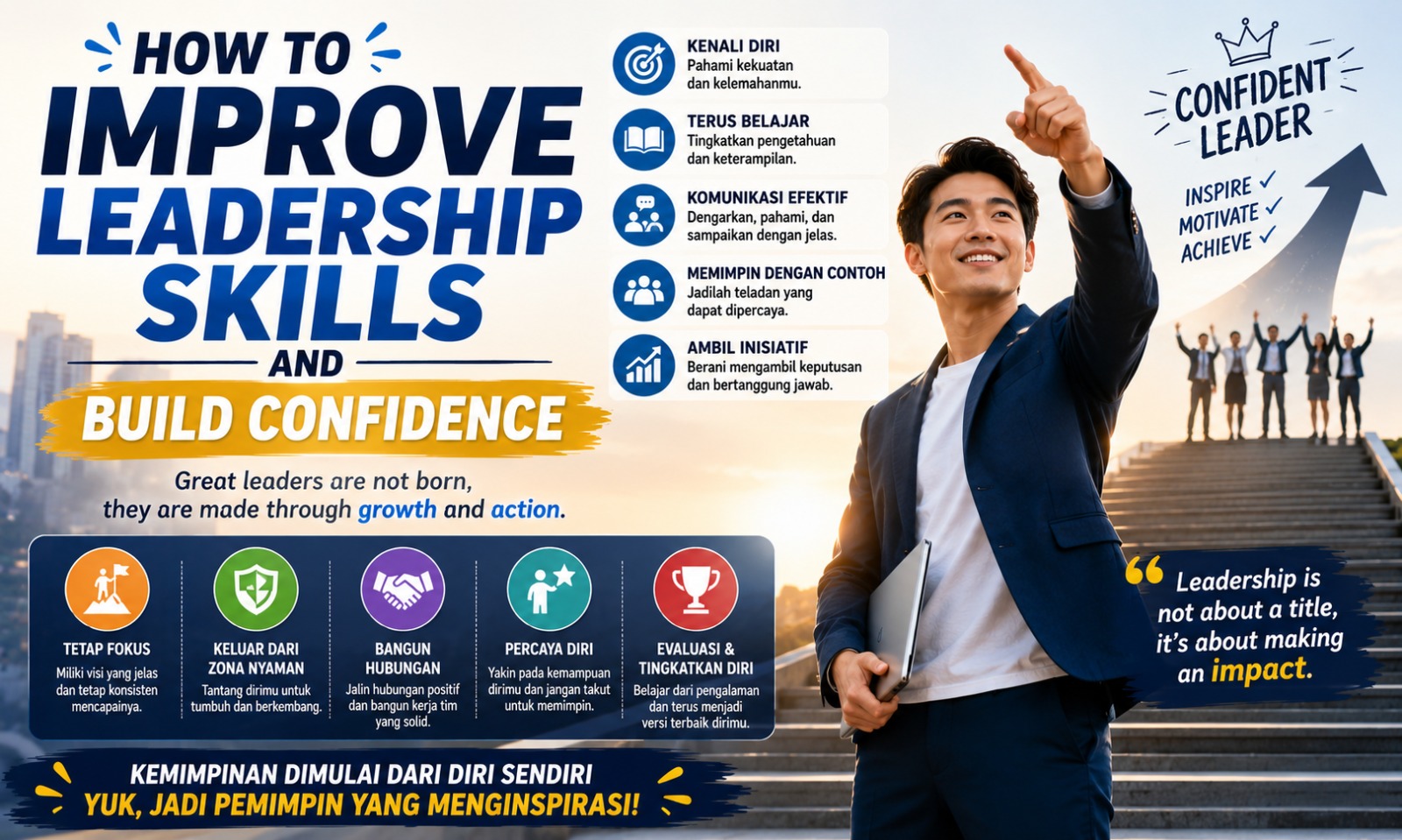
Leadership skills and confidence are two important qualities that can help individuals succeed in both personal and professional life. Strong leadership allows a person to guide, motivate, and influence others effectively, while confidence helps them make decisions and face challenges with a positive mindset. Although some people seem naturally confident and charismatic, leadership skills can actually be learned and improved over time through consistent practice and self-development.
In today’s competitive world, individuals who possess leadership abilities and self-confidence often stand out in workplaces, schools, and communities. Developing these qualities can open more opportunities and help build stronger relationships with others.
UNDERSTANDING THE IMPORTANCE OF LEADERSHIP
Leadership is not only about managing people or holding a high position. It is the ability to inspire others, solve problems, and work together toward common goals. Effective leaders help teams stay motivated and productive even during difficult situations.
People with strong leadership skills are often trusted because they can communicate clearly, make responsible decisions, and support others. Leadership also encourages personal growth by teaching discipline, accountability, and emotional intelligence.
Improving leadership skills can positively impact career development, teamwork, and overall self-confidence.
BUILDING SELF-CONFIDENCE STEP BY STEP
Confidence is essential for leadership because it affects how people communicate and handle responsibilities. Building confidence does not happen instantly, but small daily improvements can make a significant difference over time.
One effective way to build confidence is by setting realistic goals and achieving them gradually. Completing tasks successfully helps create a sense of accomplishment and self-belief. Individuals should also focus on their strengths rather than constantly comparing themselves to others.
Positive self-talk and maintaining a healthy mindset can also improve confidence. Believing in personal abilities allows individuals to face challenges more calmly and effectively.
IMPROVING COMMUNICATION SKILLS
Communication is one of the most important leadership qualities. Leaders must be able to express ideas clearly, listen actively, and understand different perspectives. Poor communication can create misunderstandings and reduce trust within a team.
Improving communication skills can start with simple habits such as maintaining eye contact, speaking clearly, and listening without interrupting others. Participating in discussions, presentations, or group activities can also help improve public speaking abilities.
Good communication builds stronger relationships and allows leaders to inspire and motivate people more effectively.
LEARNING TO HANDLE CHALLENGES
Every leader faces obstacles and difficult situations. Learning how to stay calm under pressure is an important part of becoming a confident leader. Challenges should be viewed as opportunities to grow rather than reasons to give up.
Problem-solving skills can be improved by analyzing situations carefully and considering different solutions before making decisions. Leaders who remain positive and adaptable during challenges often earn the respect and trust of others.
Experience also plays a major role in building confidence. The more challenges individuals overcome, the more prepared they become for future responsibilities.
DEVELOPING EMOTIONAL INTELLIGENCE
Emotional intelligence helps leaders understand and manage emotions effectively. It also allows them to empathize with others and maintain healthy relationships.
Leaders with emotional intelligence are better at handling conflicts, supporting team members, and creating positive environments. They can recognize when others need encouragement or guidance.
Improving emotional intelligence involves practicing empathy, controlling emotional reactions, and becoming more aware of personal behavior and communication styles.
TAKING INITIATIVE AND RESPONSIBILITY
Confident leaders are willing to take initiative and accept responsibility for their actions. Instead of waiting for instructions, they actively look for ways to contribute and improve situations.
Taking responsibility also means admitting mistakes and learning from them. This attitude demonstrates maturity and integrity, which are highly respected leadership traits.
People who consistently show responsibility often gain the trust of colleagues, friends, and team members.
CONTINUING TO LEARN AND GROW
Successful leaders understand the importance of continuous learning. They read books, attend training sessions, seek mentorship, and remain open to feedback.
Learning new skills and gaining knowledge can increase both leadership ability and confidence. Personal development helps individuals adapt to changing situations and become more effective in different environments.
Feedback from others can also provide valuable insights for improvement. Strong leaders are not afraid to learn from criticism and use it as motivation for growth.
SURROUNDING YOURSELF WITH POSITIVE INFLUENCES
The people around us can greatly influence confidence and leadership development. Supportive friends, mentors, and colleagues can provide encouragement, advice, and inspiration.
Positive environments help individuals stay motivated and focused on their goals. On the other hand, constant negativity can reduce confidence and limit personal growth.
Building connections with inspiring people can help strengthen leadership qualities and encourage continuous self-improvement.
CONCLUSION
Improving leadership skills and building confidence require patience, practice, and dedication. Leadership is not only about guiding others but also about understanding oneself, communicating effectively, and facing challenges with courage.
By developing communication skills, emotional intelligence, responsibility, and a positive mindset, individuals can become stronger and more inspiring leaders. Confidence grows through experience and consistent effort, making it possible for anyone to improve over time.
True leadership comes from the ability to motivate others while continuing to grow personally and professionally. With determination and continuous learning, anyone can build the confidence needed to lead successfully.
Tentang Penulis
Gusti Ayu Tita P
Penulis — Universitas STEKOM
Penulis aktif yang berfokus pada isu-isu akademik, teknologi pendidikan, dan pengembangan sumber daya manusia di lingkungan kampus.