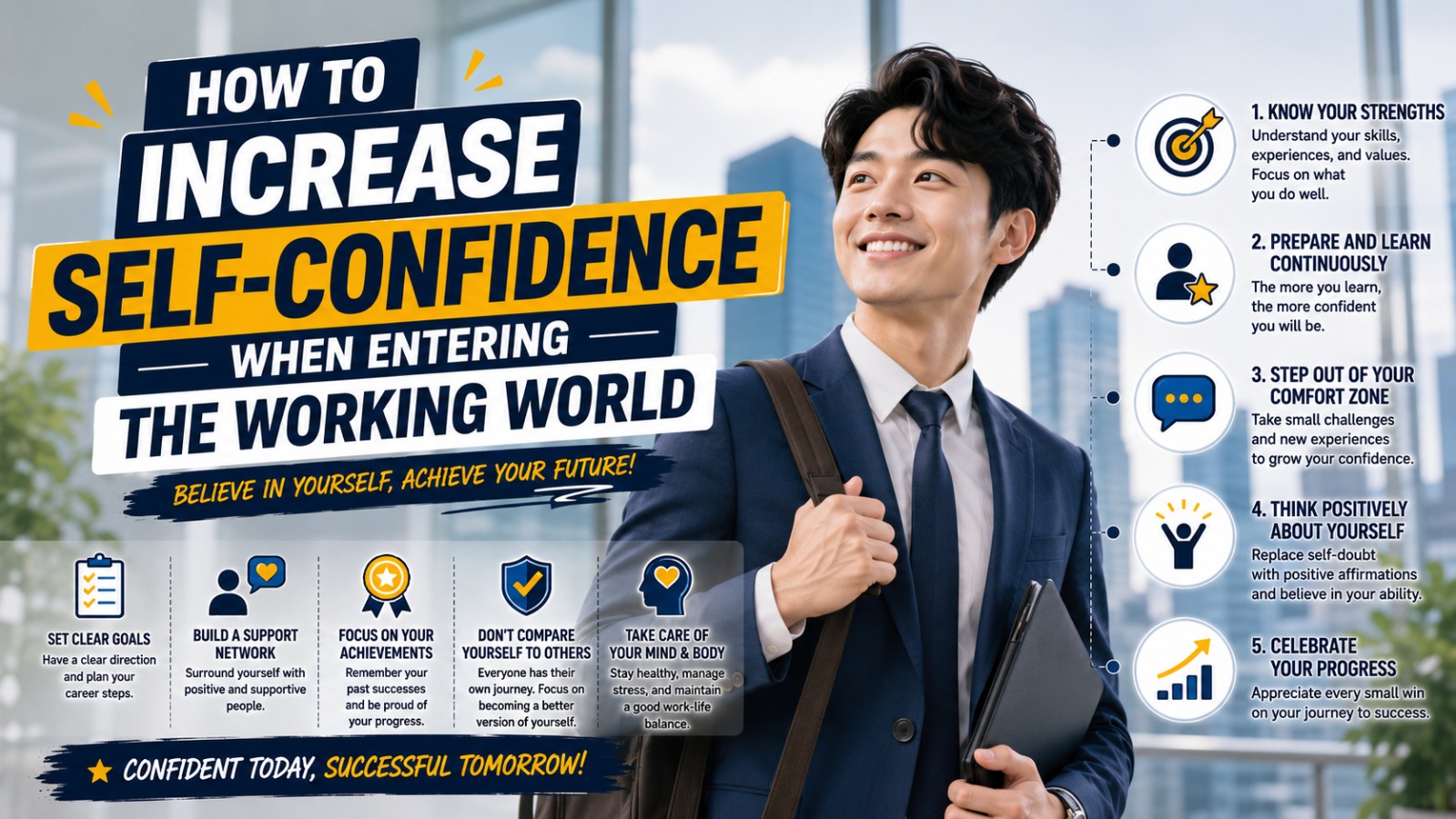
Entering the working world for the first time can feel exciting, challenging, and sometimes intimidating. Many fresh graduates and young professionals experience self-doubt when facing interviews, workplace responsibilities, and professional competition. However, self-confidence is an important factor that can influence career growth and workplace performance. People who believe in their abilities are usually more prepared to face challenges, communicate effectively, and seize career opportunities.
UNDERSTAND YOUR STRENGTHS AND ABILITIES
The first step to building confidence is recognizing your strengths and skills. Every individual has unique abilities that can contribute positively in the workplace. Instead of focusing only on weaknesses, identify achievements, experiences, and talents that make you valuable.
Understanding your abilities can help you feel more prepared when applying for jobs, attending interviews, or handling professional responsibilities.
PREPARE YOURSELF WITH KNOWLEDGE AND SKILLS
Confidence often comes from preparation. Improving your professional knowledge and practical skills can make you feel more capable in workplace situations. Learn about your field, industry trends, and the responsibilities related to your desired career.
Taking online courses, attending workshops, and practicing technical skills can increase competence and reduce anxiety when entering the professional environment.
IMPROVE COMMUNICATION SKILLS
Good communication skills can significantly improve self-confidence. Employees who express ideas clearly and professionally usually feel more comfortable interacting with coworkers, supervisors, and clients.
Practicing public speaking, participating in discussions, and improving presentation skills can help individuals communicate with greater confidence in professional situations.
SET REALISTIC GOALS
Setting achievable goals helps build confidence gradually. Start with small targets, such as improving interview performance, completing tasks effectively, or learning a new skill. Every accomplishment, even a small one, can increase motivation and self-belief.
Realistic goals also help individuals stay focused and avoid unnecessary pressure during the early stages of their careers.
DEVELOP A POSITIVE MINDSET
Negative thoughts can reduce confidence and create fear of failure. Developing a positive mindset helps individuals remain motivated and optimistic when facing challenges.
Instead of worrying too much about mistakes, view failures as opportunities to learn and improve. Successful professionals often grow through experience and continuous self-development.
PREPARE FOR JOB INTERVIEWS
Job interviews are one of the most common situations where confidence is tested. Preparing thoroughly before interviews can reduce nervousness and improve performance.
Research the company, practice answering common interview questions, and understand the position you are applying for. Good preparation allows candidates to answer confidently and create a positive impression.
BUILD PROFESSIONAL EXPERIENCE
Experience helps increase confidence because it improves familiarity with professional environments. Internships, volunteer activities, freelance work, and organizational involvement can provide valuable practical experience.
These activities help individuals develop skills, understand workplace culture, and become more comfortable with professional responsibilities.
SURROUND YOURSELF WITH POSITIVE PEOPLE
Supportive environments can greatly influence confidence levels. Connecting with positive friends, mentors, lecturers, or coworkers can provide motivation and constructive advice.
Learning from experienced professionals can also help young workers gain insights and feel more prepared to face career challenges.
TAKE CARE OF YOUR APPEARANCE AND ATTITUDE
Professional appearance and body language can affect confidence significantly. Dressing neatly, maintaining eye contact, and showing positive body posture can improve self-image and create a stronger impression.
A professional attitude also reflects discipline, respect, and readiness to work in a professional environment.
CONTINUE LEARNING AND GROWING
Confidence grows through continuous improvement. People who consistently learn and develop their abilities become more adaptable and prepared for workplace challenges.
Staying open to feedback, improving skills, and gaining new experiences can strengthen both competence and confidence over time.
CONCLUSION
Increasing self-confidence when entering the working world requires preparation, positive thinking, and continuous self-development. By understanding personal strengths, improving communication skills, gaining experience, and maintaining a professional attitude, individuals can feel more ready to face workplace challenges. Confidence is not built instantly, but with consistent effort and a willingness to grow, every person can become more successful and comfortable in the professional world.
Tentang Penulis
Gusti Ayu Tita P
Penulis — Universitas STEKOM
Penulis aktif yang berfokus pada isu-isu akademik, teknologi pendidikan, dan pengembangan sumber daya manusia di lingkungan kampus.