
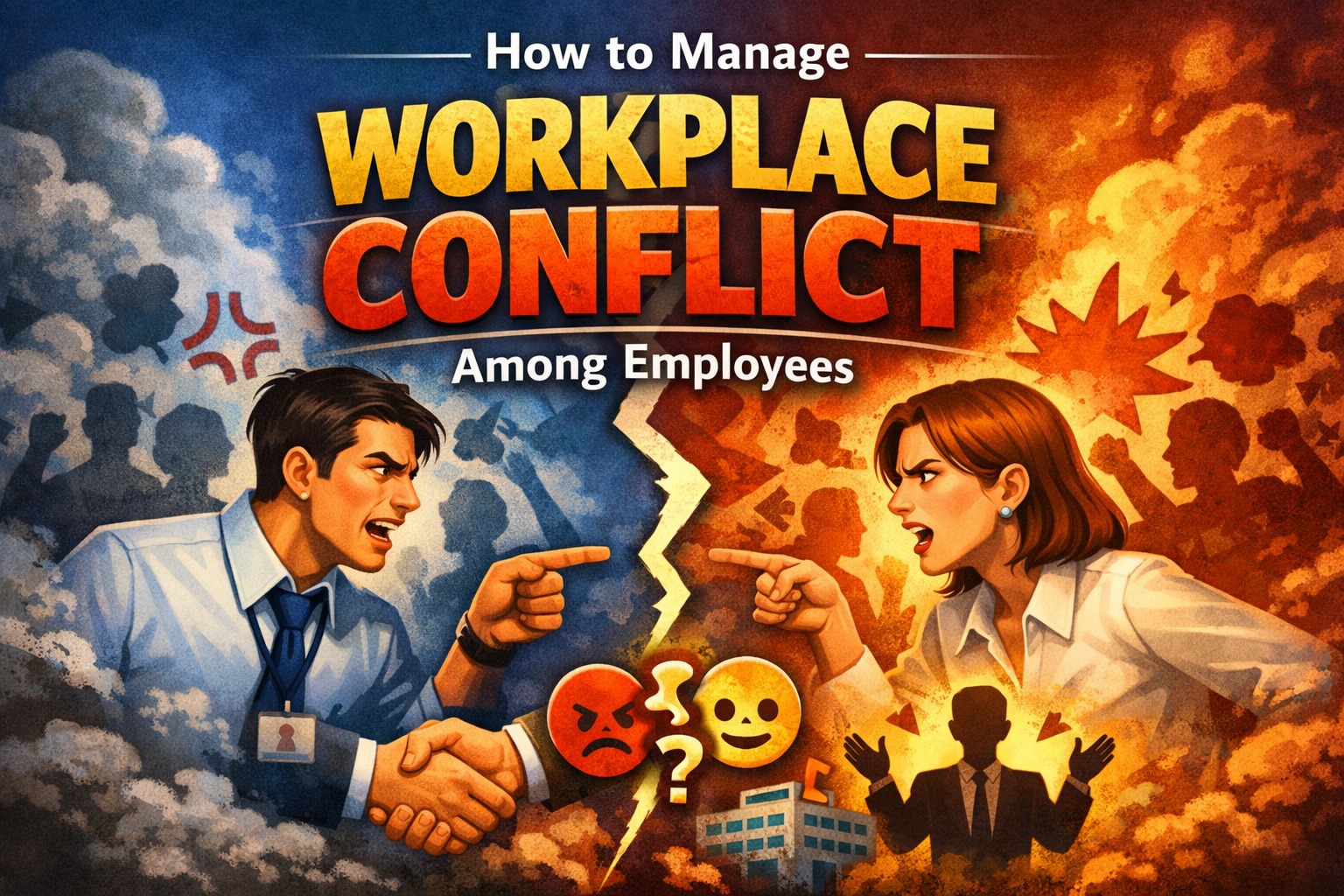
Workplace conflict is a common challenge in many organizations. Differences in opinions, communication styles, personalities, and work responsibilities can sometimes create tension between employees. If conflicts are ignored, they may reduce productivity, damage teamwork, and create an unhealthy work environment.
Managing workplace conflict effectively is essential for maintaining positive relationships and ensuring smooth business operations. Companies that handle disputes professionally can strengthen teamwork and improve employee satisfaction.
UNDERSTAND THE CAUSE OF CONFLICT
The first step in managing workplace conflict is identifying the root cause. Conflicts often happen because of poor communication, unclear responsibilities, personality differences, or competition among employees.
Managers should listen carefully to everyone involved and gather accurate information before making decisions. Understanding the real issue helps prevent misunderstandings and leads to more effective solutions.
ENCOURAGE OPEN COMMUNICATION
Open and respectful communication is important in resolving workplace disagreements. Employees should feel comfortable expressing their concerns without fear of punishment or judgment.
Managers can create a positive environment by encouraging honest discussions and active listening. When employees communicate clearly, they are more likely to understand each other’s perspectives and find common ground.
ADDRESS CONFLICT EARLY
Ignoring small problems can allow tension to grow into larger disputes. Managers should respond quickly when signs of conflict appear. Early intervention can prevent negative emotions from becoming more serious.
Handling issues immediately also shows employees that the company values teamwork and professionalism.
REMAIN NEUTRAL AND FAIR
When managing conflict, leaders must stay neutral and avoid taking sides. Employees are more likely to trust the resolution process when they feel they are treated fairly.
Managers should focus on facts instead of emotions and ensure every employee has an equal opportunity to explain their point of view.
FOCUS ON SOLUTIONS
The goal of conflict management is not to determine who is right or wrong, but to find solutions that benefit everyone involved. Encourage employees to work together and discuss possible ways to solve the problem.
Collaborative problem-solving helps rebuild trust and improves future teamwork.
DEVELOP STRONG LEADERSHIP SKILLS
Effective leadership plays a major role in preventing and managing workplace conflict. Leaders who communicate well, show empathy, and support employees can reduce tension within teams.
Managers should also provide guidance and training on conflict resolution to help employees handle disagreements professionally.
PROMOTE TEAMWORK AND RESPECT
A workplace culture built on respect and cooperation can reduce the risk of conflict. Team-building activities, regular meetings, and positive communication practices can strengthen relationships among employees.
When workers respect each other’s ideas and differences, conflicts become easier to manage.
ESTABLISH CLEAR WORKPLACE POLICIES
Clear company policies regarding employee behavior, communication, and dispute resolution provide guidance during conflicts. Employees should understand what is considered acceptable conduct and how workplace issues will be handled.
Well-defined policies create consistency and reduce confusion during difficult situations.
CONCLUSION
Workplace conflict cannot always be avoided, but it can be managed effectively with the right approach. Open communication, fair leadership, quick action, and teamwork are key factors in resolving employee disputes.
By creating a respectful and supportive work environment, businesses can minimize conflict, improve collaboration, and maintain strong employee relationships.
Tentang Penulis
Gusti Ayu Tita P
Penulis — Universitas STEKOM
Penulis aktif yang berfokus pada isu-isu akademik, teknologi pendidikan, dan pengembangan sumber daya manusia di lingkungan kampus.