Leadership Skills for SPVs: How to Lead a Team Effectively
Gusti Ayu Tita P
10 Juni 2026
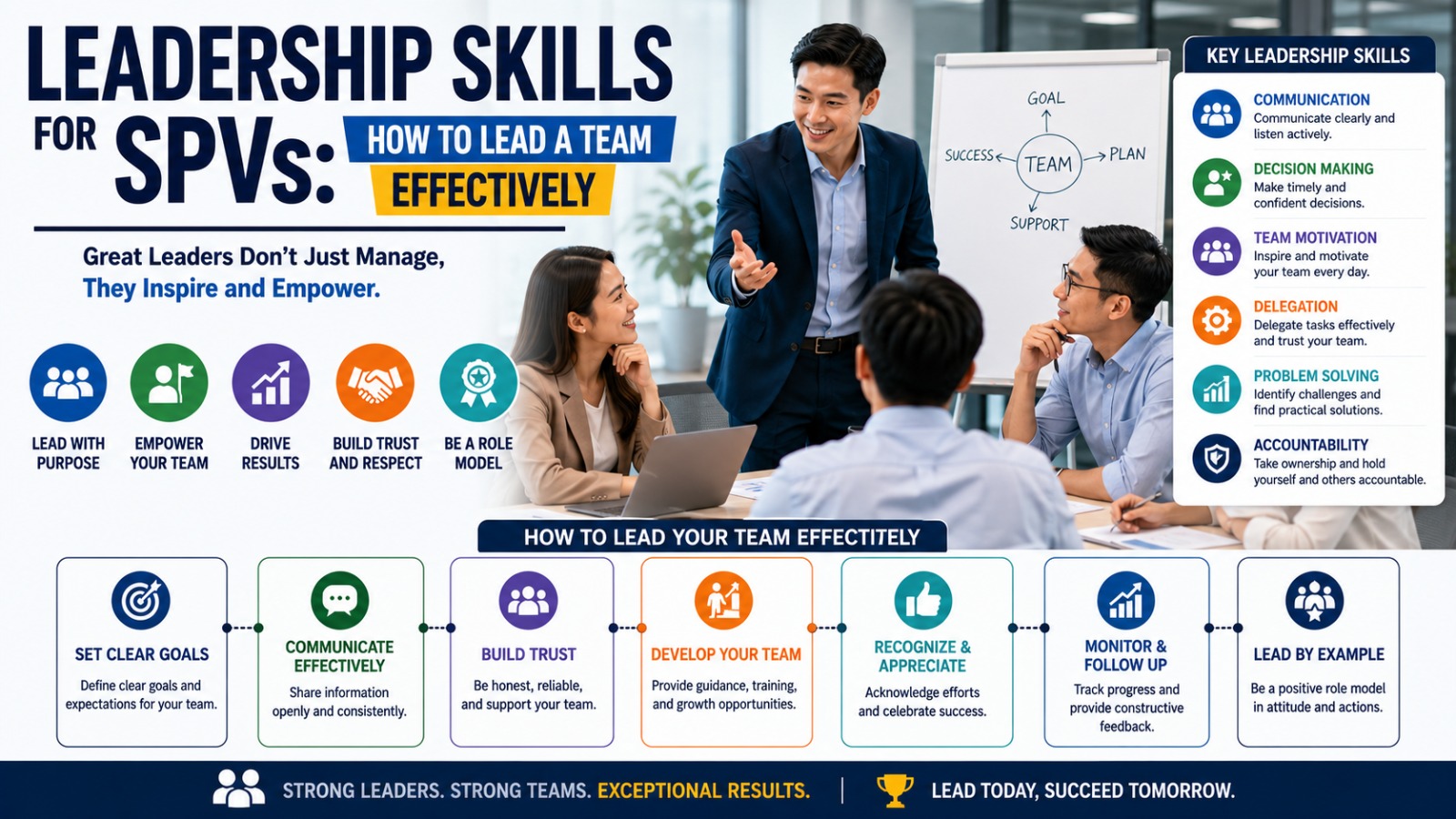
Supervisors, commonly known as SPVs, play an important role in ensuring smooth business operations and maintaining team productivity. A supervisor is not only responsible for monitoring employee performance but also for guiding, motivating, and supporting team members. Because of this responsibility, strong leadership skills are essential for every SPV.
Effective leadership helps supervisors build productive teams, improve workplace communication, and achieve organizational goals more efficiently. Supervisors who develop strong leadership abilities can create a positive work environment and encourage employees to perform at their best.
WHY LEADERSHIP SKILLS ARE IMPORTANT FOR SPVS
Leadership skills help supervisors manage teams professionally and handle workplace challenges effectively. A good SPV can influence employee behavior, improve teamwork, and maintain operational stability.
Strong leadership provides several benefits, including:
- Better team productivity
- Improved employee motivation
- Stronger workplace communication
- Reduced workplace conflicts
- Higher employee engagement
Supervisors who lead effectively can help organizations achieve long-term success.
EFFECTIVE COMMUNICATION SKILLS
Communication is one of the most important leadership skills for supervisors. SPVs must communicate instructions, goals, and feedback clearly to employees.
Good communication helps prevent misunderstandings and improves collaboration within teams.
KEY COMMUNICATION ABILITIES
- Active listening
- Clear instructions
- Constructive feedback
- Professional speaking
- Open communication with employees
Supervisors who communicate effectively can build stronger trust and teamwork.
ABILITY TO MOTIVATE EMPLOYEES
A successful SPV understands how to motivate team members and maintain positive morale. Motivated employees are usually more productive, cooperative, and committed to their responsibilities.
WAYS TO MOTIVATE EMPLOYEES
- Recognizing employee achievements
- Providing encouragement and support
- Setting realistic goals
- Offering career development opportunities
- Creating a positive work environment
Motivation helps employees remain focused and enthusiastic about their work.
PROBLEM-SOLVING SKILLS
Supervisors often face workplace challenges such as operational issues, employee conflicts, and performance problems. Strong problem-solving skills help SPVs make effective decisions under pressure.
Good supervisors should be able to:
- Identify problems quickly
- Analyze possible solutions
- Make fair decisions
- Handle conflicts professionally
- Prevent issues from becoming larger problems
Effective problem-solving improves workplace efficiency and stability.
TIME MANAGEMENT SKILLS
SPVs usually manage multiple responsibilities at the same time. They must monitor employee performance, complete reports, attend meetings, and ensure operational targets are achieved.
Strong time management skills help supervisors prioritize tasks and maintain productivity.
BENEFITS OF GOOD TIME MANAGEMENT
- Improved efficiency
- Better deadline management
- Reduced workplace stress
- Higher operational productivity
Well-organized supervisors can manage workloads more effectively and support smoother operations.
EMOTIONAL INTELLIGENCE
Emotional intelligence is the ability to understand and manage emotions professionally. SPVs with strong emotional intelligence can build better relationships with employees and handle workplace pressure calmly.
IMPORTANT EMOTIONAL INTELLIGENCE SKILLS
- Self-control
- Empathy
- Patience
- Stress management
- Conflict resolution
Supervisors who understand employee emotions can create healthier workplace relationships.
DECISION-MAKING ABILITY
Supervisors regularly make decisions related to employee management, operational problems, and workplace discipline. Strong decision-making skills help SPVs choose solutions that benefit both employees and the company.
Good decision-making requires:
- Careful analysis
- Fair judgment
- Confidence
- Accountability
Effective decisions improve workplace trust and organizational performance.
TEAM-BUILDING SKILLS
Successful supervisors know how to build strong and cooperative teams. Team-building skills help improve collaboration, communication, and employee relationships.
WAYS TO STRENGTHEN TEAMWORK
- Encouraging open communication
- Promoting mutual respect
- Supporting collaboration
- Resolving conflicts quickly
- Celebrating team achievements
Strong teamwork increases workplace productivity and morale.
ADAPTABILITY AND FLEXIBILITY
Work environments continue to change due to technology, market conditions, and business demands. SPVs must be adaptable and open to new ideas, systems, and challenges.
Flexible supervisors can help teams adjust more easily to workplace changes and maintain productivity during transitions.
LEADING BY EXAMPLE
Employees often follow the behavior of their supervisors. SPVs who demonstrate professionalism, discipline, honesty, and responsibility can inspire employees to do the same.
Leading by example helps supervisors gain employee respect and trust.
CONTINUOUS LEARNING AND DEVELOPMENT
Strong leaders continue improving their skills and knowledge. SPVs should participate in leadership training, management workshops, and professional development programs regularly.
Continuous learning helps supervisors stay prepared for future workplace challenges and leadership responsibilities.
CONCLUSION
Leadership skills are essential for SPVs who want to lead teams effectively and achieve organizational goals. Strong communication, motivation, problem-solving, emotional intelligence, and teamwork abilities help supervisors create productive and positive work environments.
By continuously improving leadership skills, supervisors can manage employees more effectively, overcome workplace challenges, and contribute significantly to company success. Effective leadership not only benefits supervisors but also strengthens overall organizational performance.
Tentang Penulis
Gusti Ayu Tita P
Penulis — Universitas STEKOM
Penulis aktif yang berfokus pada isu-isu akademik, teknologi pendidikan, dan pengembangan sumber daya manusia di lingkungan kampus.