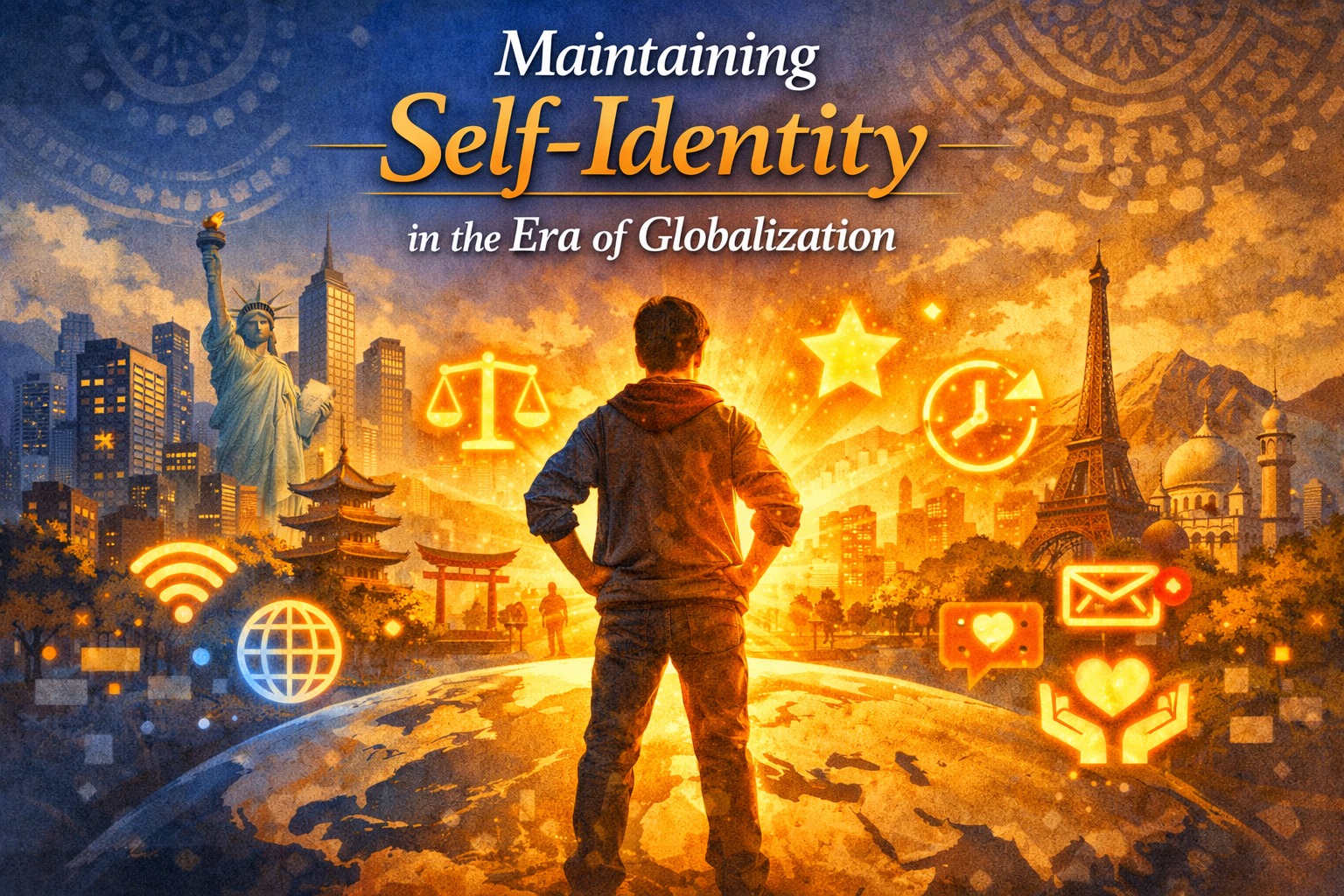
Globalization has changed the way people live, communicate, and think. Today, information from different countries spreads quickly through the internet, social media, movies, music, and technology. While globalization brings many benefits, it also creates challenges for individuals who want to maintain their self-identity. Many young people often feel pressured to follow global trends and forget their own values, culture, and uniqueness. Therefore, maintaining self-identity in the era of globalization is becoming more important than ever.
UNDERSTANDING SELF-IDENTITY
Self-identity refers to the way individuals understand themselves. It includes personal values, beliefs, culture, personality, and life goals. A strong self-identity helps people make decisions confidently and stay true to themselves even when facing social pressure.
In modern society, self-identity is often influenced by external factors such as social media, peer groups, and global culture. Without strong self-awareness, people may lose their originality and simply follow what others consider popular or acceptable.
THE IMPACT OF GLOBALIZATION ON SELF-IDENTITY
Globalization has both positive and negative impacts on self-identity. On the positive side, globalization allows people to learn new cultures, ideas, and perspectives from around the world. It also encourages creativity, innovation, and international communication.
However, globalization can also weaken local culture and personal identity. Many young people prefer foreign lifestyles over their own traditions because they believe global trends are more modern and attractive. As a result, traditional values and cultural uniqueness slowly disappear.
Social media also plays a major role in shaping identity. People often compare themselves with influencers or celebrities online, which can reduce self-confidence and create identity confusion.
THE IMPORTANCE OF MAINTAINING SELF-IDENTITY
Maintaining self-identity helps individuals stay confident and emotionally strong. People who understand themselves are less likely to be influenced by negative trends or unhealthy social pressure. They can appreciate global culture without losing their own identity.
A strong self-identity also helps preserve cultural heritage. Every culture has unique traditions, languages, and values that should be protected for future generations. By maintaining self-identity, people contribute to cultural diversity in a globalized world.
In addition, self-identity supports mental well-being. Individuals who accept themselves tend to experience greater happiness, better self-esteem, and healthier relationships with others.
WAYS TO MAINTAIN SELF-IDENTITY IN MODERN SOCIETY
There are several effective ways to maintain self-identity in the era of globalization. First, individuals should learn and appreciate their own culture, including local traditions, language, and customs. Understanding cultural roots can strengthen personal identity.
Second, people should use social media wisely. Instead of blindly following trends, individuals need to think critically and focus on content that provides positive value.
Third, building self-confidence is essential. People should recognize their strengths, talents, and personal goals without constantly seeking validation from others.
Finally, maintaining strong communication with family and community can help individuals stay connected to their values and traditions.
CONCLUSION
Globalization has brought major changes to human life, especially in the way people shape their identities. Although globalization offers many opportunities, it can also challenge individuals to maintain their originality and cultural values. Therefore, maintaining self-identity is essential for building confidence, protecting cultural heritage, and achieving personal well-being. By understanding themselves and appreciating their roots, people can successfully adapt to globalization without losing who they truly are.
Tentang Penulis
Gusti Ayu Tita P
Penulis — Universitas STEKOM
Penulis aktif yang berfokus pada isu-isu akademik, teknologi pendidikan, dan pengembangan sumber daya manusia di lingkungan kampus.