Mastering Reading Comprehension for the UTUL PTN
Gusti Ayu Tita P
11 Oktober 2026
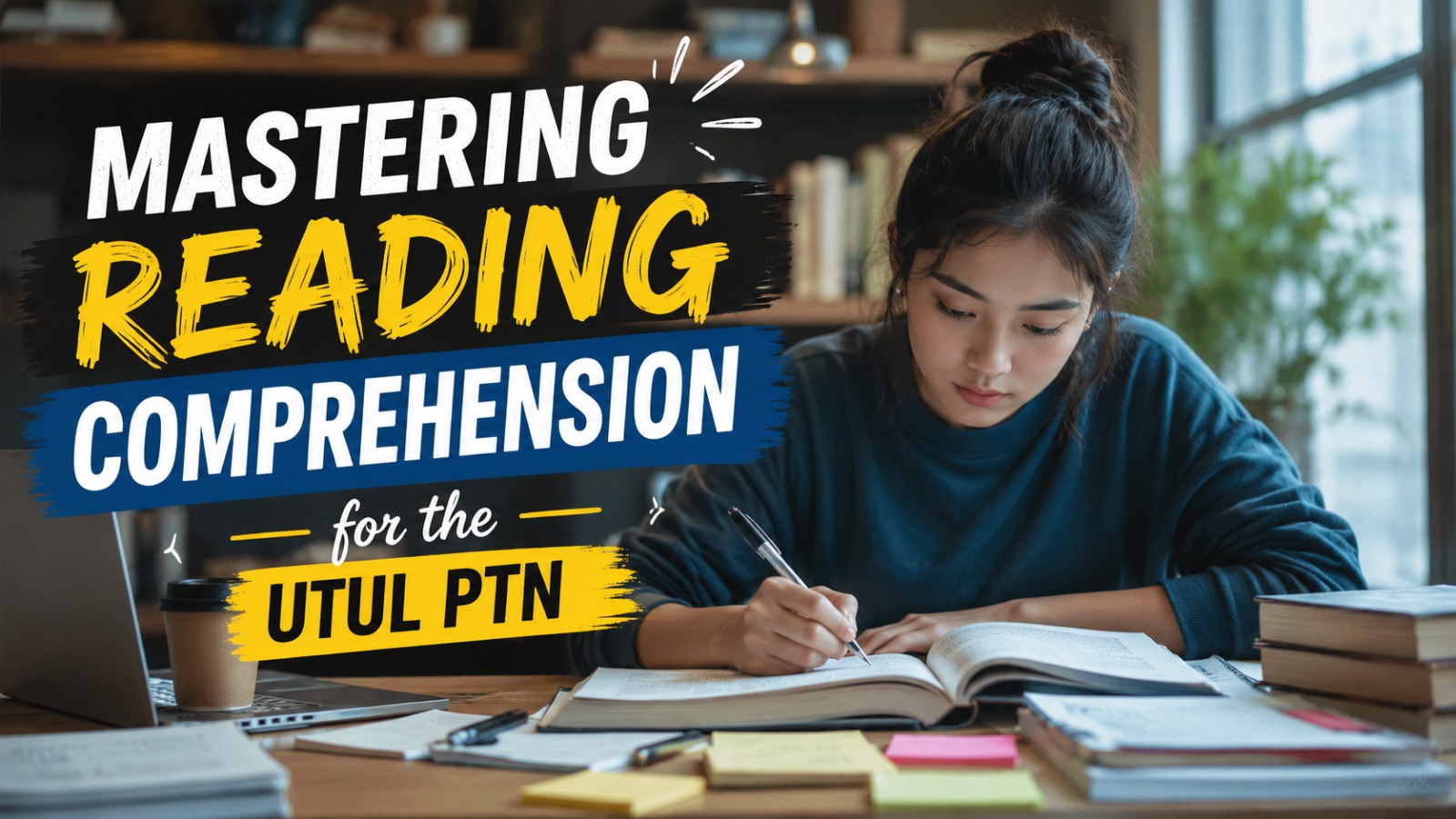
Reading Comprehension is one of the most important sections in the UTUL PTN because it measures a student's ability to understand, analyze, and interpret written information accurately. Many students find this section challenging because the passages are often long and followed by questions that require careful thinking. However, with the right preparation and consistent practice, anyone can improve their reading skills significantly. Learning effective reading strategies will not only help you answer questions correctly but also save valuable time during the exam. This guide explains practical methods that can help you master Reading Comprehension and achieve better results in the UTUL PTN.
UNDERSTANDING THE READING COMPREHENSION SECTION
The Reading Comprehension section evaluates your ability to identify the main idea, understand supporting details, recognize the author's purpose, and draw logical conclusions from a passage. Questions may also test your vocabulary knowledge and your ability to interpret information based on context rather than memorization. Because of this, students should focus on developing analytical reading skills instead of simply reading quickly.
Another important aspect is understanding different types of texts. The UTUL PTN may include passages about science, education, technology, social issues, or history. Becoming familiar with various topics helps students feel more comfortable when facing unfamiliar reading materials. Regular exposure to English articles and academic texts gradually increases reading confidence and comprehension ability.
BUILD STRONG READING HABITS
Developing a daily reading habit is one of the most effective ways to improve comprehension skills. Reading English newspapers, educational websites, journals, or short stories helps expand your vocabulary while improving your understanding of sentence structures. Consistency is more important than reading for many hours occasionally. Even 20 to 30 minutes of reading every day can produce noticeable improvements over time.
While reading, avoid translating every word into your native language. Instead, try to understand the overall meaning of each paragraph. This approach allows your brain to process English naturally and improves reading speed. Keeping a notebook for new vocabulary and reviewing it regularly will also strengthen your language skills before the exam.
LEARN EFFECTIVE SKIMMING AND SCANNING TECHNIQUES
Skimming is the process of reading quickly to understand the general idea of a passage. Instead of focusing on every sentence, pay attention to the title, introduction, topic sentences, and conclusion. This technique helps you gain an overview before answering detailed questions. It also reduces the amount of time spent reading lengthy passages.
Scanning, on the other hand, involves searching for specific information such as names, dates, numbers, or keywords. Rather than rereading the entire passage, train your eyes to locate relevant information efficiently. Combining skimming and scanning allows students to answer questions more accurately while managing exam time effectively.
IMPROVE YOUR VOCABULARY THROUGH CONTEXT
A broad vocabulary makes Reading Comprehension much easier. However, memorizing long word lists is often less effective than learning vocabulary naturally through reading. When you encounter unfamiliar words, first try to understand their meaning from the surrounding sentences before checking a dictionary. This method develops your ability to infer meaning during the actual exam.
Pay special attention to synonyms, antonyms, transition words, and academic vocabulary that frequently appear in examination texts. Words such as however, therefore, although, and consequently often indicate important relationships between ideas. Understanding these connectors helps you interpret the author's message more accurately.
PRACTICE ANSWERING DIFFERENT QUESTION TYPES
Reading Comprehension questions are designed to measure different thinking skills. Some questions ask about the main idea, while others focus on supporting details, vocabulary, inference, reference words, or the author's opinion. Learning to recognize each question type enables you to choose the most suitable answering strategy.
After completing practice exercises, carefully review every incorrect answer. Instead of only checking the correct option, identify why your answer was wrong and locate the supporting evidence in the passage. This review process helps eliminate repeated mistakes and gradually improves your analytical thinking abilities.
MANAGE YOUR TIME DURING THE EXAM
Good time management is essential because Reading Comprehension passages can be lengthy. Begin by reading the questions briefly before reading the passage so you know what information to look for. Avoid spending too much time on a single difficult question. If necessary, answer easier questions first and return to challenging ones later.
Practice under real exam conditions by setting a timer during mock tests. This habit builds confidence and helps you become familiar with the pace required in the UTUL PTN. As your reading speed increases, you will have more time to review your answers before the exam ends.
COMMON MISTAKES TO AVOID
Many students lose points because they rely on assumptions instead of information provided in the passage. Always choose answers that are directly supported by the text rather than personal opinions or prior knowledge. Reading questions carefully is equally important because small words like not, except, or best can completely change the meaning of a question.
Another frequent mistake is reading too quickly without understanding the passage. While speed is important, comprehension should always come first. A balanced approach between careful reading and efficient time management will produce the best results during the examination.
CONCLUSION
Mastering Reading Comprehension for the UTUL PTN requires continuous practice, effective reading strategies, and disciplined preparation. Students who develop strong reading habits, improve their vocabulary, and regularly practice different question types will gain a significant advantage during the exam. Combining skimming, scanning, contextual vocabulary learning, and good time management creates a comprehensive preparation strategy. With consistent effort and smart study techniques, achieving a high score in the Reading Comprehension section becomes a realistic and attainable goal.
Tentang Penulis
Gusti Ayu Tita P
Penulis — Universitas STEKOM
Penulis aktif yang berfokus pada isu-isu akademik, teknologi pendidikan, dan pengembangan sumber daya manusia di lingkungan kampus.