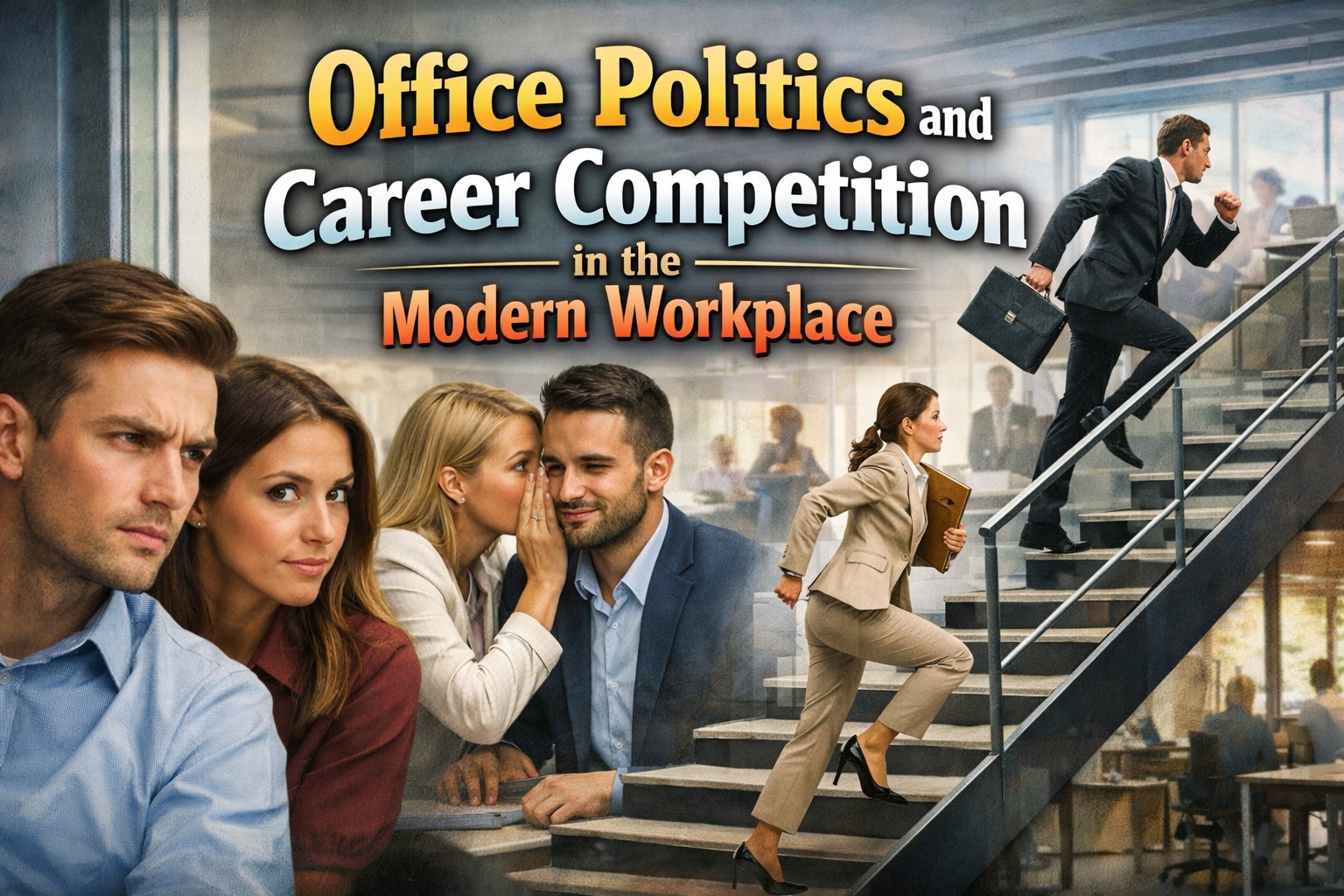
In today’s professional environment, office politics and career competition have become common parts of workplace culture. Employees are expected not only to perform well but also to build relationships, communicate effectively, and adapt to organizational dynamics. While healthy competition can motivate employees to improve their performance, unhealthy office politics may create stress, conflict, and reduced teamwork. Understanding how these factors influence the workplace is important for both employees and companies. A balanced work environment can help individuals grow professionally while maintaining positive relationships with colleagues.
UNDERSTANDING OFFICE POLITICS IN THE WORKPLACE
Office politics refers to the way employees use communication, influence, and relationships to achieve professional goals. In many companies, office politics naturally develops because people have different ambitions, personalities, and responsibilities. Some employees use positive political skills such as collaboration, networking, and leadership to build trust and improve teamwork. However, negative office politics can involve gossip, favoritism, manipulation, or unhealthy rivalry between coworkers.
Modern workplaces are highly competitive, especially in industries that focus on performance and productivity. Employees often compete for promotions, recognition, salary increases, and leadership opportunities. This competition can encourage innovation and hard work when managed properly. However, when competition becomes too aggressive, it may damage workplace relationships and reduce employee morale. Companies need clear communication and fair management systems to prevent toxic workplace behavior.
THE IMPACT OF CAREER COMPETITION ON EMPLOYEES
Career competition can have both positive and negative effects on employees. On the positive side, competition motivates workers to improve their skills, increase productivity, and achieve career goals. Employees who are challenged often become more creative, disciplined, and focused on professional development. Healthy competition can also encourage continuous learning and better performance within teams.
On the other hand, excessive competition may create anxiety, stress, and burnout. Employees who constantly compare themselves to others may feel pressured to work beyond healthy limits. In some workplaces, competition may reduce collaboration because employees focus more on personal success than team achievements. This situation can lead to communication problems and lower trust among coworkers. Maintaining emotional balance and professional ethics is important in highly competitive environments.
HOW TO HANDLE OFFICE POLITICS PROFESSIONALLY
Handling office politics requires emotional intelligence, professionalism, and effective communication. Employees should focus on building positive relationships with coworkers instead of participating in gossip or conflict. Respectful communication and teamwork can help individuals maintain a good reputation in the workplace. Being honest, reliable, and cooperative also increases professional credibility.
It is also important to understand workplace culture and company expectations. Employees should avoid emotional reactions during disagreements and instead focus on finding constructive solutions. Developing strong networking skills can help workers build supportive professional relationships. In addition, maintaining work quality and consistency is often more effective than engaging in negative political behavior. Professionalism remains one of the best ways to succeed in modern organizations.
THE ROLE OF LEADERSHIP IN CREATING A HEALTHY WORKPLACE
Company leaders play a major role in reducing unhealthy office politics and promoting fair career competition. Managers who communicate openly and treat employees fairly can build trust within teams. Transparent promotion systems and equal opportunities help employees feel valued and respected. Good leadership encourages collaboration rather than unhealthy rivalry.
Leaders should also create a workplace culture that supports teamwork, diversity, and employee well-being. Training programs on communication, conflict management, and leadership development can improve workplace relationships. Employees are more likely to stay motivated when they work in an environment that values respect and fairness. A healthy workplace culture benefits both individual employees and overall company performance.
CONCLUSION
Office politics and career competition are unavoidable aspects of the modern workplace. When managed positively, they can encourage growth, innovation, and professional development. However, unhealthy competition and toxic political behavior may damage teamwork, productivity, and employee well-being. Employees should focus on professionalism, communication, and ethical behavior to succeed in competitive environments. At the same time, companies must create fair and supportive workplace cultures that encourage both individual achievement and teamwork.
Tentang Penulis
Gusti Ayu Tita P
Penulis — Universitas STEKOM
Penulis aktif yang berfokus pada isu-isu akademik, teknologi pendidikan, dan pengembangan sumber daya manusia di lingkungan kampus.