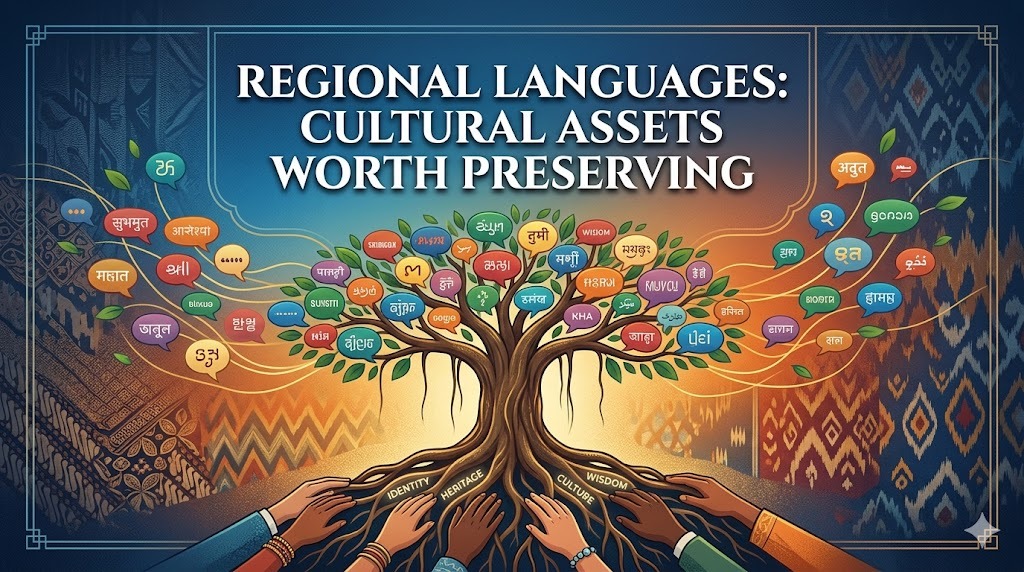
In a rapidly globalized world, communication has become easier than ever. International languages dominate education, business, and digital platforms. While this progress brings many benefits, it also creates a serious challenge: the gradual disappearance of regional languages. These languages are not merely tools of communication; they are cultural assets that reflect identity, history, and collective wisdom. Preserving regional languages is essential to maintaining cultural diversity and strengthening community identity.
THE IMPORTANCE OF REGIONAL LANGUAGES
Regional languages carry stories, traditions, and values passed down through generations. They reflect how communities understand the world, express emotions, and maintain social relationships.
When a language disappears, a part of human history disappears with it. Songs, folklore, traditional knowledge, and unique expressions often cannot be fully translated into other languages. Therefore, preserving regional languages means protecting the cultural heritage of a community.
THREATS TO REGIONAL LANGUAGES
Many regional languages are currently at risk of extinction. Several factors contribute to this situation:
### GLOBALIZATION AND MODERNIZATION
Global communication encourages the use of dominant languages such as English. As a result, younger generations often prioritize global languages over their mother tongues.
### URBANIZATION AND MIGRATION
Migration to cities creates multicultural environments where dominant languages become the primary means of communication. Over time, regional languages are used less frequently.
### LIMITED EDUCATIONAL SUPPORT
Many schools focus on national or international languages, leaving regional languages with little space in formal education.
WHY PRESERVATION MATTERS
Protecting regional languages is not only about saving words but also about safeguarding identity and diversity.
### STRENGTHENING CULTURAL IDENTITY
Language shapes how people view themselves and their communities. Maintaining regional languages helps individuals stay connected to their roots.
### PROTECTING LOCAL KNOWLEDGE
Traditional medicine, agricultural practices, and environmental wisdom are often preserved in regional languages. Losing the language means losing valuable knowledge.
### PROMOTING CULTURAL DIVERSITY
Cultural diversity enriches global society. Preserving regional languages ensures that different perspectives and traditions continue to exist.
STRATEGIES TO PRESERVE REGIONAL LANGUAGES
Efforts to protect regional languages require collaboration between communities, governments, and educational institutions.
### INTRODUCING LANGUAGE EDUCATION
Schools can include regional languages in their curriculum to ensure younger generations learn and use them.
### USING DIGITAL PLATFORMS
Social media, podcasts, and online videos provide powerful tools to promote regional languages in creative ways.
### ENCOURAGING DAILY USE
Families and communities play a key role in preserving language by using it in everyday conversations.
### SUPPORTING CULTURAL EVENTS
Festivals, storytelling events, and traditional performances help keep regional languages alive and relevant.
THE ROLE OF YOUNG GENERATIONS
Young people have the power to transform preservation efforts into modern movements. By creating digital content, music, or storytelling in regional languages, they can make these languages attractive and relevant.
Technology should not be seen as a threat but as a tool to revive and celebrate linguistic heritage.
CONCLUSION
Regional languages are priceless cultural assets that deserve protection and appreciation. In the face of globalization, preserving these languages is essential for maintaining cultural identity, safeguarding traditional knowledge, and celebrating diversity. By combining education, technology, and community involvement, regional languages can continue to thrive for future generations.
Tentang Penulis
Gusti Ayu Tita P
Penulis — Universitas STEKOM
Penulis aktif yang berfokus pada isu-isu akademik, teknologi pendidikan, dan pengembangan sumber daya manusia di lingkungan kampus.