The Benefits of Reading Academic Journals for Expanding Knowledge
Gusti Ayu Tita P
13 Oktober 2026
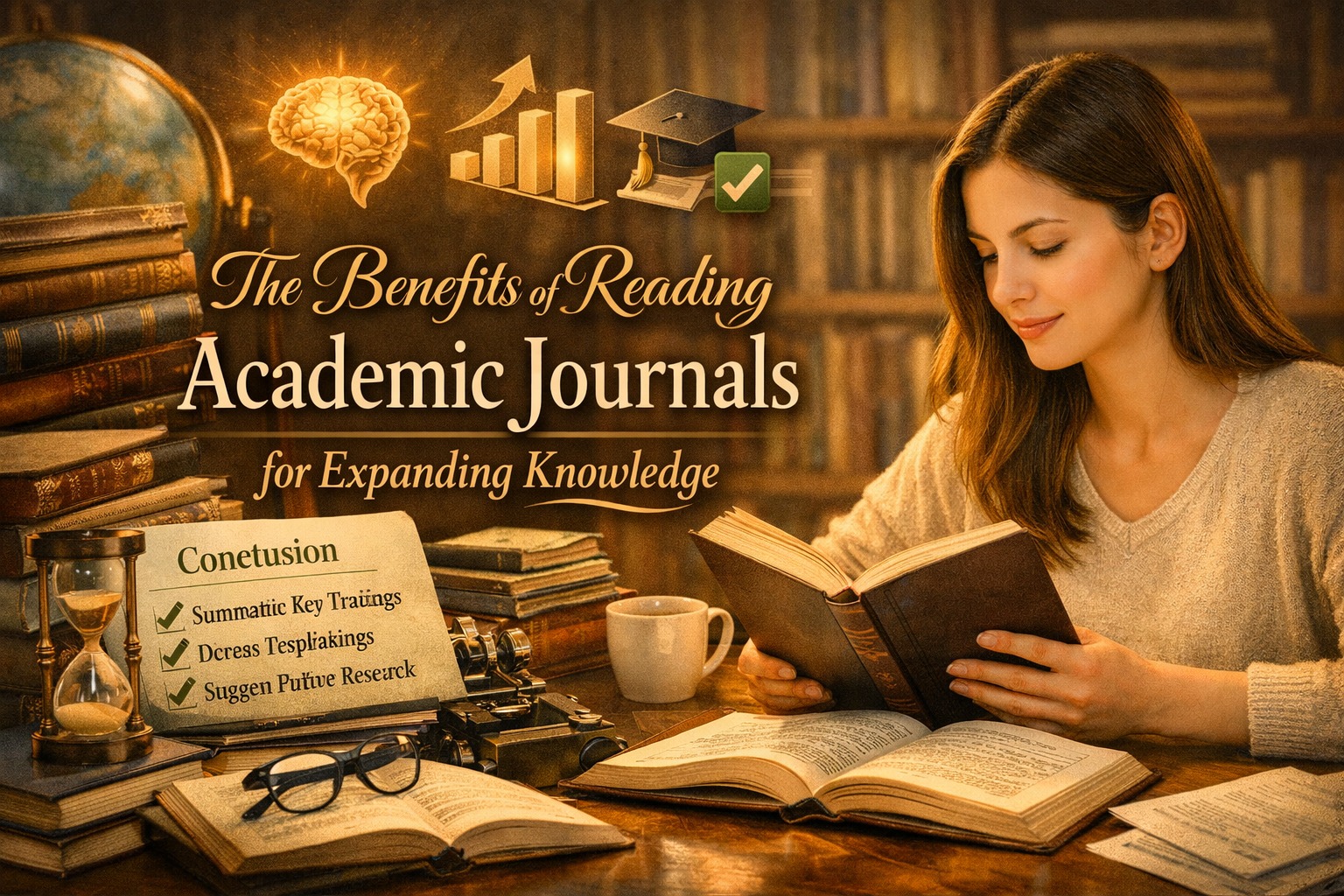
Reading academic journals is one of the most effective ways to gain deeper and more reliable knowledge in any field of study. Unlike general articles, academic journals are written based on scientific research, verified data, and structured analysis. This makes them a highly trusted source for students, researchers, and professionals who want to expand their understanding. In today’s information era, relying on accurate sources is very important to avoid misinformation. Therefore, developing the habit of reading research-based journals can significantly improve intellectual growth and critical thinking skills.
IMPROVES CRITICAL THINKING SKILLS
One of the main benefits of reading academic journals is the improvement of critical thinking skills. These journals often present complex problems that require careful analysis and evaluation. Readers are encouraged to compare arguments, examine evidence, and understand different perspectives. This process trains the brain to think more logically and systematically. Over time, individuals become more skilled in making well-informed decisions based on scientific evidence rather than assumptions.
In addition, exposure to different research methodologies helps readers understand how conclusions are formed. This builds a stronger ability to question information and avoid accepting ideas blindly. As a result, critical thinking becomes a natural habit in academic and daily life situations.
EXPANDS ACADEMIC AND PROFESSIONAL KNOWLEDGE
Reading academic journals also plays a major role in expanding both academic knowledge and professional knowledge. These journals provide updated findings in various fields such as education, technology, health, and social sciences. By reading them regularly, individuals can stay informed about the latest research developments and innovations.
Furthermore, professionals can use this knowledge to improve their work performance and problem-solving abilities. For students, it helps in writing better assignments, theses, and research papers. This continuous learning process ensures that knowledge remains relevant and up to date in a fast-changing world.
IMPROVES WRITING AND RESEARCH SKILLS
Another important benefit of reading academic journals is the improvement of academic writing skills and research skills. Journals are structured in a formal and logical format, which helps readers understand how to organize ideas effectively. This includes learning how to write introductions, literature reviews, methodologies, and conclusions.
By studying these structures, readers can improve their own writing style and produce higher-quality academic work. In addition, exposure to research data helps individuals understand how to collect, analyze, and interpret information correctly. This is especially useful for students and researchers who want to produce strong scientific writing.
ENHANCES VOCABULARY AND LANGUAGE COMPREHENSION
Reading academic journals significantly enhances vocabulary development and language comprehension. These journals often use formal and technical terms related to specific fields of study. As readers encounter these terms repeatedly, they naturally expand their academic vocabulary.
This improvement also helps in understanding complex texts more easily. In the long term, readers become more confident in interpreting scholarly materials and communicating ideas clearly. Strong language skills are essential for success in both academic and professional environments.
SUPPORTS INFORMED DECISION MAKING
Another key benefit of reading academic journals is the ability to make more informed decisions. Since journals are based on verified data and peer-reviewed research, they provide reliable information that can be trusted. This is especially important in fields like health, education, business, and technology.
With access to accurate information, individuals can avoid misinformation and make better choices in their studies or careers. This leads to more effective problem-solving and better long-term outcomes. Ultimately, informed decision-making is one of the most valuable skills developed through consistent reading of academic literature.
CONCLUSION
In conclusion, reading academic journals offers many benefits, including improved critical thinking skills, expanded academic knowledge, better research skills, enhanced vocabulary development, and stronger decision-making abilities. It is a powerful habit that supports both personal and professional growth. By regularly engaging with research-based journals, individuals can stay updated with global knowledge and strengthen their intellectual capabilities. Therefore, making academic reading a daily habit is highly recommended for anyone who wants to succeed in education and career developmentAcademic Journals Reading improves critical thinking knowledge research skills vocabulary and decision making for academic and professional success
Tentang Penulis
Gusti Ayu Tita P
Penulis — Universitas STEKOM
Penulis aktif yang berfokus pada isu-isu akademik, teknologi pendidikan, dan pengembangan sumber daya manusia di lingkungan kampus.