The Difference Between a Leader and a Boss You Should Know
Gusti Ayu Tita P
18 Juni 2026
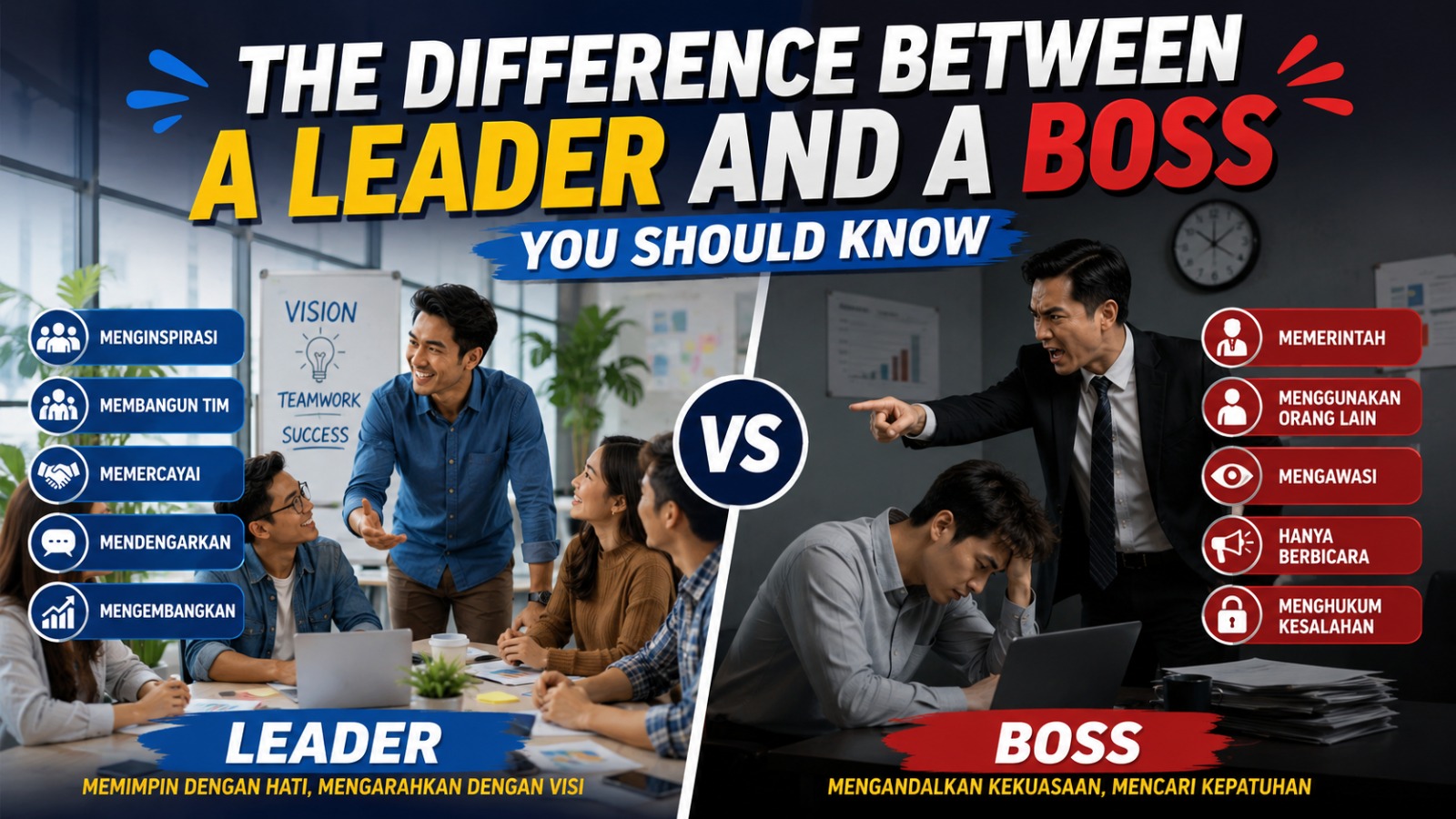
In the workplace, the terms “leader” and “boss” are often used interchangeably. However, they have very different meanings and approaches when it comes to managing people. A boss usually focuses on authority and control, while a leader inspires, guides, and supports the team toward shared success. Understanding the difference between a leader and a boss is important because it can affect teamwork, productivity, and employee satisfaction.
A good working environment is often built by strong leadership rather than strict control. This is why many modern companies today value leaders more than traditional bosses. Knowing these differences can help individuals improve their management style and create healthier professional relationships.
UNDERSTANDING THE ROLE OF A BOSS
A boss is someone who has authority over employees and is responsible for ensuring that tasks are completed. Bosses usually focus on achieving targets, maintaining discipline, and managing performance. In many situations, they rely on rules, instructions, and supervision to control workflow.
A boss often gives orders and expects employees to follow them without much discussion. This management style can sometimes create pressure in the workplace because communication tends to be one-sided. Employees may feel less motivated if they are treated only as workers instead of valued team members.
However, not all bosses are negative. Some bosses are highly organized and efficient in handling responsibilities. The problem appears when authority becomes more important than teamwork and personal growth.
WHAT MAKES A TRUE LEADER
A leader is someone who motivates and inspires others to work together toward a common goal. Unlike a boss, a leader builds trust and encourages collaboration. Leaders focus not only on results but also on the well-being and development of their team members.
Good leaders listen to ideas, provide support, and help employees grow professionally. They lead by example and are willing to work alongside their team during difficult situations. Because of this approach, employees often feel respected and appreciated.
Leadership is based on influence rather than fear. A leader gains loyalty because people genuinely want to follow and learn from them.
THE DIFFERENCE IN COMMUNICATION STYLE
One major difference between a leader and a boss can be seen in communication. A boss tends to give instructions and expects immediate results. Communication is usually formal and direct.
On the other hand, a leader values open communication. Leaders encourage team members to share ideas, opinions, and feedback. They understand that good communication creates stronger teamwork and better problem-solving.
Employees often feel more comfortable discussing challenges with a leader because the environment is more supportive and less intimidating.
HOW THEY HANDLE TEAMWORK
Bosses often focus on controlling employees and ensuring tasks are completed correctly. In some cases, they may take full credit for achievements while blaming employees for mistakes.
Leaders, however, believe in collaboration. They recognize the contributions of every team member and celebrate success together. When problems occur, leaders work with the team to find solutions instead of simply assigning blame.
This difference greatly affects team morale and productivity. Teams led by supportive leaders are usually more motivated and loyal.
APPROACH TO EMPLOYEE DEVELOPMENT
A boss may prioritize short-term results over employee growth. Training and development are sometimes viewed only as tools to improve performance.
A leader sees employee development as a long-term investment. Leaders encourage learning, provide mentorship, and help team members improve their skills. They understand that when employees grow, the entire organization benefits.
Because of this, leaders often create a more positive and inspiring work culture.
DECISION-MAKING STYLE
Bosses usually make decisions independently and expect employees to follow instructions without question. This top-down approach can sometimes limit creativity and innovation.
Leaders often involve their teams in decision-making processes. They appreciate different perspectives and understand that collaboration can lead to better ideas and solutions.
When employees feel included, they become more engaged and committed to the organization’s goals.
WHICH ONE CREATES A BETTER WORK ENVIRONMENT?
A leader generally creates a healthier and more productive work environment than a boss. Employees who feel respected and motivated are more likely to work efficiently and stay loyal to the company.
Leadership encourages trust, creativity, and teamwork, while excessive control can create stress and fear. Modern workplaces increasingly prefer leaders who can inspire people rather than bosses who only focus on authority.
CONCLUSION
The difference between a leader and a boss lies mainly in their approach to people. A boss manages through authority and control, while a leader guides through inspiration, communication, and trust. Both roles may have the same goal of achieving success, but the methods they use are very different.
Being a true leader means supporting others, encouraging teamwork, and helping people grow. In today’s professional world, leadership skills are becoming more valuable because they create stronger teams and better workplace relationships. Understanding these differences can help individuals become more effective in both personal and professional life.
Tentang Penulis
Gusti Ayu Tita P
Penulis — Universitas STEKOM
Penulis aktif yang berfokus pada isu-isu akademik, teknologi pendidikan, dan pengembangan sumber daya manusia di lingkungan kampus.