The Importance of Teamwork in Implementing Student Council Programs
Gusti Ayu Tita P
14 Oktober 2026
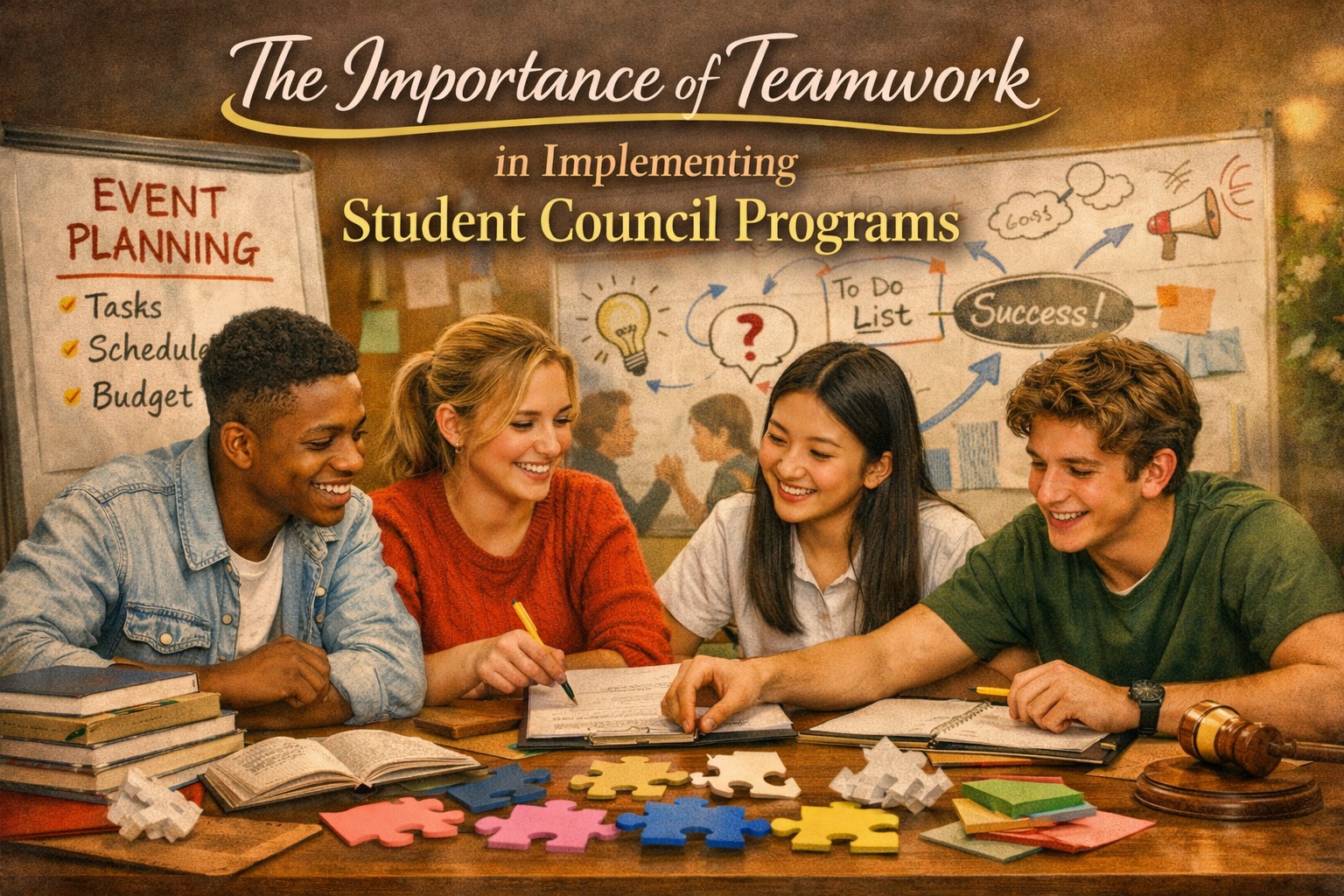
The student council is an essential organization that helps students develop leadership, responsibility, and organizational skills while contributing to the school community. However, no student council program can succeed without strong teamwork among its members. Every activity, from educational seminars and social campaigns to cultural festivals and community service projects, requires cooperation, communication, and shared commitment. Effective teamwork allows members to combine their strengths, solve problems efficiently, and achieve common goals. As a result, teamwork becomes the foundation for successful student council programs and meaningful student development.
UNDERSTANDING THE ROLE OF TEAMWORK IN STUDENT COUNCIL
Teamwork is the ability of individuals to work together toward a shared objective while respecting each other's roles and responsibilities. Within the student council, teamwork enables members to plan, organize, and execute activities more effectively by combining different skills and perspectives. Every member contributes unique ideas and abilities that strengthen the organization as a whole. This collaborative approach improves both productivity and creativity.
Strong teamwork also creates a positive organizational culture built on trust and mutual respect. Members learn to communicate openly, share responsibilities fairly, and support one another during challenging situations. These experiences strengthen relationships while promoting a sense of belonging within the organization. As a result, student council members become more motivated to contribute their best efforts.
WHY TEAMWORK IS ESSENTIAL FOR STUDENT COUNCIL PROGRAMS?
Every successful student council program depends on cooperation between members who share common goals. Organizing school events involves planning schedules, managing budgets, coordinating volunteers, promoting activities, and solving unexpected problems. Without effective teamwork, these responsibilities become much more difficult to manage. Collaborative efforts ensure that every task is completed efficiently.
Teamwork also improves decision-making because members contribute different perspectives and creative ideas. Constructive discussions often lead to more effective solutions than individual efforts alone. Students learn to appreciate diversity while developing the ability to compromise for the benefit of the organization. This collaborative process strengthens both leadership and organizational performance.
BENEFITS OF EFFECTIVE TEAMWORK FOR STUDENTS
Participating in collaborative student council activities helps students develop valuable leadership skills and interpersonal abilities. Working with classmates improves communication, active listening, adaptability, and emotional intelligence. Students become more confident when contributing ideas and supporting group decisions. These experiences prepare them for future academic and professional environments.
Teamwork also strengthens responsibility and accountability. Every member understands that the success of a program depends on everyone's contributions. Completing assigned tasks on time demonstrates reliability and commitment to shared objectives. These habits build strong character and encourage lifelong collaboration skills.
CHALLENGES IN TEAMWORK AND HOW TO OVERCOME THEM
Although teamwork offers many advantages, student council members may encounter communication problems, differing opinions, or unequal participation. These challenges are natural whenever individuals with different backgrounds and ideas work together. Ignoring conflicts can negatively affect organizational performance and team morale. Therefore, members must address issues respectfully and constructively.
Open communication is one of the most effective ways to overcome teamwork challenges. Members should actively listen to each other, express ideas clearly, and remain focused on organizational goals instead of personal preferences. Regular meetings and constructive feedback also improve coordination and mutual understanding. These strategies strengthen cooperation and create a healthier working environment.
STRATEGIES FOR BUILDING STRONG TEAMWORK
Building successful teamwork begins with establishing clear goals and defining each member's responsibilities. Every student council member should understand their role while recognizing how individual contributions support the overall success of the organization. Clear expectations reduce confusion and improve accountability. Proper planning also helps projects run more smoothly.
Encouraging mutual respect and appreciation further strengthens collaboration. Members should celebrate achievements together while learning from mistakes without assigning blame. Leadership training, team-building activities, and regular evaluations also help improve cooperation over time. Continuous learning creates a stronger and more united student council.
THE LONG TERM IMPACT OF TEAMWORK ON STUDENT DEVELOPMENT
The teamwork experiences gained through the student council provide lifelong benefits for students. Collaboration teaches responsibility, discipline, communication, adaptability, and problem-solving skills that remain valuable in higher education and future careers. Employers and universities highly value individuals who can work effectively within diverse teams. Student council participation provides practical evidence of these abilities.
Beyond professional preparation, teamwork also helps students become more empathetic and socially responsible individuals. They learn to value cooperation, appreciate different viewpoints, and contribute positively to their communities. These qualities shape responsible citizens and future leaders. The lessons learned through teamwork continue to influence students long after they leave school.
CONCLUSION
The importance of teamwork in implementing student council programs cannot be overstated. Effective collaboration enables students to organize successful activities, solve challenges efficiently, and build stronger relationships within the school community. Through teamwork, students develop leadership, communication, responsibility, and problem-solving skills that benefit them throughout their lives. Schools that encourage collaborative student council activities create an environment where students can grow into confident, capable, and socially responsible leaders. Investing in teamwork today helps prepare students for lasting success in the future.
Tentang Penulis
Gusti Ayu Tita P
Penulis — Universitas STEKOM
Penulis aktif yang berfokus pada isu-isu akademik, teknologi pendidikan, dan pengembangan sumber daya manusia di lingkungan kampus.