
Effective Strategies For Finding Reliable Sources For Scientific Writing
Gusti Ayu Tita P
14 Oktober 2026
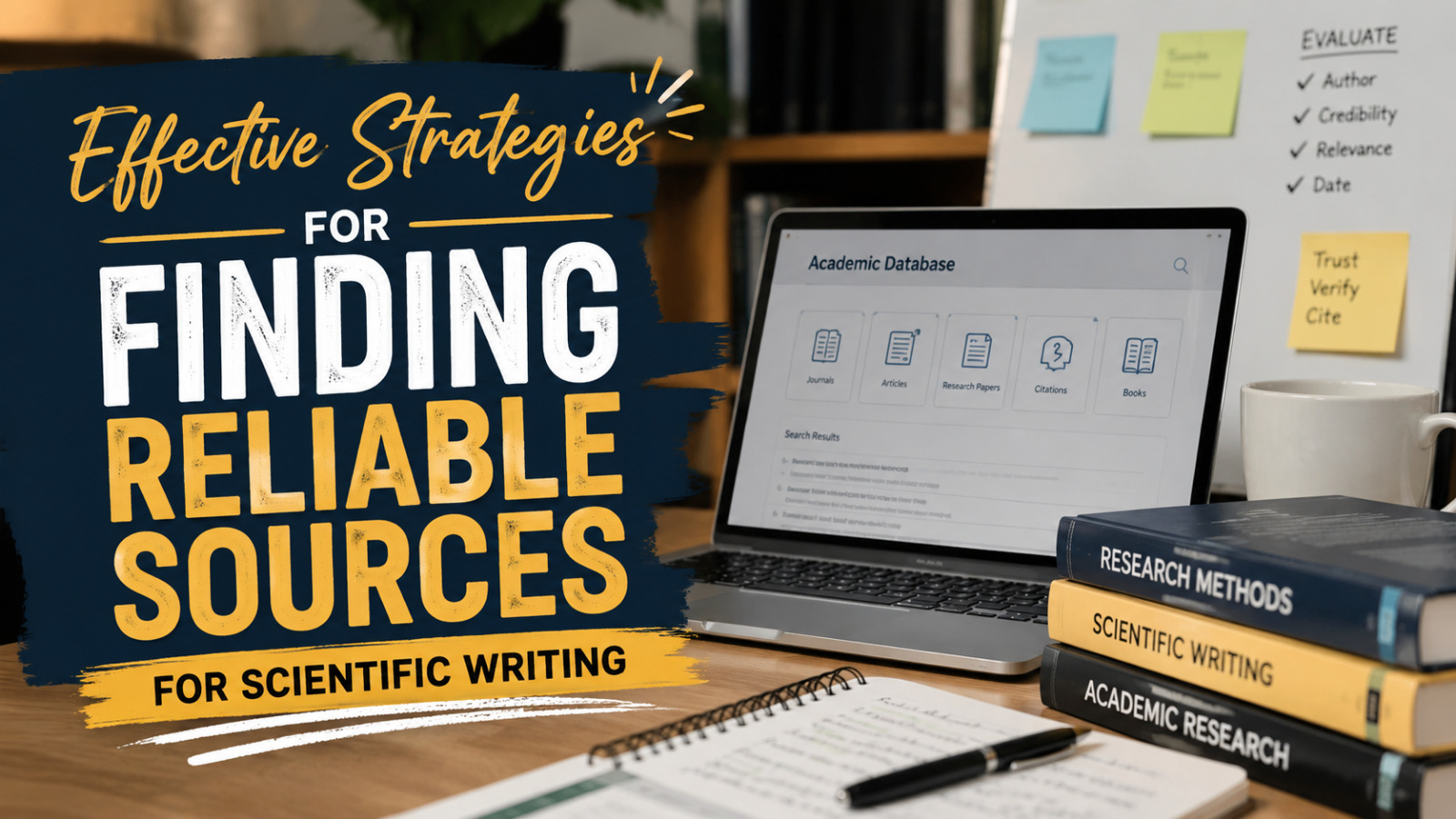
Finding Reliable Sources is one of the most important steps in producing a high-quality scientific paper. Credible references strengthen arguments, improve the accuracy of information, and increase the trustworthiness of research results. Many students struggle because they rely on websites or articles that have not been properly reviewed. Understanding how to identify trustworthy information allows researchers to build stronger academic work. By applying effective search strategies, every researcher can improve the quality of Scientific Writing and produce more reliable findings.
In addition, selecting quality references helps prevent misinformation and supports evidence-based conclusions. Academic institutions expect students to use verified publications rather than unverified online content. Using trusted materials also demonstrates professionalism and critical thinking throughout the research process. Therefore, learning how to find and evaluate reliable sources is an essential academic skill for every student and researcher.
UNDERSTANDING THE IMPORTANCE OF RELIABLE SOURCES
Using Reliable Sources is essential because every claim in a scientific paper should be supported by accurate evidence. Credible references increase the validity of research and help readers trust the conclusions presented. They also reduce the risk of spreading incorrect or outdated information. Reliable information forms the foundation of strong academic writing and meaningful research. Without trustworthy references, even a well-written paper may lose its credibility.
Researchers should prioritize Academic Journals, books published by respected publishers, conference proceedings, and official government or institutional publications. These materials usually go through careful review before publication. Compared to personal blogs or anonymous websites, scholarly resources provide stronger evidence and more accurate data. Choosing reliable references from the beginning saves time and improves the overall quality of the research.
USING ACADEMIC DATABASES EFFECTIVELY
One of the best ways to locate Research Sources is by using academic databases. These platforms provide access to peer-reviewed articles, scientific journals, conference papers, and scholarly publications from various disciplines. Searching within trusted databases increases the likelihood of finding relevant and accurate information. It also helps researchers avoid unreliable websites with unsupported claims. Learning how to use search filters can significantly improve search efficiency.
Researchers should use specific keywords related to their study rather than broad search terms. Combining keywords with publication dates, subject categories, and document types helps narrow search results. Reading abstracts before downloading full articles also saves valuable research time. Mastering academic database searches enables researchers to gather stronger evidence for their scientific writing.
EVALUATING THE CREDIBILITY OF INFORMATION
Finding information is only the first step because researchers must also evaluate its credibility. A good Source Evaluation process includes checking the author's qualifications, publication date, publisher reputation, and supporting references. Recent publications are generally more suitable for rapidly changing research fields such as technology or health. Researchers should also verify whether the information is supported by evidence and citations. Careful evaluation prevents the use of misleading or inaccurate sources.
Another important factor is identifying potential bias within a publication. Researchers should compare information from multiple Credible References instead of depending on a single source. Cross-checking facts strengthens the reliability of research findings and reduces errors. This practice also improves critical thinking and enhances the quality of scientific discussions. Reliable information always comes from transparent and verifiable sources.
ORGANIZING REFERENCES FOR BETTER WRITING
Managing references properly makes the writing process more efficient and organized. Keeping records of every Research Sources document prevents accidental plagiarism and simplifies citation management. Researchers should record author names, publication years, titles, and publication details immediately after collecting sources. This habit reduces confusion when preparing the bibliography. Organized references also make revisions much easier.
Reference management tools can further improve productivity by storing and formatting citations automatically. Maintaining a structured collection of sources allows researchers to focus more on analysis rather than searching for missing information. Proper organization supports smoother writing and ensures consistent citation styles throughout the paper. Good reference management is an important part of successful scientific writing.
CONCLUSION
Finding Reliable Sources requires careful searching, critical evaluation, and organized reference management. By using trusted Academic Journals, performing proper Source Evaluation, collecting high-quality Research Sources, and relying on Credible References, researchers can significantly improve the quality of their Scientific Writing. Reliable evidence strengthens arguments, increases academic credibility, and supports meaningful research outcomes. Developing these skills helps students and researchers produce accurate, professional, and impactful scientific papers.
Tentang Penulis
Gusti Ayu Tita P
Penulis — Universitas STEKOM
Penulis aktif yang berfokus pada isu-isu akademik, teknologi pendidikan, dan pengembangan sumber daya manusia di lingkungan kampus.