Tips for Creating Interesting and Beneficial Student Council ProgramsTips for Creating Interesting and Beneficial Student Council Programs
Gusti Ayu Tita P
18 September 2026
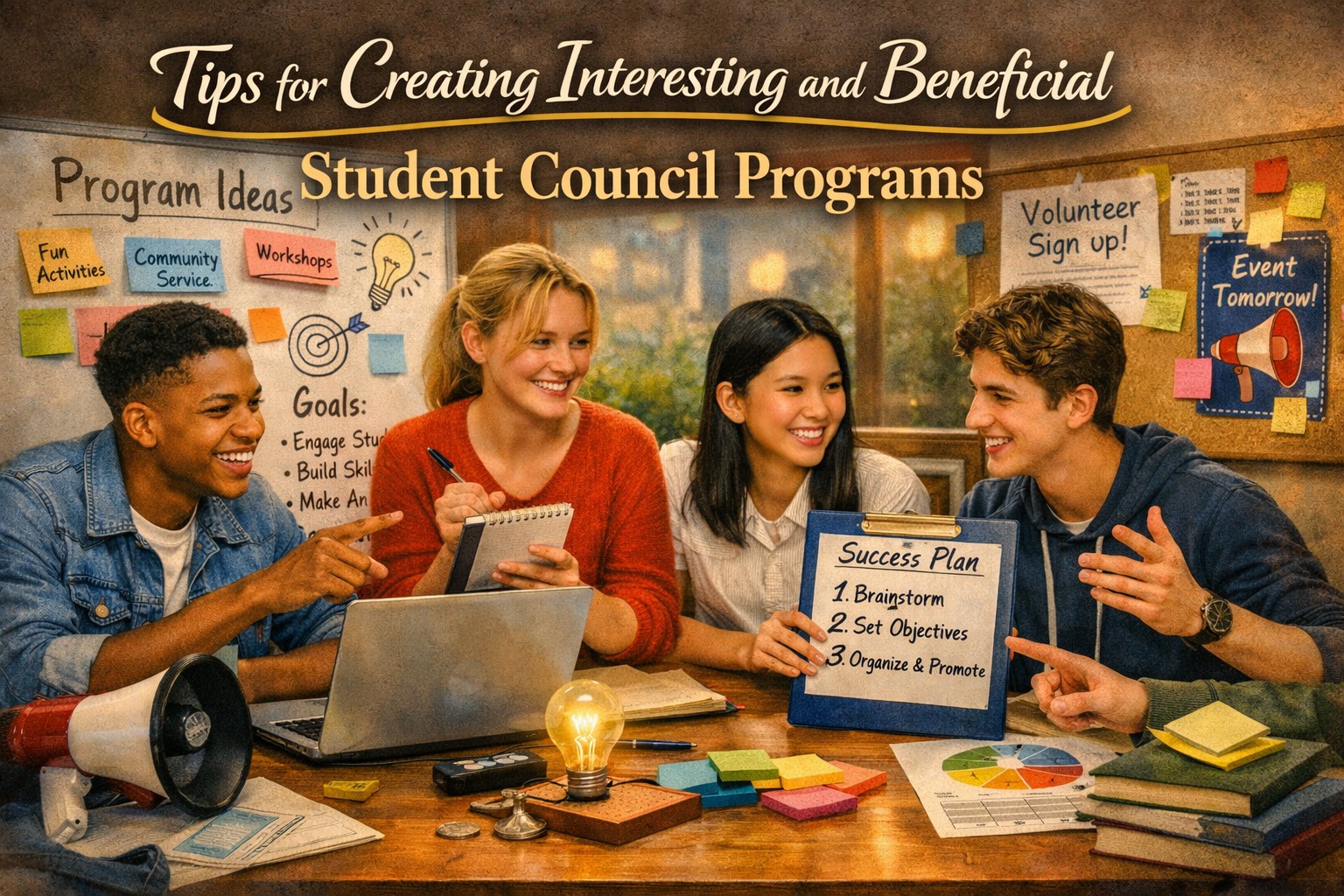
The student council plays an essential role in organizing activities that enrich school life and encourage students to become more active, creative, and responsible. Well-planned programs not only make school more enjoyable but also help students develop leadership, teamwork, communication, and problem-solving skills. To achieve these goals, every student council activity should be meaningful, inclusive, and aligned with the needs of the school community. Successful programs inspire participation while creating positive experiences for all students. By following effective planning strategies, student council members can design activities that leave a lasting impact on both students and the school environment.
UNDERSTANDING THE PURPOSE OF STUDENT COUNCIL PROGRAMS
Every student council program should have a clear purpose that supports student development and strengthens the school community. Activities should encourage learning, leadership, creativity, cooperation, and social responsibility rather than simply providing entertainment. Programs with meaningful objectives create greater value for participants and contribute to a positive school culture. A clear vision also helps student council members organize activities more effectively.
Understanding student needs is equally important before planning any program. Student council members should gather opinions through surveys, discussions, or suggestion boxes to identify the interests of their classmates. This approach ensures that activities remain relevant and engaging. Programs designed around student interests usually attract higher participation and stronger enthusiasm.
PLAN PROGRAMS THAT ENCOURAGE ACTIVE PARTICIPATION
One of the most important tips for creating successful student council activities is encouraging active participation. Students are more motivated when they can contribute ideas, volunteer, and become directly involved in organizing events. Activities such as leadership workshops, talent competitions, environmental campaigns, charity projects, and cultural festivals encourage broader student involvement. Participation strengthens students' sense of ownership and belonging.
Student council members should also provide opportunities for students from different backgrounds and interests to participate. Inclusive activities create a welcoming environment where everyone feels valued. Encouraging teamwork and collaboration increases interaction among students. Greater participation results in more successful and meaningful school programs.
FOCUS ON CREATIVITY AND INNOVATION
Creative and innovative programs capture students' attention while making learning more enjoyable. The student council can introduce unique event concepts, interactive workshops, digital competitions, entrepreneurship fairs, educational games, and creative exhibitions. Fresh ideas help maintain student interest and prevent activities from becoming repetitive. Creativity also inspires students to think differently and express their talents.
Innovation should be supported by careful planning and continuous improvement. Student council members can evaluate previous events, gather participant feedback, and explore new trends that suit the school environment. Combining traditional activities with modern technology often creates more engaging experiences. Continuous innovation keeps student council programs relevant and exciting.
BUILD STRONG TEAMWORK DURING PLANNING
Effective teamwork is the foundation of every successful student council program. Members should divide responsibilities fairly according to individual strengths and abilities while maintaining open communication throughout the planning process. Cooperation improves efficiency because every member contributes to achieving shared goals. A well-organized team can solve problems more effectively.
Regular meetings and constructive discussions strengthen coordination among team members. Respecting different opinions encourages creative solutions and improves decision-making. Supporting one another during challenging situations builds trust and motivation. Strong teamwork leads to smoother program implementation and better overall results.
USE EFFECTIVE COMMUNICATION AND PROMOTION
Good communication is essential for ensuring that students understand the purpose, schedule, and benefits of every activity. Student council members should use school announcements, social media, posters, and digital platforms to promote events effectively. Clear information increases student awareness and encourages greater participation. Consistent communication also reduces misunderstandings during program implementation.
Promotion should highlight the value students will gain from participating rather than simply announcing the event. Attractive visual materials and engaging messages generate excitement before activities begin. Student council members should also encourage participants to share their experiences after events. Positive promotion strengthens the reputation of future student council programs.
EVALUATE PROGRAMS FOR CONTINUOUS IMPROVEMENT
Evaluation is a crucial step in creating high-quality student council programs. After each activity, members should collect feedback from participants, teachers, and advisors to assess strengths and identify areas for improvement. Honest evaluation provides valuable insights that help improve future events. Continuous learning leads to better organizational performance.
Student council members should also celebrate successful achievements while discussing challenges constructively. Learning from both successes and mistakes encourages growth and innovation. By maintaining a commitment to improvement, student councils can continue creating meaningful and beneficial programs for future students. Evaluation ensures long-term organizational success.
CONCLUSION
Creating interesting and beneficial student council programs requires thoughtful planning, creativity, teamwork, communication, and continuous evaluation. Programs that focus on student needs and encourage active participation contribute to a more engaging and inspiring school environment. Through well-designed activities, students develop leadership, responsibility, collaboration, and problem-solving skills that extend beyond the classroom. Schools that support innovative student council initiatives provide valuable opportunities for personal and academic growth. By applying these practical tips, student councils can create lasting positive experiences that benefit the entire school community.
Tentang Penulis
Gusti Ayu Tita P
Penulis — Universitas STEKOM
Penulis aktif yang berfokus pada isu-isu akademik, teknologi pendidikan, dan pengembangan sumber daya manusia di lingkungan kampus.