Supervisors, commonly known as SPVs, play an essential role in managing employees and ensuring smooth business operations. In many companies, supervisors act as a bridge between management and staff members. They are responsible for monitoring performance, maintaining discipline, improving productivity, and helping teams achieve organizational goals.
Different industries and departments require different types of supervisors based on operational needs. Each SPV position has specific responsibilities and leadership functions that contribute to company success.
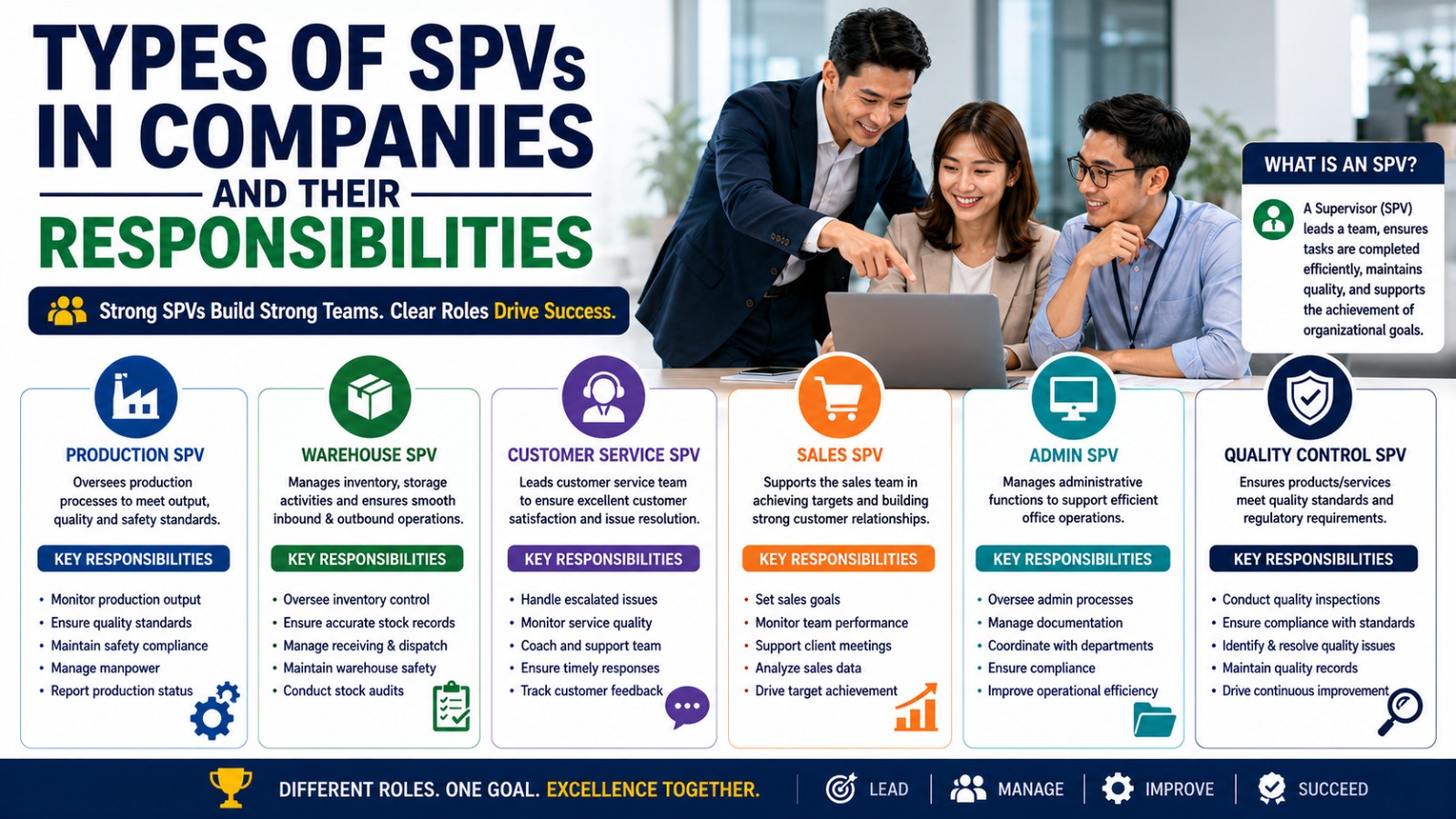
WHAT IS AN SPV?
An SPV, or supervisor, is a professional responsible for overseeing the daily activities of employees within a department or operational area. Supervisors ensure that tasks are completed correctly, workplace rules are followed, and company targets are achieved efficiently.
SPVs also play an important role in communication, employee motivation, and problem-solving within teams.
PRODUCTION SUPERVISOR
Production supervisors are commonly found in manufacturing and industrial companies. They oversee production processes to ensure efficiency, quality, and safety standards are maintained.
MAIN RESPONSIBILITIES
- Monitoring daily production activities
- Ensuring production targets are achieved
- Managing machine operations
- Maintaining product quality standards
- Enforcing workplace safety procedures
- Coordinating production staff
Production supervisors help companies maintain smooth manufacturing operations and reduce production errors.
SALES SUPERVISOR
Sales supervisors manage sales teams and help companies achieve revenue targets. They monitor employee performance, customer relationships, and sales strategies.
MAIN RESPONSIBILITIES
- Supervising sales staff
- Monitoring sales performance
- Setting sales targets
- Training sales employees
- Building customer relationships
- Evaluating sales reports
Strong sales supervision can improve company profits and customer satisfaction.
CUSTOMER SERVICE SUPERVISOR
Customer service supervisors oversee service teams that interact directly with customers. Their main goal is to maintain excellent customer experiences and solve service-related problems efficiently.
MAIN RESPONSIBILITIES
- Managing customer service representatives
- Handling customer complaints
- Monitoring service quality
- Improving response times
- Training customer support staff
- Maintaining customer satisfaction standards
Customer service supervisors help companies build strong customer loyalty and positive brand reputation.
HUMAN RESOURCES SUPERVISOR
Human resources supervisors focus on employee management, recruitment, and workplace policies. They support workforce development and maintain positive employee relations.
MAIN RESPONSIBILITIES
- Supervising HR staff
- Managing recruitment processes
- Monitoring employee attendance
- Supporting employee development
- Handling workplace conflicts
- Ensuring compliance with company policies
HR supervisors contribute to a healthier and more organized work environment.
ADMINISTRATIVE SUPERVISOR
Administrative supervisors manage office operations and ensure administrative tasks are completed efficiently.
MAIN RESPONSIBILITIES
- Coordinating office activities
- Supervising administrative staff
- Managing company documentation
- Organizing schedules and meetings
- Monitoring office supplies
- Improving administrative efficiency
Administrative supervisors help maintain smooth internal business operations.
WAREHOUSE SUPERVISOR
Warehouse supervisors oversee inventory management, storage operations, and product distribution processes.
MAIN RESPONSIBILITIES
- Monitoring stock levels
- Managing warehouse employees
- Ensuring accurate inventory records
- Supervising shipping and receiving activities
- Maintaining warehouse safety
- Improving storage efficiency
Effective warehouse supervision supports efficient supply chain operations.
QUALITY CONTROL SUPERVISOR
Quality control supervisors ensure products or services meet company standards and customer expectations.
MAIN RESPONSIBILITIES
- Conducting quality inspections
- Monitoring production standards
- Identifying product defects
- Implementing quality improvement strategies
- Preparing quality reports
- Ensuring compliance with regulations
Quality control supervisors help maintain customer trust and product reliability.
IT SUPERVISOR
Information technology supervisors manage technical teams and maintain company technology systems.
MAIN RESPONSIBILITIES
- Supervising IT support staff
- Monitoring network systems
- Managing cybersecurity measures
- Solving technical problems
- Supporting software and hardware maintenance
- Ensuring system performance
IT supervisors help organizations maintain stable and secure technology operations.
FINANCE SUPERVISOR
Finance supervisors oversee financial activities and ensure accurate financial management within the company.
MAIN RESPONSIBILITIES
- Supervising finance staff
- Monitoring budgets and expenses
- Reviewing financial reports
- Managing invoice processes
- Ensuring financial compliance
- Supporting financial planning
Finance supervisors help organizations maintain financial stability and operational control.
PROJECT SUPERVISOR
Project supervisors manage specific projects and ensure work is completed according to schedule and objectives.
MAIN RESPONSIBILITIES
- Coordinating project teams
- Monitoring project timelines
- Managing project resources
- Ensuring project quality
- Reporting project progress
- Solving operational challenges
Project supervisors help companies complete projects efficiently and successfully.
IMPORTANT SKILLS REQUIRED FOR SPVS
Regardless of their department, all supervisors need strong leadership and management skills to perform effectively.
ESSENTIAL SPV SKILLS
- Communication skills
- Leadership abilities
- Problem-solving skills
- Time management
- Team coordination
- Decision-making abilities
These skills help supervisors lead teams and manage workplace responsibilities successfully.
CONCLUSION
Companies rely on different types of SPVs to manage operations, supervise employees, and maintain productivity across departments. From production and sales supervisors to HR and IT supervisors, each role has unique responsibilities that support organizational success.
Strong supervisors help improve teamwork, operational efficiency, and employee performance. By understanding the responsibilities of different SPV positions, companies can build stronger management systems and achieve long-term business goals.
Tentang Penulis
Gusti Ayu Tita P
Penulis — Universitas STEKOM
Penulis aktif yang berfokus pada isu-isu akademik, teknologi pendidikan, dan pengembangan sumber daya manusia di lingkungan kampus.