What Are The Dangers Of Volcanic Ash?
Gusti Ayu Tita P
19 September 2026
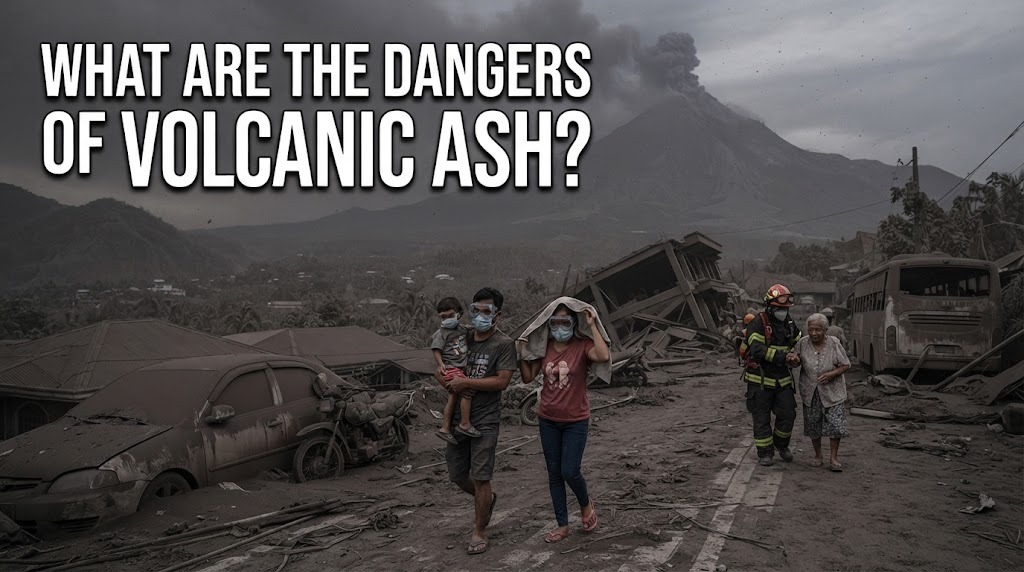
Volcanic ash is made of very small particles of rock, minerals, and volcanic glass produced during an eruption. Although it may look like ordinary dust, volcanic ash can create serious problems for people, animals, the environment, and infrastructure. The particles can travel far from the volcano depending on wind conditions. Understanding these dangers can help communities take the right safety measures during an eruption.
VOLCANIC ASH CAN AFFECT RESPIRATORY HEALTH
One of the main dangers of volcanic ash is its effect on the respiratory system. Fine ash particles can enter the nose, throat, and lungs when people breathe contaminated air. This may cause coughing, throat irritation, and breathing difficulties. People with existing respiratory conditions may be more sensitive to high levels of ash.
The risk increases when ash remains suspended in the air or is disturbed by wind and human activities. People should reduce outdoor exposure during heavy ashfall and follow local health advice. Wearing a suitable protective mask can help reduce the amount of ash inhaled. Keeping windows and doors closed can also limit ash entering indoor spaces.
VOLCANIC ASH CAN IRRITATE THE EYES AND SKIN
Volcanic ash can cause eye irritation because its tiny particles can enter the eyes. People may experience redness, discomfort, or excessive watering after exposure. Rubbing the eyes can make the irritation worse. Protective glasses or goggles can help reduce direct contact with ash.
Ash can also irritate the skin, especially after prolonged exposure. People should avoid unnecessary contact with heavy ash and wash exposed skin with clean water. Clean clothing and personal hygiene can help remove ash particles from the body. Anyone experiencing severe or persistent symptoms should seek appropriate medical advice.
VOLCANIC ASH CAN DAMAGE BUILDINGS
Large amounts of ash can accumulate on roofs and other structures. When ash becomes wet, it can become much heavier and place significant weight on roofs. Weak structures may be damaged or collapse under excessive loads. Ash can also enter buildings through small openings and contaminate indoor spaces.
Cleaning ash from buildings should be done carefully and according to local safety guidance. People should avoid placing themselves on unsafe roofs. Professional assistance may be necessary when ash accumulation is heavy or structures appear damaged. Proper cleaning can reduce the risk of structural problems.
VOLCANIC ASH CAN DISRUPT TRANSPORTATION
Volcanic ash can create serious problems for road and air transportation. Heavy ashfall can reduce visibility and make roads slippery, increasing the risk of traffic accidents. Ash can also enter vehicle engines and other mechanical systems. For these reasons, unnecessary travel should be avoided during heavy ashfall.
Volcanic ash is particularly dangerous for aircraft because ash particles can damage or interfere with jet engines and aircraft systems. Aviation authorities may close affected airspace or change flight routes when ash clouds are present. This can lead to flight delays or cancellations. Travelers should follow official transportation information during volcanic activity.
VOLCANIC ASH CAN AFFECT WATER AND AGRICULTURE
Ash can fall into rivers, lakes, tanks, and other water supplies. This can make water cloudy and may introduce unwanted particles or chemicals into the supply. Water sources should be protected from ash whenever possible. Communities should follow local guidance about water treatment and safe use after heavy ashfall.
Agriculture can also be affected when ash covers crops and pasture. Thick ash deposits may block sunlight, damage plant surfaces, and reduce the availability of food for livestock. Farmers may need to protect animals and crops from heavy ash exposure. Recovery can take time depending on the amount of ash and environmental conditions.
CONCLUSION
Volcanic ash can affect respiratory health, eyes, buildings, transportation, water supplies, and agriculture. Its fine particles may travel long distances, making its effects possible even outside the immediate area of an eruption. Protective equipment, staying indoors during heavy ashfall, and following official information can help reduce exposure. Understanding the dangers of volcanic ash is important for protecting people and communities during volcanic emergencies.
Tentang Penulis
Gusti Ayu Tita P
Penulis — Universitas STEKOM
Penulis aktif yang berfokus pada isu-isu akademik, teknologi pendidikan, dan pengembangan sumber daya manusia di lingkungan kampus.