What Are the Responsibilities of a Kaprogdi?
Gusti Ayu Tita P
19 September 2026
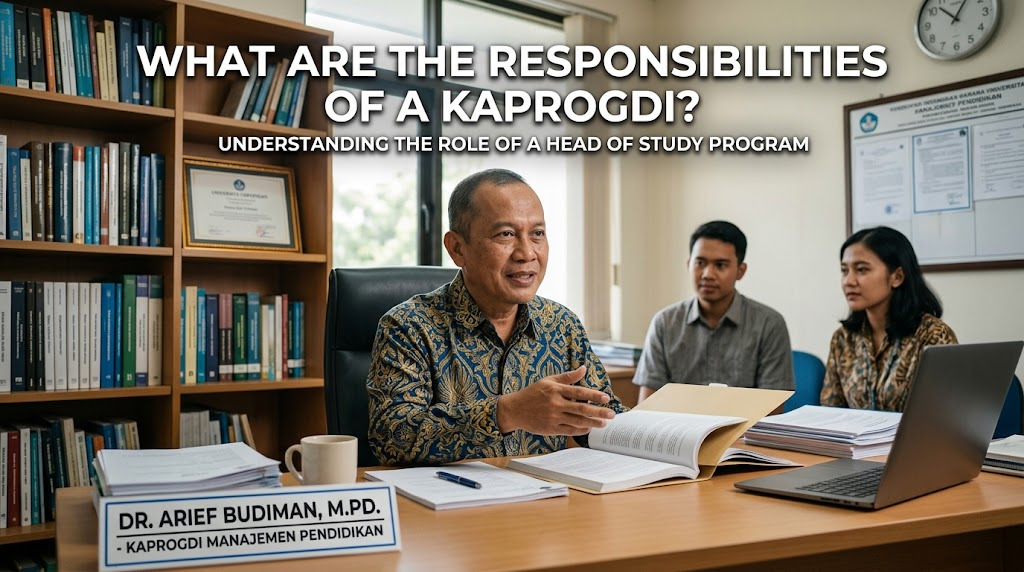
A Kaprogdi or Head of a Study Program has an important role in coordinating and managing activities within a study program. The position is closely related to academic management, lecturer coordination, student needs, evaluation, and program development. Through these responsibilities, a Kaprogdi helps ensure that academic activities are organized according to the objectives of the study program.
The responsibilities of a Kaprogdi are not limited to administrative work. The position may require communication with lecturers, students, faculty administrators, and other university units. However, the exact responsibilities and authority can differ between higher education institutions depending on their organizational structure and internal regulations.
MANAGING AND COORDINATING ACADEMIC ACTIVITIES
One of the main responsibilities of a Kaprogdi is managing and coordinating academic activities within the study program. These activities can include course implementation, academic schedules, learning programs, examinations, and other educational activities. The Kaprogdi works with relevant parties to help ensure that these activities are properly planned and implemented.
Academic coordination also requires attention to potential issues that may arise during the implementation of activities. When changes or problems occur, the Kaprogdi can communicate with lecturers and relevant university units to determine appropriate follow-up. This coordination helps maintain the organization of academic activities and supports the objectives of the study program.
COORDINATING WITH LECTURERS AND RELEVANT PARTIES
A Kaprogdi works closely with lecturers who are involved in teaching and other academic activities. Coordination may include course implementation, academic programs, curriculum-related matters, student activities, and information from the faculty or university. Clear communication can help lecturers understand plans and responsibilities related to the study program.
In addition to lecturers, the Kaprogdi may communicate with students, faculty administrators, and other university units. Different parties can provide information about academic needs or issues within the program. This communication allows the Kaprogdi to identify matters that require attention and coordinate them through the appropriate institutional channels.
MONITORING AND EVALUATING THE STUDY PROGRAM
Another important responsibility is monitoring the implementation of activities within the study program. Monitoring can help the Kaprogdi understand whether academic programs are being carried out according to established plans. Information can be collected through communication with lecturers, students, administrative staff, and other relevant parties.
The results can then be used for study program evaluation. If an activity requires improvement, the Kaprogdi can coordinate follow-up according to the authority and procedures of the university. Evaluation can also identify activities that have worked well and can be maintained or developed. Through this process, the Kaprogdi can contribute to continuous improvement in academic management.
DEVELOPING THE STUDY PROGRAM AND FOLLOWING UP ON NEEDS
The responsibilities of a Kaprogdi can also include supporting the development of the study program. Development may consider evaluation results, student feedback, lecturer input, developments in the academic field, and institutional needs. These sources can help identify areas where academic activities or program management may need improvement.
When certain needs require support from the faculty or university, the Kaprogdi can communicate them through the appropriate organizational structure. The follow-up process should follow the authority and procedures established by the institution. In this way, the Kaprogdi can help connect the needs of the study program with broader university management.
CONCLUSION
The responsibilities of a Kaprogdi generally include coordinating academic activities, working with lecturers and relevant parties, monitoring and evaluating the study program, and supporting its development. The position also involves communication with students and other university units when academic needs or issues arise.
The specific responsibilities of a Kaprogdi may differ depending on the university's organizational structure and regulations. Therefore, information about a particular Kaprogdi position should be understood according to the official policies of the relevant higher education institution.
Tentang Penulis
Gusti Ayu Tita P
Penulis — Universitas STEKOM
Penulis aktif yang berfokus pada isu-isu akademik, teknologi pendidikan, dan pengembangan sumber daya manusia di lingkungan kampus.