What Are The Signs Of An Imminent Volcanic Eruption?
Gusti Ayu Tita P
19 September 2026
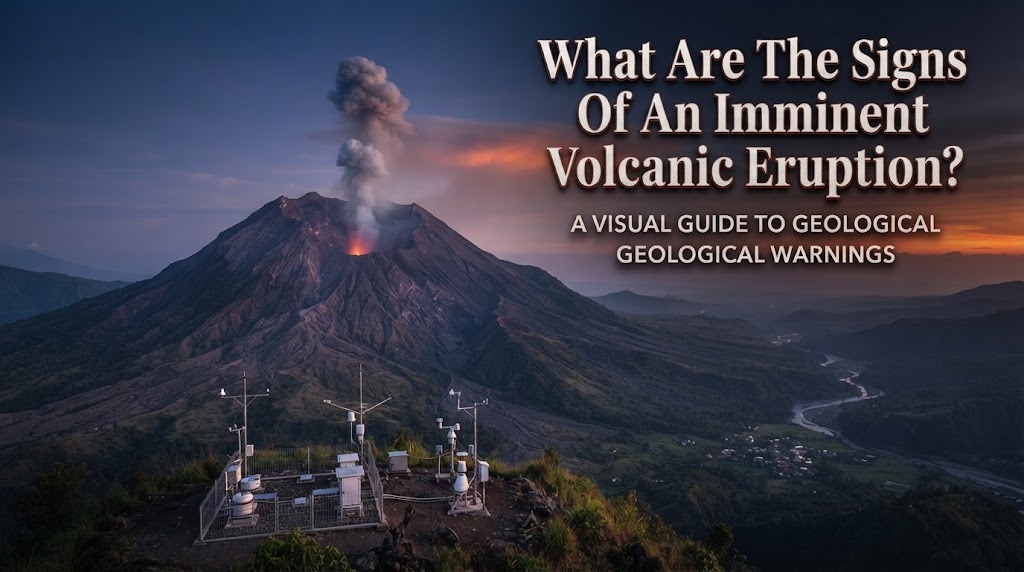
Volcanic eruptions can sometimes be preceded by changes in the volcano and its surrounding area. Scientists monitor these changes to identify signs of increased volcanic activity. Common indicators include volcanic earthquakes, changes in gas emissions, ground deformation, and changes in temperature. However, these signs do not always mean that an eruption will happen immediately. Careful monitoring and expert analysis are needed to understand the condition of a volcano.
INCREASED VOLCANIC EARTHQUAKES
One common sign of rising volcanic activity is an increase in volcanic earthquakes. These earthquakes can happen when magma moves through cracks and pathways beneath the volcano. Monitoring instruments called seismometers can detect changes in the number, strength, and location of these earthquakes. A sudden increase in seismic activity may indicate that the volcanic system is becoming more active. Scientists compare these patterns with previous observations to assess changes in the volcano.
CHANGES IN VOLCANIC GAS
Changes in the amount and type of volcanic gases can provide important information about activity beneath a volcano. Rising magma can release gases such as water vapor, carbon dioxide, and sulfur dioxide. An increase in certain gas emissions may indicate that magma is moving closer to the surface. Scientists use specialized instruments to measure gas concentrations and observe changes over time. Gas measurements are most useful when combined with other monitoring data.
GROUND DEFORMATION
Magma moving beneath a volcano can cause the ground surface to swell, tilt, or shift. This process is known as ground deformation and can be measured using GPS, satellite observations, and other instruments. Changes in the shape or elevation of the volcano may indicate that magma is accumulating underground. Scientists regularly compare new measurements with earlier data to identify unusual changes. Ground deformation alone does not guarantee an eruption, but it can be an important warning indicator.
INCREASED TEMPERATURE
An increase in temperature around volcanic areas can sometimes indicate changes in the movement of magma or volcanic fluids. Scientists may monitor hot springs, crater lakes, fumaroles, and other areas where heat reaches the surface. Thermal cameras and satellite instruments can also help detect changes in surface temperature. However, temperature changes can have several causes and must be interpreted carefully. Experts therefore compare temperature data with other signs of volcanic activity.
CHANGES IN THE VOLCANO AND CRATER
Visible changes around a volcano can also provide useful information. These changes may include new cracks, changes in the crater, increased steam, or changes in the appearance of volcanic lakes. Such observations can be recorded using cameras, field surveys, drones, and satellite images. Scientists use these observations together with seismic, gas, and deformation data. A combination of several unusual changes can provide a clearer picture of increasing volcanic activity.
CONCLUSION
Possible signs of an approaching volcanic eruption include increased earthquakes, changing gas emissions, ground deformation, rising temperatures, and visible changes around the crater. However, no single sign can accurately determine exactly when an eruption will occur. Scientists need to analyze multiple types of monitoring data continuously. Communities near volcanoes should follow official information and evacuation instructions when warnings are issued. Preparedness and reliable information are essential for reducing volcanic risks.
Tentang Penulis
Gusti Ayu Tita P
Penulis — Universitas STEKOM
Penulis aktif yang berfokus pada isu-isu akademik, teknologi pendidikan, dan pengembangan sumber daya manusia di lingkungan kampus.