What Happens If Frustration Is Not Managed Properly?
Gusti Ayu Tita P
21 September 2026
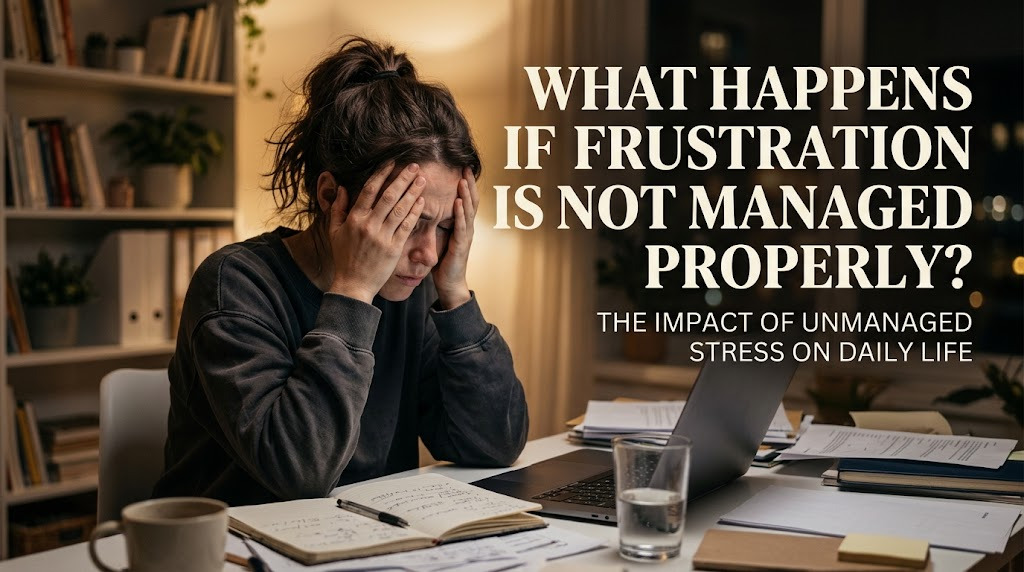
Frustration is a natural emotional response that can occur when someone faces obstacles, unmet expectations, or situations that do not go according to plan. Feeling frustrated from time to time is normal, but repeatedly ignoring these emotions can make them more difficult to handle. When frustration is not managed properly, it may influence mood, concentration, relationships, and the way a person responds to everyday problems.
Understanding the potential effects of unmanaged frustration can help someone recognize emotional changes earlier. The goal is not to avoid frustration completely, but to develop healthy ways of understanding and responding to it. With appropriate emotional awareness, a person can reduce the chance of frustration interfering with daily activities.
FRUSTRATION CAN AFFECT MOOD AND EMOTIONAL BALANCE
One possible effect of unmanaged frustration is a noticeable change in mood. A person may become more easily irritated, impatient, disappointed, or less enthusiastic about activities that would normally feel manageable. When frustration continues without being addressed, these emotional changes may become more noticeable in everyday situations.
Unmanaged emotions can also make it harder to respond calmly to new problems. A relatively small difficulty may feel more overwhelming when someone is already carrying unresolved frustration. Recognizing changes in mood can therefore be an important first step toward better emotional management.
FRUSTRATION CAN INTERFERE WITH CONCENTRATION
Persistent frustration can make it difficult to focus because the mind may continue returning to the source of the problem. Someone may repeatedly think about a mistake, disappointing result, or unresolved situation instead of concentrating on the task in front of them. This can make studying, working, or completing daily responsibilities feel more challenging.
Difficulty concentrating may also affect productivity. When attention is divided between an activity and unresolved emotional concerns, completing tasks can take more time or require additional effort. Taking a pause, identifying the source of frustration, and breaking tasks into smaller steps can help restore focus.
FRUSTRATION CAN AFFECT SOCIAL RELATIONSHIPS
When frustration is not expressed or managed appropriately, it can influence communication with other people. A frustrated person may become more sensitive to comments, misunderstandings, or disagreements. This can sometimes result in communication that is less patient than usual.
Unmanaged frustration does not necessarily mean that someone intends to create conflict. However, strong emotions can influence how words are interpreted and how responses are delivered. Practicing healthy communication and taking time to calm down before discussing a difficult issue can help protect relationships.
FRUSTRATION CAN CHANGE THE WAY PROBLEMS ARE HANDLED
Another possible effect of unmanaged frustration is a change in how someone approaches problems. When emotions are intense, a person may focus primarily on the immediate difficulty instead of considering different solutions. This can make it harder to evaluate choices carefully or determine which actions are actually within their control.
Learning to pause and separate emotions from practical decisions can support better problem solving. A person can identify the main issue, consider possible options, and choose manageable steps instead of reacting automatically. If frustration becomes difficult to manage alone, talking with a trusted person can provide additional perspective and support.
CONCLUSION
When frustration is not managed properly, it can affect mood, concentration, social relationships, and the way problems are approached. These effects may become more noticeable when frustration continues for a long time or when several challenging situations happen at once. Recognizing these changes can help someone take action before frustration has a greater impact on daily life.
Managing frustration can begin with identifying the source of the emotion, taking time to calm down, and focusing on practical steps. Clear communication and support from trusted people can also make difficult situations easier to handle. Developing healthy emotional management skills can help a person respond to frustration more thoughtfully and maintain better balance in everyday life.
Tentang Penulis
Gusti Ayu Tita P
Penulis — Universitas STEKOM
Penulis aktif yang berfokus pada isu-isu akademik, teknologi pendidikan, dan pengembangan sumber daya manusia di lingkungan kampus.